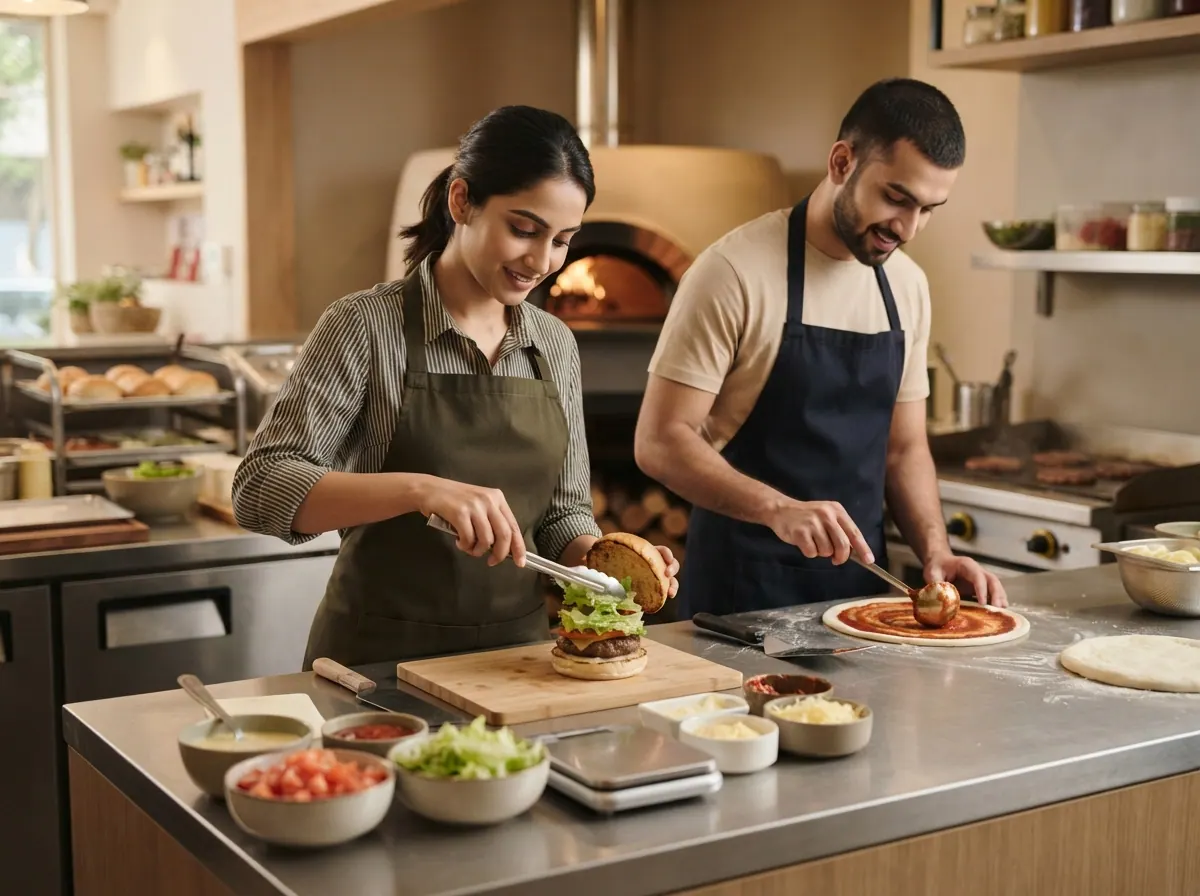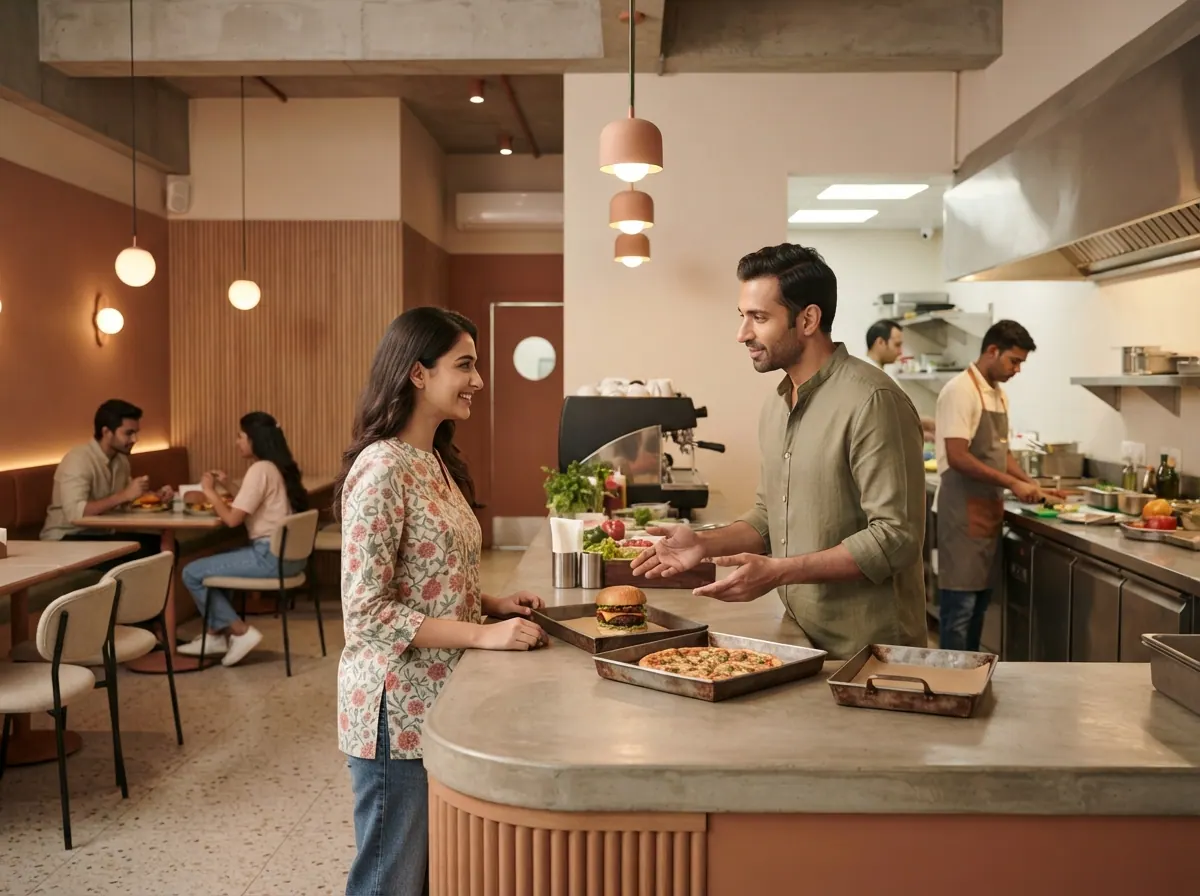
To start a fast food outlet in India you need a small shop with a proper kitchen, a cook who can hold the taste every day, a short menu, and about ₹3–20 lakh. A roll and burger counter sits near the bottom of that range. A pizza outlet with an oven and a few tables sits near the top. Money is made on a low ingredient cost per plate and a steady stream of orders. It is lost in wastage, slow service and delivery app commissions.
All figures here are estimates. Check prices near you before you spend.
What does it cost?
For a rented shop of about 150–300 sq ft:
| Item | Estimate |
|---|---|
| Rent deposit | ₹50,000–2 lakh |
| Counter, kitchen platform, exhaust hood, basic interiors | ₹70,000–2.5 lakh |
| Griddle, fryer, pizza oven or tandoor, mixer | ₹60,000–2.5 lakh |
| Refrigerator, deep freezer, storage racks | ₹40,000–1.2 lakh |
| First stock: buns, cheese, sauces, oil, packaging | ₹30,000–80,000 |
| Signboard, menu boards, billing machine | ₹20,000–50,000 |
| FSSAI, shop registration, fire and other papers | ₹5,000–25,000 |
| Money for the first slow months | ₹50,000–1.5 lakh |
| Total, counter shop | about ₹3–11 lakh |
One 2026 vendor guide itemises a small outlet with seating at ₹10–20 lakh (deposit ₹1.5–4 lakh, interior ₹2–4 lakh, equipment ₹2–4 lakh, working capital ₹1.5–3 lakh) and a medium one with AC at ₹20–40 lakh.
Second-hand equipment can cut the cost, but check the burners and compressors in person. A fryer or freezer that dies in the first month costs you more than you saved.
How much can it earn?
Here is a normal month for a small outlet with three staff:
Sales
- 60 orders a day × about ₹170 = ₹10,200 a day
- ₹10,200 × 30 days = ₹3,06,000
Costs
- Ingredients and oil: about 35% of sales = ₹1,07,100
- Cook = ₹22,000
- Counter staff = ₹14,000
- Helper = ₹12,000
- Rent = ₹35,000
- Gas and power = ₹18,000
- Packaging boxes and bags = ₹12,000
- Delivery app commission and ads = ₹25,000
- Cleaning, repairs, small things = ₹10,000
- Total = ₹2,55,100
Left over: ₹3,06,000 − ₹2,55,100 = ₹50,900 a month, and this has to pay you as well.
If wastage and free portions push ingredient cost from 35% to 42%, you lose about ₹21,000 a month. That one number often decides whether the outlet makes money.
What do you need before you start?
- A short menu. Eight to twelve items you can make fast and well, such as veg and chicken burgers, rolls, fries, sandwiches and a few pizzas. A long menu means more stock that spoils.
- A cook who is not the owner's cousin by default. Test their burger and roll on a busy hour. Taste has to be the same at 2 pm and at 10 pm.
- A supplier list. Bun, cheese, mayonnaise, frozen patties and sauces from a local distributor, and vegetables from the mandi. Ask for the batch date on frozen items.
- Cold storage you trust. Power cuts and a weak freezer ruin chicken and cheese faster than you expect.
- A lane with the right crowd. Colleges, coaching classes, offices and bus stops each buy differently. Stand there at 6 pm and count who is eating.
Step by step
- Pick the lane and the menu together. A college lane wants ₹60–120 value items. An office lane wants a combo and quick service.
- Take a shop with a proper exhaust and water point. Fixing smoke and drainage after you move in costs far more.
- Buy only the equipment your menu needs. Do not buy a pizza oven if you will sell ten pizzas a day.
- Cost every item on paper. Weigh the patty, cheese slice and sauce. Add oil and packaging. Then set the price.
- Train your cook and counter staff on portions. Same weight, same sauce, same box.
- Apply for FSSAI before opening, and keep the certificate where customers can see it.
- Soft launch for a week. Invite neighbours, fix the long waits, then list on delivery apps.
- Photograph your food properly for the apps. A clear photo and short description matter more than a long menu.
- Check your wastage every week. Count what you threw away.
Which licences apply?
- FSSAI registration or licence. Required for selling cooked food. Basic registration (₹100) covers turnover up to ₹1.5 crore from 1 April 2026; above that a state licence (₹5,000) is needed. Selling without a licence can bring up to 6 months in jail and a ₹5 lakh fine.
- Shops and Establishments registration and a local trade or health licence where your municipality asks for one.
- Fire safety clearance may apply if you have a larger kitchen or seating. Ask the local fire office.
- GST depends on your turnover. Restaurant food is generally 5% without input tax credit, and registration is needed above ₹20 lakh of turnover. Ask a CA.
- Udyam registration is free and helps if you want a bank loan later.
- Frying oil and mayonnaise. The FSSAI limit for used oil is 25% total polar compounds, with no topping up, and above 50 litres a day you must keep records. Raw-egg mayonnaise is banned in Kerala, Telangana and Tamil Nadu.
Confirm all of this with your local office or a CA, since rules vary by state.
What goes wrong?
- Too big a menu. Twenty-five items means open packets of cheese and paneer going bad.
- Oil used too long. Black oil makes fries bitter and customers stop coming. Change on a schedule.
- Rain and rush hour. Delivery orders flood in together, the kitchen slows down, and ratings drop in one evening.
- Delivery app discounts you cannot afford. A 25% commission plus a discount can leave you with almost nothing on a combo.
- The cook leaves with your recipe and opens next lane with the same menu. Keep sauces mixed by you or in a way only a few know.
- Dirty counter, flies, and a stale smell. A food inspector or an unhappy customer can end your name quickly.
- Rent that is too high for your orders. Count how many plates you need every day to pay it.
Situations you will face
What would you do? Each choice costs something.
Getting started
Your friends want pizza, rolls, burgers, momos and pasta all on the board. Each item needs its own stock.
- Keep ten items only: Less waste, fewer reasons to visit
- List twenty-five items: More stock, more spoilage
A deck oven costs a lot and you might sell only ten pizzas a day. Burgers and rolls need only a griddle.
- Buy the oven: Big cost, pizza buyers come
- Start with burgers and rolls: Cheap start, fewer choices
A closed outlet is selling its fryer and freezer. The seller says they run fine but they are four years old.
- Buy the used set: Saves money, breakdown risk
- Buy new with warranty: Costs double, no worry
The landlord says a window fan is enough. Frying smoke will go into the neighbours' flats above.
- Fit a proper hood: Costly, no smoke complaints
- Fit a cheaper filter hood: Mid cost, smoke reduced
Students buy at ₹60–100 in the evening and are gone in holidays. Offices pay more but only buy at lunch.
- Take the college lane: Evening rush, holiday dips
- Take the office lane: Steady lunch, thin evenings
The shop is ready and the FSSAI application is still being processed. Each day closed costs you rent.
- Wait for the certificate: Lose a few days of sales
- Train staff while you wait: No sales, ready to open
Ready-made mayo and sauces are cheap. A house peri-peri and garlic sauce takes your time every morning.
- Make sauces in-house: Extra work, people remember it
- Buy ready sauces: Saves time, tastes like others
First month
A friend suggests buy-one-get-one on burgers for three days. The lane is full of new shops.
- Run the BOGO offer: Loses margin, big crowd
- Give a free fries combo upgrade: Smaller loss, smaller crowd
At 8 pm six tables and three delivery boys wait on one cook. People start walking out.
- Hire a second cook: Salary cost, faster plates
- Cut the menu in the rush: No cost, some customers annoyed
Zomato and Swiggy can bring orders from five streets away. They take a share of every order.
- List on both apps: More orders, big commission
- Use your own phone number: Keeps margin, small reach
A supplier sells patties ₹4 cheaper each but the batch date is only three weeks away. You sell about 40 a day.
- Stay with the known brand: Costs more, safe quality
- Test a small sample batch: Small cost, check before buying
A customer got a chicken roll instead of the paneer roll they ordered. They post a one-star review.
- Refund and send correct order: Costs a plate, wins them back
- Reply and do nothing more: No cost, the review stays
The fryer oil is three days old and fries taste bitter. A full change costs about ₹2,500.
- Change the oil now: Costs a tin, fries taste right
- Top up and keep using: Saves money, taste suffers
Running it
Your baker wants ₹1 more per bun. You sell about 1,500 buns a month.
- Accept the new price: Higher cost, steady buns
- Switch to a new baker: Cheaper, quality is unknown
Students have gone home to study and sales fall by a third for three weeks. Rent still has to be paid.
- Push family combos: Ad cost, some recovery
- Cut staff hours: Saves pay, slower service
Delivery orders will jump on finals night. The kitchen can do about 40 orders an hour.
- Hire two part-timers: Pay and stock cost, big night
- Work as usual: No cost, late orders likely
Burger, fries and a cold drink for ₹149 would sell fast but the margin on the drink is thin.
- Launch the combo: More orders, less margin each
- Keep items separate: Better margin, smaller bills
The app says outlets with discounts get shown first. Your commission is already high.
- Join the discount scheme: More orders, thin margin
- Refuse the discount: Margin safe, fewer app orders
A rival outlet has offered your cook more. Most of your regulars come for their rolls.
- Pay the raise: Higher cost, taste stays
- Train a helper instead: Saves pay, taste may slip
They will give a free display fridge if you stock only their drinks. Your own fridge is full of sauces.
- Accept the free fridge: Saves cost, one brand only
- Buy your own fridge: Costs money, free to choose
They sell similar burgers for ₹10 less and have put up bright banners. Your regulars are still coming.
- Cut your price too: Less margin, keeps crowd
- Improve the patty and bun: Costs more, builds loyalty
Many customers will not eat onion, garlic or non-veg for nine days. Your kitchen uses the same griddle for everything.
- Make a separate vrat menu: Extra stock, new buyers
- Sell your normal menu: No change, quiet nine days
When things go wrong
A night-long power cut warmed the freezer and 8 kg of cheese and chicken smell off.
- Throw it away, buy fresh: Big loss, open as usual
- Throw out and shut early: Lose the evening, no risk
The inspector finds uncovered bins and no hair caps on your helpers. They give a notice with a date to fix it.
- Fix everything this week: Costs money, papers clean
- Fix the worst, book re-check: Cheaper now, second visit
A customer calls to say they were sick after your chicken roll yesterday. You cannot be sure why.
- Pay their bill, check the kitchen: Costs money, shows you care
- Ask the health office to check: Time spent, honest check
The dealer says the commercial cylinders will come in three days. You have enough for one more day.
- Pay a nearby shop for a cylinder: Costs far more, shop stays open
- Run a short menu on induction: Lost sales, safe
Your helper does not come for the weekend rush and their phone is switched off. You have four hours to open.
- Call a part-timer at double pay: Costly, shop runs
- Run with a short menu: Saves pay, lost sales
Growing
A landlord has a shop near a new coaching hub. You would need a trusted cook and another full set of equipment.
- Open the second outlet: Big spend, double the orders
- Stay with one outlet: Safe, growth is limited
You can sell a second menu such as biryani or momos from the same kitchen on the apps, with a new name.
- Launch the second brand: New orders, more stock risk
- Improve your main menu: Lower risk, slower growth
A known burger chain offers its name and recipes, for a fee and a share of your sales. You would stop using your own menu.
- Sign the franchise: Strong name, fees every month
- Keep your own brand: Full control, slow name
Is it right for you?
A fast food outlet suits you if you like busy evenings, can watch cost on every plate, and are ready to be in the shop until closing time. It also helps if you can cook the main items yourself, so a cook leaving does not close the shop.
It suits you less if you want a quiet job. Weekends, festivals and exam seasons change your orders, and the kitchen is hot and loud. Try this first: sell your best burger or roll from a friend's shop or at a small event for a weekend, cost every plate, and see if people come back.