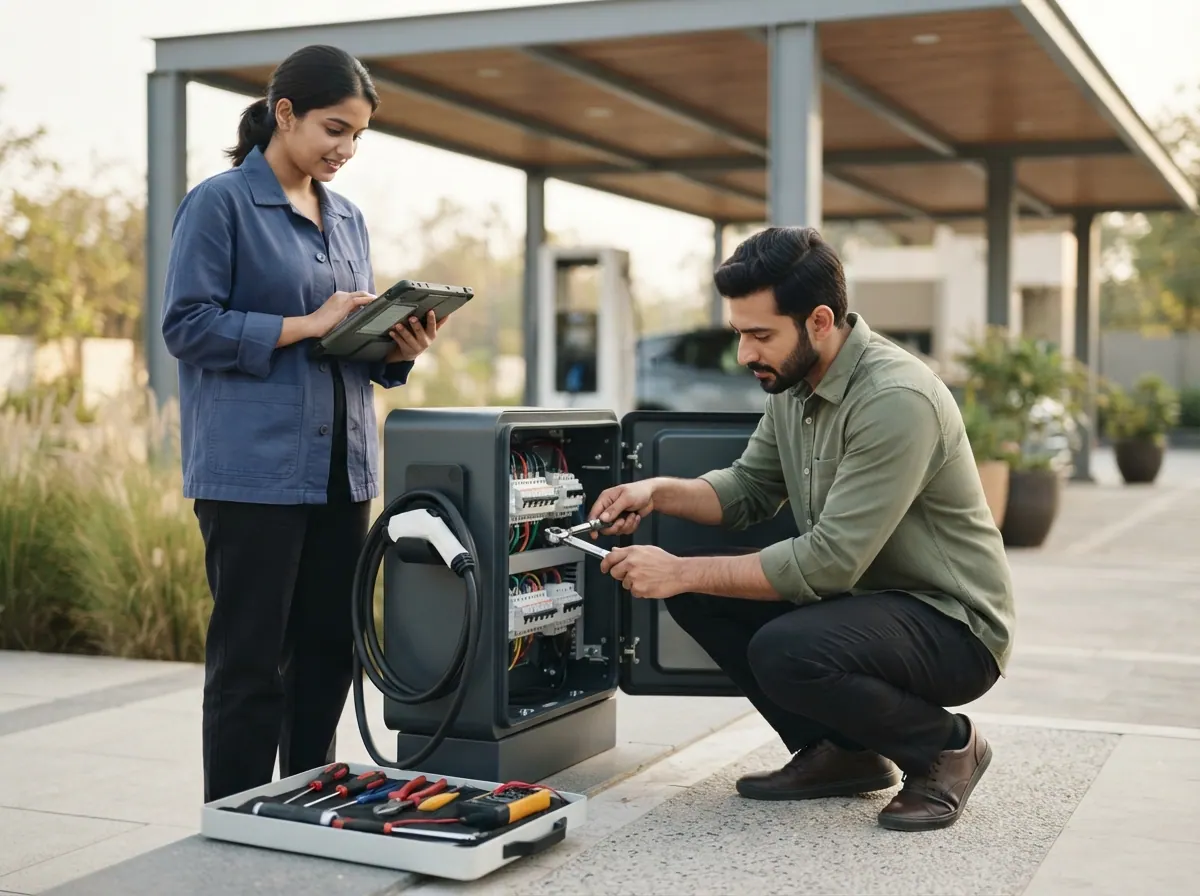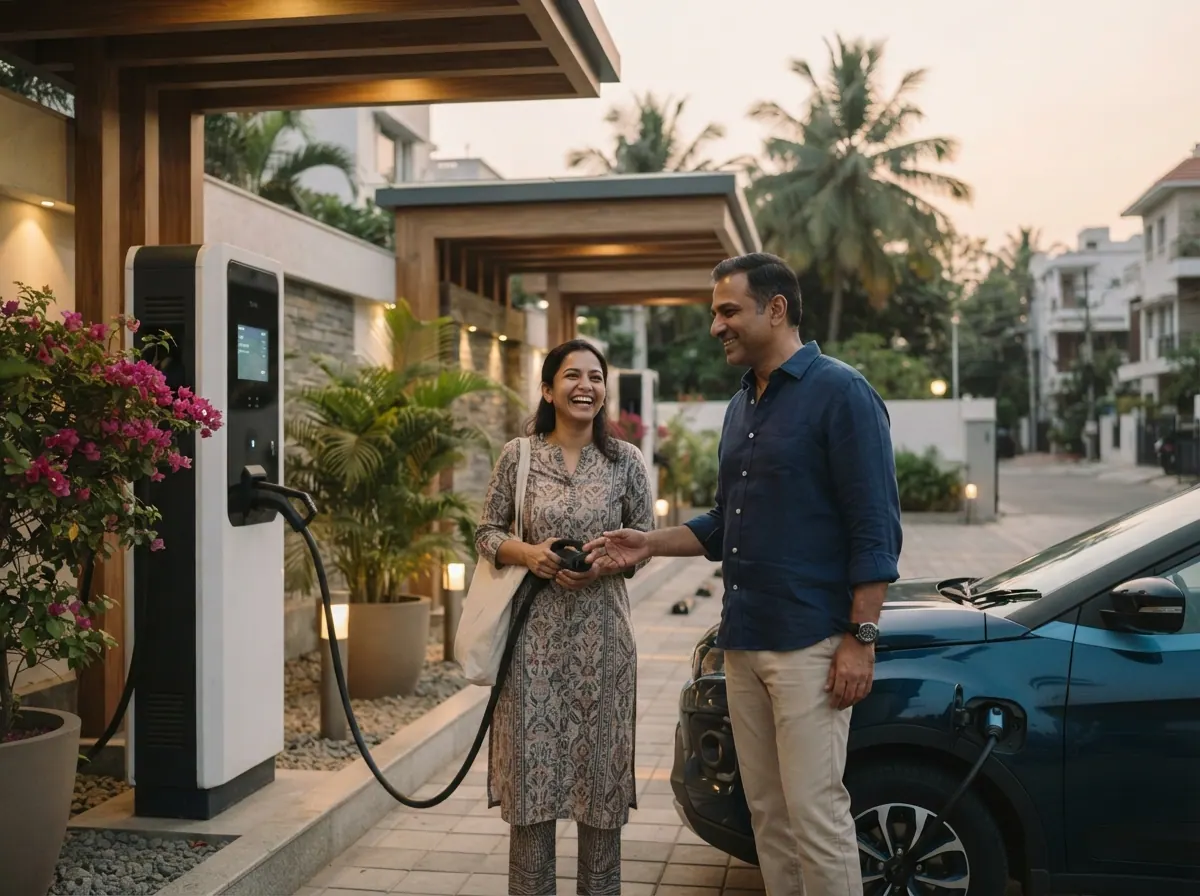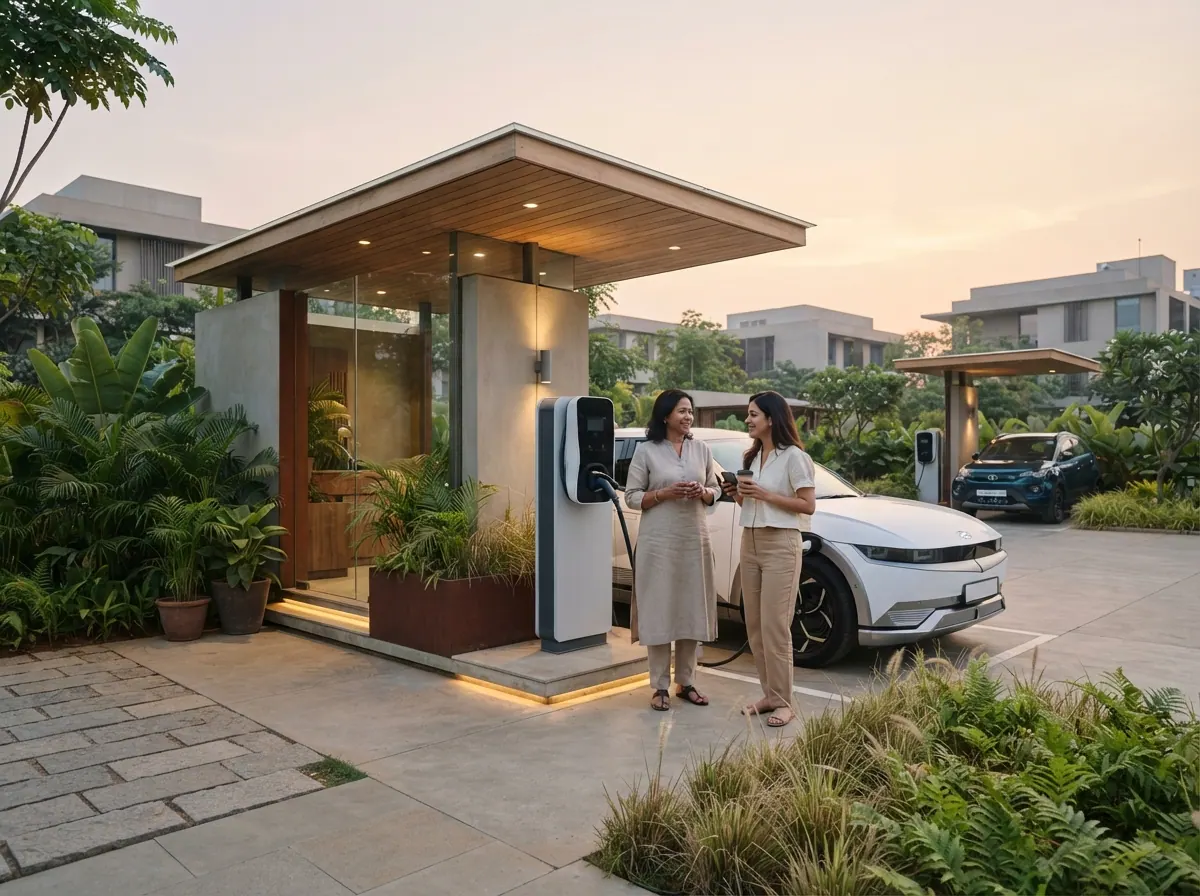
To start an EV charging station in India you need a site where cars already stop, a power connection with enough load, chargers that fit the cars around you, and about ₹5–10 lakh for four AC points or ₹22–40 lakh for two 30 kW DC fast chargers. That assumes you already have the land or a lease. The business sells electricity by the unit, so what decides your profit is how many cars charge each day, not how good the chargers look.
All figures here are estimates. Check prices and your electricity tariff before you spend.
What does it cost?
| Item | Small AC site (4 points) | DC fast site (2 × 30 kW) |
|---|---|---|
| Chargers | ₹1.2–2.4 lakh | ₹8–14 lakh |
| Power connection, cables, panel | ₹1–2.5 lakh | ₹5–10 lakh |
| Civil work, canopy, bay marking | ₹80,000–1.5 lakh | ₹3–4.5 lakh |
| Earthing, fire safety, lighting | ₹30,000–60,000 | ₹1–2 lakh |
| Software, payment and signage | ₹30,000–50,000 | ₹1–1.5 lakh |
| Lease advance or deposit | ₹1–2 lakh | ₹3–4 lakh |
| Cash for the first months | ₹50,000–1 lakh | ₹1.5–3 lakh |
| Total | about ₹5–10 lakh | about ₹22–40 lakh |
The DC fast charger is the big cost, and the cable and panel work to carry its load is the second. A transformer or a higher sanctioned load can add a lot, so ask the electricity company for a written quote before you sign a lease.
Which chargers should you put in?
Look at the cars that will use you:
- AC points (about 3.3 to 7.4 kW): slow and cheap. Two-wheelers, three-wheelers and cars that park for several hours use them. A hotel, society or office parking lot suits this.
- DC fast chargers (30 kW and up): a car can add a lot of charge in under an hour. They cost far more and need a big connection.
- Connector types: most new cars sold in India use the CCS2 connector for fast charging and Type 2 for AC. Two-wheelers and three-wheelers often use other plugs. Check which vehicles you want to serve before you order.
How much can it earn?
Here is a DC site with two 30 kW chargers in a steady month, once drivers know it.
Units sold
- 25 charging sessions a day × about 20 units per session = 500 units a day
- 500 units × 30 days = 15,000 units a month
- Selling at about ₹18 a unit = ₹2,70,000 a month
Costs each month
- Electricity: about ₹10 a unit including fixed demand charges × 15,000 = ₹1,50,000
- Site rent or lease = ₹25,000
- One attendant = ₹20,000
- Network software, repairs, insurance = ₹15,000
- Total = ₹2,10,000
Left over: ₹2,70,000 − ₹2,10,000 = about ₹60,000 a month, before any loan instalment.
With a ₹30 lakh loan, the instalment could be more than that. If only 10 sessions come each day, units fall to 6,000, sales to ₹1,08,000, and the same costs are mostly fixed, so you lose money. Numbers like these are why site choice matters more than the charger brand.
What do you need before you start?
- A site where cars already stop for 30 minutes or more. A highway dhaba, a petrol pump forecourt, a mall, a busy market or a hotel.
- A power connection sized for the chargers. Ask the electricity company about the load, the cable route and any special EV tariff.
- A lease long enough to earn back your money. A short lease with a landlord who can raise rent is risky.
- Safety basics. Proper earthing, a fire extinguisher, weather cover and good lighting.
Step by step
- Count vehicles at your site for two weeks, at different hours, and note how many are electric.
- Ask the electricity company about load, deposit, meter type and tariff before you commit.
- Choose AC or DC for the vehicles you counted, then get quotes from at least three charger makers. Ask about service in your town.
- Check the lease for the right to run charging, the signboard and the electricity meter.
- Build the bays, canopy and cabling with a licensed electrical contractor.
- Join an app or network so drivers can find you and pay by UPI or card.
- Test with a real car of each type before you open, and write down the price per unit clearly on a board.
Which licences and permissions apply?
- Electricity connection. The electricity company gives the connection and decides the tariff category. Many states have a separate EV charging tariff, so ask for it.
- Local permission for the site, signboard and any building work, from your municipality or panchayat.
- Fire and electrical safety checks, and an electrical contractor who signs off on the work.
- Business registration and GST. Ask a CA how electricity sales are treated.
- Support schemes. Governments have offered support for public charging in some places. Amounts and conditions change, so ask your state nodal agency what is open.
What goes wrong?
- A cheap site with no traffic. The rent is low because no one stops there.
- Chargers that do not match the cars. You put in DC chargers where only auto-rickshaws come, or AC points where drivers want a fast top-up.
- Power cuts and voltage drops that stop charging or damage the equipment.
- Fixed power charges. You pay a demand charge every month even on days with no cars.
- Breakdowns with no service nearby. A charger down for two weeks sends drivers away.
- Petrol cars parked in your bays. Mark the bays and keep an attendant or a camera.
Situations you will face
What would you do? Each choice costs something.
Getting started
A corner plot has low rent but few cars. A dhaba on the highway asks for double the rent and sees many cars stop.
- Take the highway dhaba: Higher rent, more cars
- Take the cheap corner: Lower rent, quiet days
The electricity company asks for a high deposit and a new cable for fast chargers. AC points would need far less.
- Pay for fast charger load: Costly, quick top-ups
- Start with AC points: Cheaper, slower sales
An unknown maker's charger is cheaper by a lakh. The known brand has a service centre in the next city.
- Buy the serviced brand: Costs more, repairs faster
- Buy the cheaper charger: Saves money, slow repairs
Cars in your town use CCS2, but many autos and scooters use other plugs. Both need different cables.
- Add plugs for autos too: Extra cost, more customers
- Serve only cars: Lower cost, fewer vehicles
The site owner will not give more than 2 years, and may raise rent after. A longer lease costs a bigger advance.
- Pay for a 9 year lease: Big advance, safe site
- Sign the 2 year lease: Small advance, rent can rise
The electrician says proper earthing and a surge protector add to the quote. It is out of your budget.
- Pay for full earthing: Costly, safe equipment
- Delay the opening a month: Wait, then pay in instalments
A charging network offers its app and drivers, but takes a share of each sale. Going alone means no app traffic.
- Join the network: More drivers, shared income
- Run on your own: Keep all income, fewer drivers
First month
The site is ready, but only two cars charged in a week. People do not know you are open.
- Run a first-week discount: Lower price, more trials
- Put up boards on the road: One-time cost, slow effect
- Wait for word of mouth: No cost, slow start
Your station is not on charging apps or maps. A driver asks why you are missing.
- Pay a software setup: Costs now, shows on apps
- Add yourself on free maps: No cost, fewer drivers
Few cars charged, but the bill has a large fixed demand charge. You must pay it this month.
- Ask for a lower load: Small fee, lower fixed bill
- Pay it and keep the load: Costly now, room to grow
A shop nearby parks its vans in your charging bays. A Nexon driver had to wait an hour.
- Hire a bay attendant: Monthly wage, free bays
- Put up bollards and signs: One-time cost, some misuse
A rival charger down the road sells cheaper. Your power cost per unit is high at low sales.
- Match the lower price: More cars, thinner margin
- Keep your price: Better margin, fewer cars
Running it
Chargers sit idle from morning to 5 pm, then queue at night. Cheaper day rates might spread the load.
- Offer cheaper day rates: Lower price, steadier use
- Add a fourth point: Cost now, shorter queues
A hotel nearby offers to send guests if you give them a lower unit rate and a free bay for guests.
- Accept the tie-up: Steady cars, lower rate
- Refuse the lower rate: Keep margin, fewer cars
A taxi owner with 12 electric cabs wants a discount for daily charging. They would use you every night.
- Give the fleet discount: Many units, lower margin
- Offer a smaller discount: Better margin, they may leave
Voltage swings trip your charger, and drivers leave half-charged. A stabiliser would help.
- Buy a voltage stabiliser: Costly, steadier charging
- Complain to the power office: Free, slow fix
One fast charger stopped. The service centre can send an engineer in a week, or you can pay for an urgent visit.
- Pay for the urgent visit: Costly, back in 2 days
- Wait the week: Free visit, lost drivers
The charger maker offers a service contract that costs a lot each year but covers routine checks.
- Buy the service contract: Yearly fee, fewer breakdowns
- Pay per visit: No fee, higher repair bills
The UPI scan on your board does not work when the signal drops. Drivers say they cannot pay.
- Add a prepaid wallet: Setup cost, smooth payments
- Take cash at the counter: No cost, slower and untracked
A solar installer says rooftop panels on the canopy can cut your daytime power bill. It costs a lot upfront.
- Install the solar canopy: Big cost, lower power bills
- Not now: Keep cash, same power bill
The electricity company raises the per unit rate. Your margin on each charge is now smaller.
- Raise your price a little: Margin saved, some drivers leave
- Keep your price: Drivers stay, thinner margin
When things go wrong
At night someone cut a cable for the copper. The bay is closed and a driver is waiting.
- Replace and add a camera: Costly, safer at night
- Replace the cable only: Cheaper, may happen again
A car starts smoking at your bay. The driver and staff step back and call the fire service.
- Stop all bays and check: Lost day, safer site
- Stop that bay, buy more extinguishers: Cost now, safer bays
A big oil company opens fast chargers opposite you at a lower price. Your sales fall within two weeks.
- Cut prices for a while: Keeps cars, thinner margin
- Add a waiting lounge: Cost now, loyal drivers
Sales dipped in monsoon. The instalment is due and your account is short.
- Ask the bank to adjust dates: Small fee, more breathing room
- Pay by borrowing from family: Safe credit, money tied up
The site owner sees cars coming and asks for a big rent rise. Moving the chargers would be costly.
- Negotiate a middle rent: Some rise, you stay
- Pay what they ask: Costly, no fight
- Move to a new site: Huge cost, lost days
Cash sales at the counter are lower than the meter shows. The attendant says it was a mistake.
- Move all to digital payments: Setup cost, clear records
- Change the attendant: Hiring cost, risk of the same
Growing
A highway restaurant offers you space for chargers. It costs more than your first site and needs your time.
- Open the second site: Big cost, more cars
- Improve the first site: Smaller cost, steady gain
At peak time, cars wait 40 minutes at your chargers. More chargers would need a bigger connection.
- Add another fast charger: Costly, shorter queues
- Add AC points for long stays: Cheaper, helps part of the queue
A friend says some states support public chargers. The forms need time and papers, and the rules may have changed.
- Hire a consultant to apply: Fee now, uncertain gain
- Ask the state office yourself: Free, takes your time
Is it right for you?
An EV charging station suits you if you already control a good site, can wait a long time for it to fill, and are comfortable with electrical work and contracts. It suits you less if you need quick returns, or only have money for equipment with nothing left for the power connection.
A good test: stand at the site for two weekends and count the cars that stop for over half an hour. Then ask the electricity company for a quote. If the numbers work at half the sessions you hoped for, you have a business worth trying.