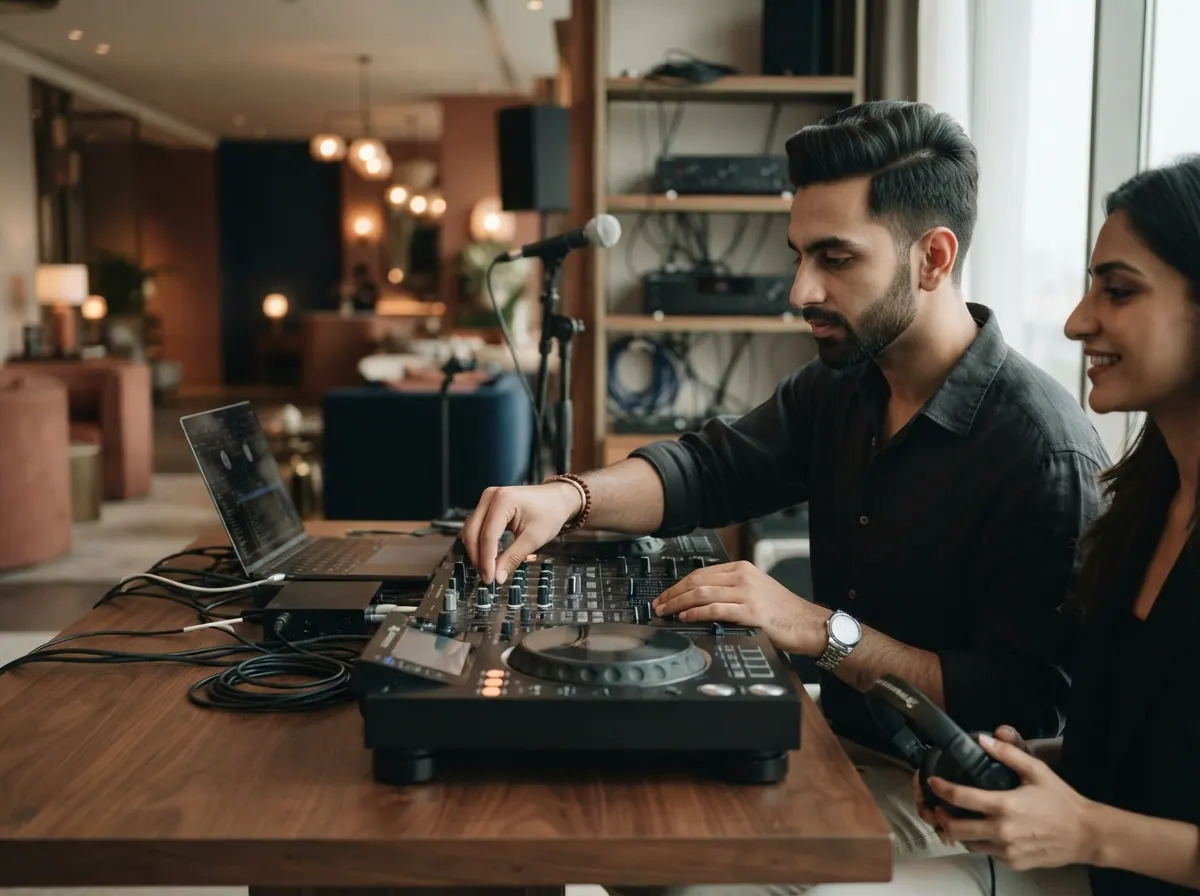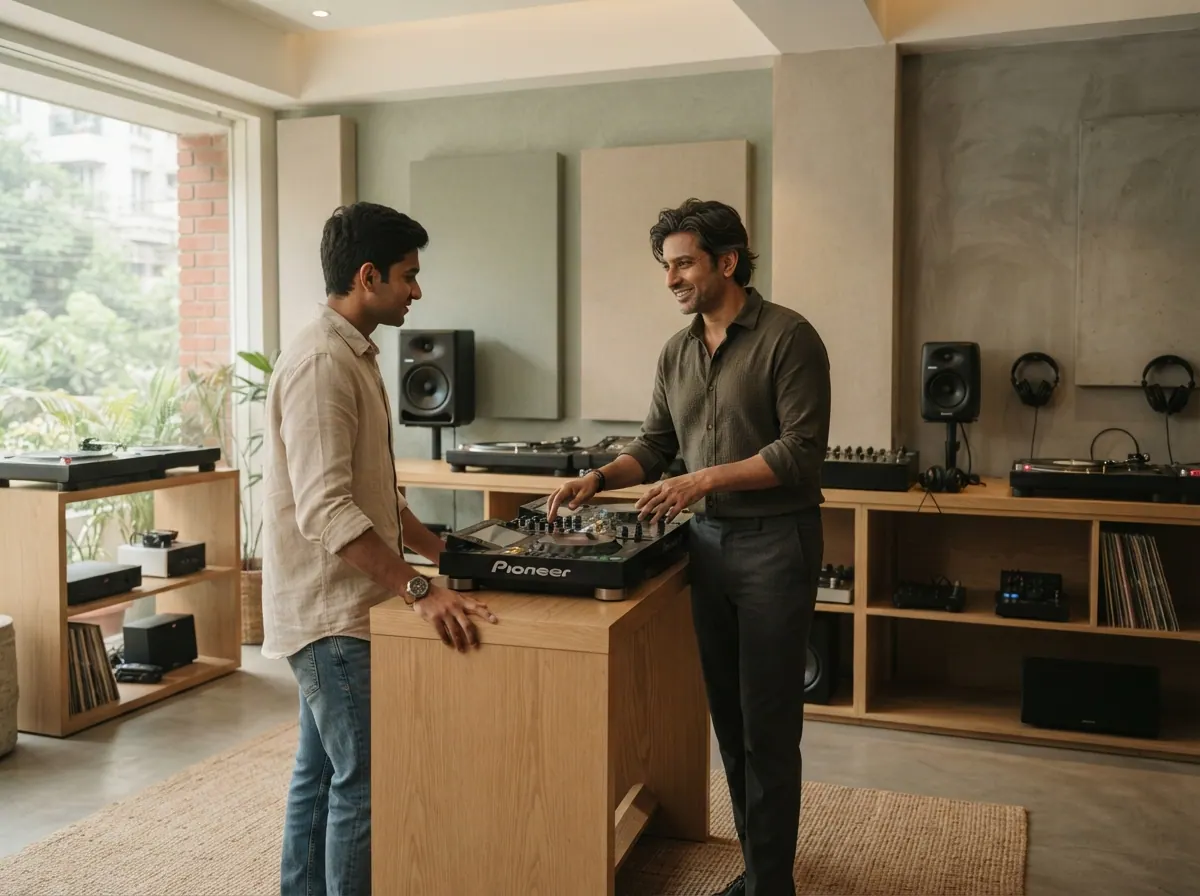
To start a DJ and sound system business in India you need speakers and subwoofers, power amplifiers, a mixer or DJ controller, microphones, lights, cables and cases, a vehicle to carry them, and about ₹2–8 lakh. A small start for birthdays and house parties can begin near ₹2 lakh with second-hand gear. The money comes from the wedding and sangeet season, and the risk is in gear that fails at 11 p.m. on the busiest night of the year.
All figures here are estimates. Check prices near you before you spend.
What does it cost?
| Item | Estimate |
|---|---|
| Top speakers, two to four | ₹40,000–1.5 lakh |
| Subwoofers, two | ₹30,000–1.2 lakh |
| Power amplifiers and a rack | ₹30,000–1 lakh |
| Mixer or DJ controller, laptop | ₹40,000–1.2 lakh |
| Wireless microphones | ₹8,000–30,000 |
| Basic lights, stands and a small truss | ₹30,000–1.2 lakh |
| Cables, extension boards, flight cases | ₹15,000–50,000 |
| Vehicle plan: tempo hire first, or a down payment | ₹10,000–1 lakh |
| Insurance, registration, first marketing | ₹5,000–25,000 |
| Total | about ₹2.1–8.5 lakh |
Do not spend everything on bass. A wedding hall needs clear speech for the announcements and a good sound for the baraat, and bad cables and weak extension boards are the first things to fail.
How much can it earn?
Here is a wedding-season month for a small DJ business that does twelve events (baraat, sangeet, receptions and a few birthdays) averaging about ₹25,000:
Money in
- 12 events × ₹25,000 = ₹3,00,000
Costs
- Two helpers and a lights operator on event days = ₹36,000
- Tempo hire, diesel and tolls = ₹30,000
- Repairs, cables, bulbs and speaker cones = ₹20,000
- Store room rent = ₹10,000
- Instalment on ₹4 lakh of gear = ₹60,000
- Ads, Instagram and sample videos = ₹8,000
- Music subscriptions and licences = ₹6,000
- Total = ₹1,70,000
Left over: ₹3,00,000 − ₹1,70,000 = ₹1,30,000.
Outside the wedding months, four events at ₹15,000 give ₹60,000, but instalment, rent and subscriptions are still about ₹76,000, so you lose money. Keep part of each busy month aside.
What do you need before you start?
- A sound that suits your market. A baraat needs loud, clean bass; a corporate dinner needs low background music. Do not sell the same package to both.
- Music that is organised. A good library by genre and mood, with clean versions for family events, and the habit of reading the crowd, make a DJ rebooked.
- Gear that is tested. Check every speaker, cable and fuse before it goes in the vehicle, and carry spares of the parts that fail.
- A trusted team. At least one helper who can set up quickly and a backup person if you are ill.
- Clear packages. For example: basic (two tops and a mic), standard (plus subwoofers and lights) and premium (plus truss and a second operator).
- A backup plan for power. Know whether the venue has enough supply, and have a generator contact.
Step by step
- Practise at friends' parties and college events while you build a playlist and a few videos.
- Buy the core gear first: speakers, amplifiers, mixer, mics. Add lights as the work grows.
- Make packages and a price list for different event types and group sizes, and decide your overtime rate.
- Sign a simple booking note: date, hours, venue, what you will bring, price, advance and what happens at overtime.
- Visit the venue or ask for photos: power points, setup space, entry for the tempo, and the cut-off time for music.
- Reach early. Set up and sound check at least an hour before guests arrive.
- Respect the family's requests but keep control of the volume. Distortion and feedback make people leave.
- Collect the balance before packing up, and ask the organiser for a short review.
Which licences apply?
- Business registration. Many DJs start as proprietors. Ask a CA what suits you.
- GST once your turnover requires it, or earlier if companies and hotels ask for GST bills.
- Udyam registration is free and can help with equipment loans.
- Loudspeaker permission. The organiser or venue usually needs permission from the local police for loudspeakers, and there are limits on sound levels and night-time use. Rules vary by city, so ask the local police station and the venue.
- Music licences. Playing recorded music in public places is covered by copyright law. Music rights bodies such as PPL and IPRS collect licence fees for this, and venues often have to hold the licence. Ask the venue or organiser who is responsible for it at each event.
- Safety. Use proper wiring and earthing, and keep cables away from walkways.
What goes wrong?
- Gear failing at the peak. A burnt amplifier or a damaged speaker cone at a wedding costs you the reputation of the whole season.
- Overtime fights. Families keep asking for "one more hour" and then argue about the bill. Write the overtime rate before the event.
- Police stopping the music. Past the night cut-off, or without permission, the sound can be stopped in the middle of the baraat.
- Venue power problems. Overloaded boards or weak supply make your system trip, or damage the gear.
- Noise complaints. Heavy bass in a residential area leads to complaints and sometimes to your gear being locked up.
- Damage on the road. Speakers shifting in an open tempo get scratched or cracked. Use cases and straps.
- Late payment. Organisers and planners can take weeks to pay. Take a firm advance.
Situations you will face
What would you do? Each choice costs something.
Getting started
A dealer shows new tops for ₹90,000. A seller has used ones for ₹45,000, tested only for ten minutes.
- Buy the new speakers: Costly, warranty, clean sound
- Buy the used pair: Cheaper, may fail in season
You have ₹60,000 left. Subwoofers will please the baraat crowd. Good wireless mics help wedding announcements.
- Buy two subwoofers: Bass crowd loves it
- Buy mics and a mixer: Clear speeches, less thump
Hiring a tempo costs ₹2,500 per event. A used pickup costs ₹2.5 lakh down payment plus a loan.
- Keep hiring tempos: Pay per job, no loan
- Buy the used pickup: Big spend, own schedule
You need Punjabi, Bollywood, regional and old songs. Paid music pools are costly. Free downloads are poor quality.
- Pay for a music pool: Costs monthly, good files
- Use low-quality files: Cheap, tinny at the venue
Your speakers rattle in the tempo. Flight cases cost money but protect the cones and amplifiers.
- Buy proper cases: Spend now, gear lasts
- Wrap them in blankets: Free, scratches and cracks
A cousin's sangeet needs a DJ for six hours. Others charge ₹25,000. You are new.
- Charge ₹18,000: Win it, thin margin
- Charge ₹25,000: Fair rate, may lose it
Clients want to hear and see you. A videographer will film an evening for ₹10,000 at a friend's party.
- Pay for the video: Looks professional
- Shoot on a phone: Free, shaky and noisy
First month
The baraat will pass a road with no power points. A generator costs money and adds noise.
- Hire a silent generator: Costs ₹4,000, runs smoothly
- Use a battery speaker: Cheap, weak sound
Your booking ends at midnight. The groom's family wants to dance until one and says they will pay later.
- Charge ₹3,000 for the hour: Awkward, you are paid
- Play free to keep them happy: Goodwill, unpaid hour
During the father's speech the mic whistled loudly. Guests covered their ears.
- Buy better mics and a limiter: Spend, fewer problems
- Just keep volume lower: Free, weak announcements
Uncles want old ghazals and youngsters want remixes. The crowd is split and the floor is half empty.
- Mix both in blocks: Hard work, everyone is happy
- Follow the family head: Easy, young guests leave
A speaker cable crackled and went dead during the baraat. You have no spare of that length.
- Buy a spare set of cables: Small cost, safe
- Borrow a proper cable: Small favour, safe fix
Your helper promised to come at 3 p.m. to set up lights, and it is 5 p.m. Guests start at 7.
- Hire a day helper at once: ₹1,500, setup done
- Set up alone: Cheap, tired and rushed
Running it
A wedding lawn party continues past the allowed time. A constable asks you to switch off.
- Switch off and apologise: Lost hour, family upset
- Ask for a short extension: May be refused, no rule broken
The tent leaks over your speakers. Water near the amplifiers is a danger.
- Stop and cover the gear: Pause, protect the set
- Move the gear to dry ground: Costs a tarp and a pause, safe
A new DJ offers a package at ₹15,000 where you charge ₹25,000. Two clients ask you to match.
- Hold your price: Lose a few bookings
- Match with fewer lights: Keeps jobs, thin margin
Sangeet clients now ask for moving head lights and haze. A set costs ₹80,000.
- Buy the light set: Higher rates, big spend
- Rent lights per event: Pay each time, lower margin
A housing society says your subs shook flats during a birthday party. The organiser is embarrassed.
- Apologise and cut the bass: Keeps goodwill
- Defend your set: Argue, risk a police call
A college offers ₹60,000 for a two-day fest, but wants the sound for 2,000 students and a long setup.
- Take it and hire more gear: Big pay, big hire cost
- Decline the big job: Safe, miss the exposure
A company wants a quiet background set and a clean mic for awards. The pay is good but the work is dull.
- Accept and keep it soft: Steady pay, no fans
- Turn it into a dance night: Fun, may upset the boss
Both families want their own dance block, with different songs, and ask for two extra hours.
- Plan two fair blocks: Extra setup, calm families
- Play one mixed set: No extra work, one side upset
A friend with a small system asks to hire your lights for a weeknight event. Your gear is idle that day.
- Rent it with your helper: ₹6,000 income, wear on gear
- Keep it in the store room: No wear, no income
When things go wrong
At 11 p.m. on the busiest night, your main amplifier stops with a burning smell. Half the sound is gone.
- Hire a backup amp now: Costly rush, show saved
- Run with half the system: Free, weak sound
An event planner owes you ₹40,000 for two events and says next week every time.
- Stop working with the planner: Lose a source of leads
- Keep working and wait: Cash tied up
After a late-night wedding, one speaker is not in the tempo. The venue had many outsiders around.
- Replace it and add a checklist: Costly, tighter control
- File a police report, absorb it: Costs the speaker, record kept
A guest spilled a drink on your controller and tried to grab the mic. The laptop kept playing, but the pad is dead.
- Ask the family to pay: Awkward, repair covered
- Absorb the repair: Keeps goodwill, you pay
The banquet's supply cannot take your lights and amps together. The hall owner blames your system.
- Bring your own generator: Cost for the night, smooth show
- Switch off the lights: Dull dance floor
Growing
On wedding dates you turn away calls. A second small system and operator would take those jobs.
- Buy a second small system: Big spend, more jobs
- Refer extra jobs to a friend: Small referral fee
A hotel offers ₹30,000 a weekend for Saturday nights but asks you to leave your gear there and keep to its hours.
- Accept the weekend slot: Steady pay, tied weekends
- Stay with weddings only: Freedom, uneven income
A signage shop offers branded truss covers and a logo screen for ₹35,000. Clients see you at every event.
- Order the branding: Spend, more calls
- Skip it for now: Save money, plain look
Is it right for you?
A DJ business suits you if you love music and crowds, can stay patient with drunk guests and demanding families, and are comfortable carrying and fixing gear at midnight. A good ear and a calm manner matter as much as the equipment.
It suits you less if you want daytime work or steady pay every month. Try this first: do three paid small events with hired or borrowed gear, noting every cost. If you are rebooked and come home with money after paying helpers and transport, then think about buying your own set.