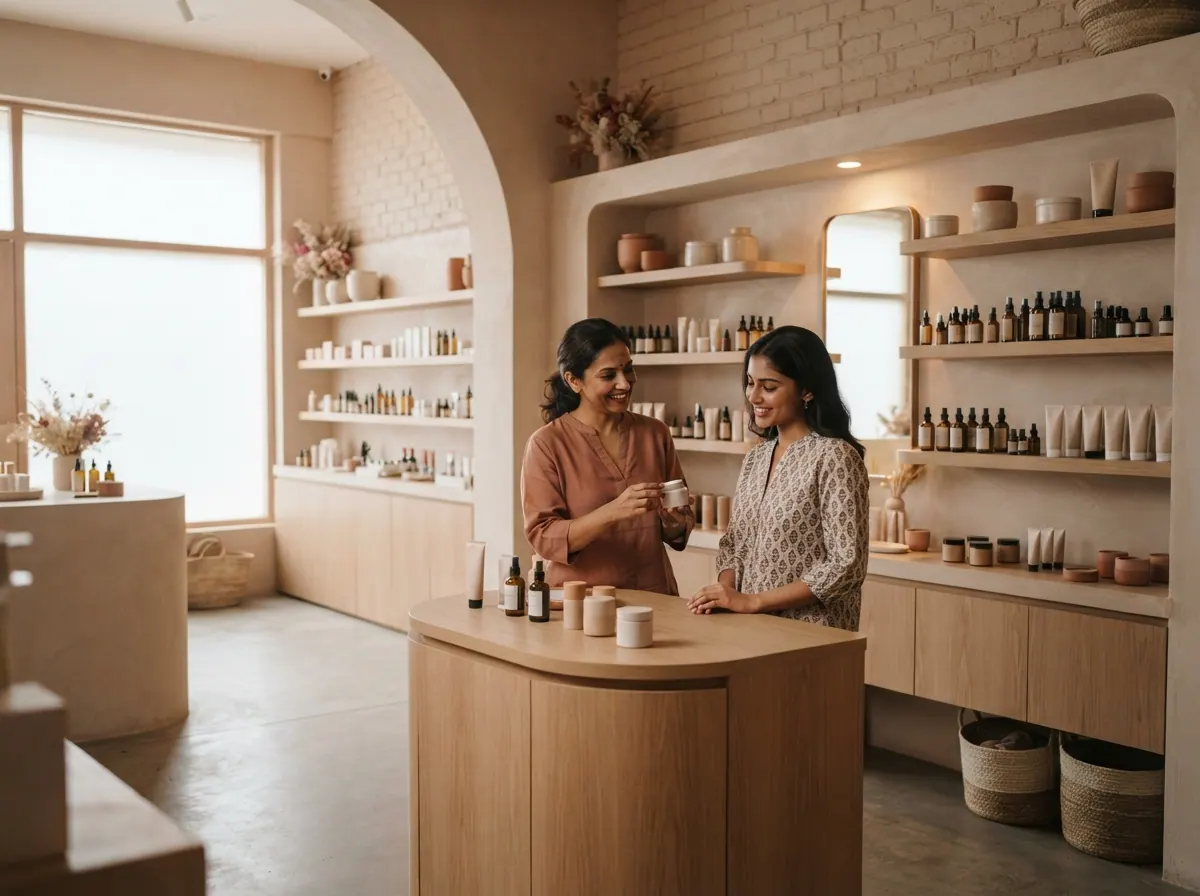
To start a cosmetics shop in India you need a bright counter with a safe, tidy display, stock from authorised distributors with proper bills, and about ₹1.4 lakh for a small shop or ₹6.5 lakh for a well-stocked one. Your real work is not selling lipstick. It is watching expiry dates and keeping fake products off your shelves.
All figures here are estimates. Check prices near you before you spend.
What does it cost?
| Item | Small shop | Larger shop |
|---|---|---|
| Makeup and skincare stock | ₹60,000 | ₹3.5 lakh |
| Hair care, personal care, nail polish | ₹15,000 | ₹80,000 |
| Glass counter, shelves, mirror, lights | ₹30,000 | ₹1.2 lakh |
| Signboard, billing and GST set-up | ₹8,000 | ₹25,000 |
| Rent advance (deposit) | ₹20,000 | ₹80,000 |
| Cash kept for the first months | ₹10,000 | ₹40,000 |
| Total | about ₹1.4 lakh | about ₹6.5 lakh |
The display is more important here than in a hardware shop. A small, clean glass counter with good light makes ₹20 items look worth ₹60. Spend there before you spend on a wide range.
How much can it earn?
Here is a shop doing about ₹2.5 lakh of sales a month. This is an illustration, not a promise.
Gross margin
- Sales: ₹2,50,000
- About 30% blended margin: ₹2,50,000 × 0.30 = ₹75,000
Costs each month
- Rent = ₹15,000
- One helper = ₹10,000
- Electricity and phone = ₹3,000
- Expired, damaged or sample stock = ₹4,000
- Packing, small repairs and misc = ₹3,000
- Total = ₹35,000
Left over: ₹75,000 − ₹35,000 = about ₹40,000 a month.
Expiry is the quiet cost. A slow lot of ₹30,000 can lose half its value if it reaches its date before it sells, which wipes out a month of profit. Buy fast movers often in small lots instead of one big lot.
What do you need before you start?
- A location with women and college traffic. Near a market, a college, a school or a busy residential road works better than a quiet road.
- Authorised distributors. Ask each brand who supplies your area. Insist on a bill.
- Product knowledge. Learn skin types, shade matching and which sunscreen suits oily skin. Customers trust the shop that can answer.
- A way to handle tester products. Plan how you will show colours without spoiling stock.
Step by step
- Visit three shops and note the 30 things that sell daily: kajal, lip balm, face wash, sunscreen, hair oil, shampoo and so on.
- Pick a shop with good light and a clean front. Women shoppers often judge the shop by how it looks.
- Make a display with a glass counter, a mirror and a few open testers for items that are safe to sample, as your distributor advises.
- Open accounts with 2–3 distributors and ask for batch details on every bill.
- Stock fast movers first, and add premium brands only after customers ask.
- Check dates every week. Move older stock to the front and keep a short list of items within three months of expiry.
- Make a WhatsApp number for repeat customers and tell them when new stock arrives.
How do you keep customers coming back?
Cosmetics buyers return when they trust your advice. Keep a small notebook with each regular customer's skin type, shade and the product they use, so you can suggest a refill before it runs out. Offer a sunscreen and moisturiser pair for summer and a lip balm and body lotion pair for winter, since seasonal buying is predictable. Tell every customer to patch test a new cream on a small area first. It costs nothing and it protects both of you if a reaction happens.
Which licences apply?
Confirm each with your local office, since rules vary:
- Shop and establishment registration with the municipality or labour department.
- GST. Needed above the turnover limit, and useful for buying on tax invoices. Ask a CA.
- Selling licences for makeup. Retail selling usually does not need the licence that manufacturers and importers need, but ask your local office if you are unsure.
- Making your own brand. If you ever sell an own-label product, the maker needs the proper manufacturing licence. Check this before you order.
What goes wrong?
- Fake or grey-market stock. Branded creams and lipsticks offered far below distributor price, with no bill, are a trap. Customers who react to a fake blame your shop.
- Expired products. One expired item sold by mistake damages your name quickly.
- Skin reaction complaints. Cosmetics can cause allergies. Have a clear way to handle returns and tell customers to see a doctor when needed.
- Shade returns. Foundation and lipstick shade mistakes are the most common return.
- Online discounts. Customers compare your price with apps. You cannot always match them.
- Heat and sun. Lipsticks melt and creams spoil in a hot shop without cooling.
Situations you will face
What would you do? Each choice costs something.
Getting started
Famous brands pull customers in but give thin margins. Smaller lines give you more per piece but nobody asks for them.
- Stock known brands: Costly, steady footfall
- Stock mostly local lines: Better margin, slow trust
A wholesale lane stocks many brands with small bills. An authorised distributor charges a bit more but gives full batch details.
- Buy from the authorised dealer: Higher cost, clean papers
- Buy a mix, ask batch bills: Lower cost, more checking
A lit glass counter makes lipsticks and serums look special. Plain steel shelves cost far less.
- Build the lit glass counter: Costly, higher-priced look
- Use plain shelves for now: Cheap, plain-looking shop
A shop by the college gate gets teen footfall but wants high rent. A colony shop has quiet, regular buyers.
- Rent near the college: High rent, many students
- Rent in the colony: Lower rent, slower start
Skincare buyers return every month but compare prices. Makeup buyers pay more per item but buy less often.
- Lead with skincare: Repeat buyers, lower margin
- Lead with makeup: Higher margin, slower repeat
Customers want to try colours. Open testers cost money, and shared lipsticks raise hygiene questions.
- Keep disposable applicators: Small spend, safe trying
- Sealed stock only: No tester cost, fewer sales
Rivals nearby run discounts on everything. A small gift on bills over ₹500 would cost about ₹6,000.
- Free gift on ₹500 bills: Costs money, brings crowds
- Open quietly, no offer: Saves money, slow start
First month
A customer says a face cream caused redness and wants a refund. The cream is within date.
- Refund and suggest a doctor: Lose the sale, build trust
- Offer only an exchange: Keeps the money, unhappy buyer
While counting stock you find 40 face wash tubes that reach their date in two months.
- Sell as combo at a discount: Lose margin, clear it
- Mark and move to the front: Keep price, risk waste
A serum trending online is not in your stock. The distributor has a minimum order of 24 pieces.
- Order the 24 pieces: Cash locked, may sell fast
- Skip it, suggest alternatives: No risk, lose some buyers
A customer opened a foundation at home and says the shade is wrong. The seal is broken.
- Exchange it this once: Lose the opened piece
- Refuse, seal is broken: No loss, a sour customer
Customers will look for ready gift sets before Diwali. Packing material and stock cost money.
- Make gift sets with packing: Spend now, higher bills
- Sell items singly: No spend, smaller bills
Lipsticks and kajal packs disappear when the shop is crowded and you are with another customer.
- Add a mirror and a camera: Cost now, fewer losses
- Keep small items behind glass: Free, fewer impulse buys
Running it
Brides and parlour owners buy foundation, kajal and sets in bulk before wedding dates.
- Stock heavily for brides: Big spend, big sales
- Stock a moderate lot: Smaller risk, stock may run out
A beauty parlour owner wants shampoos, wax and face packs worth ₹25,000 and will pay next month.
- Give credit with a limit: Big sale, wait for money
- Ask for half now: Safer, they may go elsewhere
A customer says the cream looks different from the last one. It is from your authorised distributor, with a bill.
- Check the batch with the company: Time and effort, proof
- Insist it is original: Quick, a worried customer
Sunscreens and face washes are cheaper on shopping apps, and buyers now ask you to match them.
- Match on a few top items: Lose margin, keep footfall
- Hold price, offer advice: Keep margin, lose price hunters
A busy beauty parlour will send clients to your shop for 5% back on whatever they buy.
- Agree to the 5%: More clients, lower margin
- Offer them a trade discount: Cheaper, weaker push
Your shop gets afternoon sun. Lipsticks near the window have gone soft, and a cream jar has leaked.
- Install a cooler or AC: Costly, protects stock
- Move stock to the back: Cheap, a hot shop
A company rep offers a full display and sample kits if you stock their new range of skincare.
- Stock the new range: Cash tied, free display
- Decline politely: No spend, no extra push
A local office wants 40 beauty hampers for staff. It means sourcing, packing and a delivery date.
- Accept and pack hampers: Spend first, solid order
- Refer them elsewhere: Skip the work, lose the sale
When things go wrong
A customer returns a cream that passed its date last month. Other shelves may have the same problem.
- Check every shelf today: Lose stock, safe shop
- Check only that brand: Small loss, risk remains
A late payment has made your main distributor ask for cash on every order for three months.
- Pay all dues now: Cash drain, credit returns
- Buy smaller, from two others: Thin stock, slower sales
A trader walks in with famous-brand creams far below dealer price. The trader gives no bill and no batch details.
- Refuse and keep your dealer: Full cost, clean shelves
- Ask for proof and bill first: Time lost, they may vanish
A customer posts a photo of a rash and tags your shop. The rash may or may not come from the product.
- Offer a refund, reply politely: Costs money, calms things
- Ignore the post: No cost, doubts spread
Your helper sells high-margin creams to customers with sensitive skin because they earn commission on them.
- Fix advice rules, train the helper: Time and some sales lost
- Keep the commission as is: More sales, risk of complaints
The shop owner wants ₹4,000 more a month from next quarter. A similar shop nearby is free.
- Pay the higher rent: Keep your customers
- Shift to the nearby shop: Moving cost, lose some regulars
Growing
Hair clips, nail polish and small accessories sell at high margin to the same customers.
- Add the accessories corner: Spend, more per visit
- Stay with beauty products: Focused, smaller baskets
A licensed maker will pack lip balm under your shop name with a minimum order of 500 pieces.
- Order the 500 pieces: Cash locked, higher margin
- Skip the own label: No risk, plain margin
Regulars ask for photos of new stock and want delivery. It needs a phone person and packing.
- Start online orders: Wages and packing, new buyers
- Keep it in-shop only: No spend, no extra reach
Is it right for you?
A cosmetics shop suits you if you like talking to customers, are careful with dates and bills, and can keep a clean, bright shop. It suits you less if you want fast, large profits, because margins are modest and expiry takes a bite.
A good test: spend a week in a similar shop watching how staff match shades and handle returns. If you enjoy that and can say no to a cheap, billless offer, start with the small version and grow into skincare and gifts as your regular customers build up.