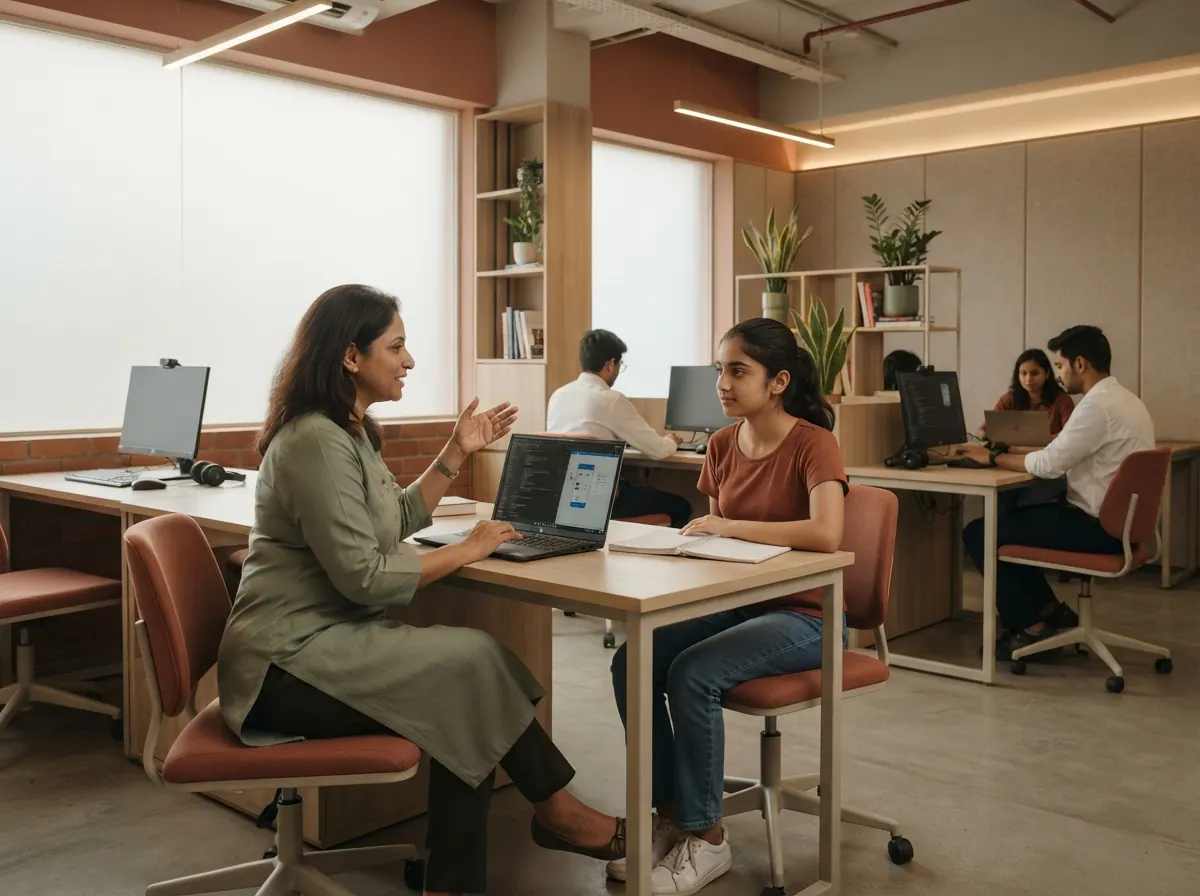
A computer training institute means a rented room with computers, an instructor, and students who pay a monthly or course fee to learn skills such as MS Office, Tally with GST, typing, and basic coding. A small centre costs about ₹2–3 lakh with five seats, and about ₹5–9.5 lakh with ten seats, air conditioning and a projector. The room and computers are easy to buy. Filling the batches, month after month, is the hard part.
All figures here are estimates. Check prices near you before you spend.
What does it cost?
For a ten-seat centre in a small town or the edge of a city:
| Item | Estimate |
|---|---|
| 10 desktop computers, new or good assembled | ₹2.5–3.5 lakh |
| Tables, chairs, fans, lights | ₹50,000–1 lakh |
| UPS and inverter backup | ₹30,000–60,000 |
| Projector, whiteboard, one teacher's computer | ₹30,000–50,000 |
| Software licences and course material | ₹20,000–50,000 |
| Deposit, paint, partition | ₹50,000–1.5 lakh |
| Signboard, pamphlets, first advertising | ₹20,000–40,000 |
| Registrations and papers | ₹10,000–30,000 |
| Three months of rent, power and wages as cushion | ₹60,000–1.2 lakh |
| Total | about ₹5.2–9.5 lakh |
You can start smaller: five seats, one room, and you as the teacher can come to about ₹2–3 lakh. Do not buy ten computers because ten looks like an institute. Add a seat when a waiting list forces you to.
How much can it earn?
Student numbers go up and down with exams and holidays. Assume a monthly fee of ₹1,200 per student, rent ₹12,000 and an instructor at ₹12,000.
A good month (40 students)
- Fees: 40 × ₹1,200 = ₹48,000
- Form filling, printouts and short courses = ₹8,000
- Income: ₹56,000
- Rent ₹12,000 + power ₹5,000 + instructor ₹12,000 + internet ₹1,000 + advertising ₹3,000 + repairs ₹2,000 + paper and ink ₹2,000 = ₹37,000
- Left over: ₹56,000 − ₹37,000 = ₹19,000
A slow month (25 students)
- Fees: 25 × ₹1,200 = ₹30,000, plus ₹6,000 of other work = ₹36,000
- Costs: about ₹35,000
- Left over: about ₹1,000
Over a year (8 good months, 4 slow)
- 8 × ₹19,000 = ₹1,52,000
- 4 × ₹1,000 = ₹4,000
- Total: about ₹1.56 lakh, or about ₹13,000 a month
If you teach yourself, you keep the instructor's ₹12,000 × 12 = ₹1,44,000, so the year comes to about ₹3 lakh. That is your salary, not a profit on top of it. The centre pays properly only when you hold 50 or more students a month, or when you add services that sell all year, such as online form filling and exam-form help.
What do you need before you start?
- A skill you can teach. Students can tell within one class whether you know Tally or just have the software.
- A room within walking distance of a college, coaching lane or school. Most students are teenagers who will not travel far for a ₹1,200 class.
- A reliable power supply. Cuts in the middle of a typing test lose students for good.
- Original software. A centre that teaches on pirated copies is one complaint from trouble.
- A list of 30 or more names of people who say they would join, before you pay the deposit.
Step by step
- Choose two or three courses, not twelve. Basic computer, Tally with GST and typing is enough to open with.
- Decide on a brand. A franchise gives a name and a certificate. Your own name keeps the full fee. Whichever you choose, ask where the certificate is accepted.
- Rent a room on the first or second floor near the students, with a lease that allows a training use.
- Buy computers in stages, starting with five to six seats.
- Fix fees by course, with a small registration fee and monthly payments, so a student can pay in parts.
- Run a free demo class and take names. Three small batches for different timings fill more seats than one big batch.
- Keep a register of each student's fee, attendance and test marks. Parents ask for this.
- Plan for the holiday rush. Summer break is when school children join, so be ready with a short course.
Which licences and papers apply?
- Shop and establishment registration or trade licence from your local municipal body.
- GST only if your income crosses the limit. Ask a CA, since the rules change.
- Udyam registration is optional but useful for bank loans.
- Affiliation or a training partner role with a government skills scheme or a computer education body is possible for some centres. Ask the local office or the body directly, and check that the certificate is genuine before telling students about it.
- Software licences for every program you teach on.
What goes wrong?
- The instructor leaves mid-course and takes the students' trust along with them.
- A free video or a cheaper centre pulls away students who only wanted a certificate.
- Viruses from pen drives make half your computers slow in one week.
- A certificate nobody accepts. A student shows it to an employer, the employer shrugs, and the student tells ten friends.
- Fees that stop in month three. Students drop off when the novelty ends, and a half-empty batch still has to pay for rent.
- Power surges burn motherboards when you have no UPS and proper earthing.
- Owning too many seats. Ten idle computers wear out faster than ten busy ones.
Situations you will face
What would you do? Each choice costs something.
Getting started
Ten seats look like a real institute. Five seats cost half as much, but a full batch will have to wait outside.
- Buy ten computers: Big spend, room for more students
- Start with five: Saves money, turns some away
Branded machines come with a warranty and cost more. A local assembler offers the same speed for much less, with no big name behind it.
- Buy branded machines: Higher cost, warranty and service
- Buy assembled ones: Cheaper, repairs come from you
Tally with GST is wanted by commerce students. Coding looks modern, but few people nearby have asked for it.
- Tally, typing, basic Office: Steady students, plain image
- Coding and web design: Fancier, fewer joiners at first
A franchise brand offers a known name and certificate for a fee. Your own name costs nothing, but nobody knows it yet.
- Join the franchise: Fee paid, brand helps admissions
- Use your own name: Keep all fees, slower start
A room opposite the college gate costs ₹6,000 a month more. A room two lanes away is cheap, and students must walk further.
- Take the room by the gate: Higher rent, more walk-ins
- Take the cheaper lane: Lower rent, fewer walk-ins
Office and Tally licences cost money. Free office software works well, but employers ask for the paid tools.
- Buy the licences: Big bill, papers in order
- Teach on free software: Saves money, weaker course
Lights go out twice a day for an hour. An inverter for ten computers is costly, and students are already complaining.
- Buy an inverter system: Costly, classes run on
- Shift timings around cuts: Saves money, awkward batches
First month
Half fee for the first month would fill the first batch. Some of those students will leave when the full fee starts.
- Offer half fee: Full batch, low money now
- Offer a free demo class: Cheaper, a smaller batch
Many parents cannot pay a course fee at once. Monthly payments are easy for them, but some will stop paying midway.
- Allow monthly payments: More joiners, chasing dues
- Ask the full fee first: Money safe, fewer joiners
Two batches overlap each evening. A part-time teacher costs ₹8,000 a month, and you cannot be in two rooms.
- Hire a part-time teacher: Monthly wage, more batches
- Teach every batch yourself: No wage, tired and limited
A student wants a six-month certificate after three weeks, for a job form. They will pay extra for a rushed course.
- Say no, offer a short course: Honest, small fee, may lose them
- Sell a rushed fast-track batch: Quick cash, shallow learning
A helper at the college offers to send students if you pay ₹200 for each one who joins.
- Agree to the commission: More joiners, lower fee kept
- Put up your own notices: Slower, you keep the fee
Four computers are slow and pop-ups appear. Students bring their own pen drives to every class.
- Install antivirus, scan drives: Cost and effort, steady lab
- Reformat when it happens: Cheap now, lost class time
Running it
Young people preparing for government job tests want a typing batch. It needs several machines for one slot each day.
- Open a typing batch: Steady fee, machines tied up
- Skip it: No change, miss the crowd
People keep asking you to fill exam and job forms and print papers. It pays small amounts all year, but it eats your hours.
- Start a form-filling desk: Small money daily, less teaching time
- Stay with teaching only: Focus, no extra income
School children have two free months. A short course could fill idle seats, but needs new material and some games.
- Run a 30-day kids course: Cost to prepare, seats filled
- Keep regular batches: No cost, empty seats
Local traders want Tally with GST for their staff on Sundays. They pay more than students, but need an expert teacher.
- Start a trader batch: Higher fee, need to learn more
- Turn it down: No effort, lose this income
Some students leave, saying they will learn from free videos. A new centre also cut its fee by ₹300.
- Match the lower fee: Keep students, thinner margin
- Add tests and practice hours: Costs effort, better results
Many of your students want it too. You would need a teacher, and the same room would host two kinds of classes.
- Add the class: Teacher cost, new fee income
- Stay with computers: Simple, miss the demand
Computers hang in the heat, and students leave early. An air conditioner raises power bills a lot.
- Fit an air conditioner: Big cost, comfortable lab
- Add coolers and fans: Cheaper, still warm
Half the batch stops coming once the basics are done. Others say the lessons are too slow.
- Rework the schedule: Costs effort, keeps students
- Let them go: No work, empty seats
When things go wrong
Your main teacher left for a rival centre with two batches half done. Parents are asking what happens next.
- Teach it yourself, at once: Tiring, parents reassured
- Hire a quick replacement: Higher pay, unknown quality
A storm hit the line and three machines will not start. Your earthing was never checked.
- Repair, fix earthing, add surge guards: Costly now, safer later
- Patch the machines only: Cheaper, risk remains
A former student says a company did not accept your certificate and wants the fee back.
- Refund and offer a recognised exam: Lose money, protect your name
- Refuse the refund: Keep the fee, student tells others
Your landlord asks for ₹3,000 more a month, saying other shops nearby pay it. Moving the lab would take a week.
- Pay the higher rent: Stay put, thinner margin
- Move to a cheaper room: Lose a week, some students
Eleven students have not paid for two months, and some still attend. Their parents say money is short.
- Stop classes until they pay: Collect some, upset parents
- Give a small discount to settle: Part money, goodwill kept
Growing
Evening batches are full. Another room could double your seats, while extra batch timings use what you have.
- Rent a second room: Big spend, double the seats
- Add morning and late batches: Small cost, longer days
People in nearby villages cannot travel to you. Online classes reach them, but need a camera, a good net line and new habits.
- Start online batches: Setup cost, reach beyond town
- Keep classes in person: Simple, limited reach
A private school offers a monthly sum to run its computer period. Your teacher would travel, and your own batches would lose hours.
- Take the school contract: Steady income, stretched staff
- Stay with your centre: Focus here, no extra money
A government skills programme might give you trainees, but needs forms, a lab inspection and extra records for months.
- Apply and set up records: Fees and paperwork, steady trainees
- Stay private: Less paperwork, no new source
Is it right for you?
This suits you if you can teach patiently, like young people, know your neighbourhood and can sell your course by talking to parents. It is better still if you hold a small certificate or years of real work in accounts, design or coding.
It suits you less if you want income that needs no daily presence, because the batch depends on you in the room. Before you buy a single computer, sit in the back of two nearby centres for a week and write down how many students arrive, what they pay and why they leave.