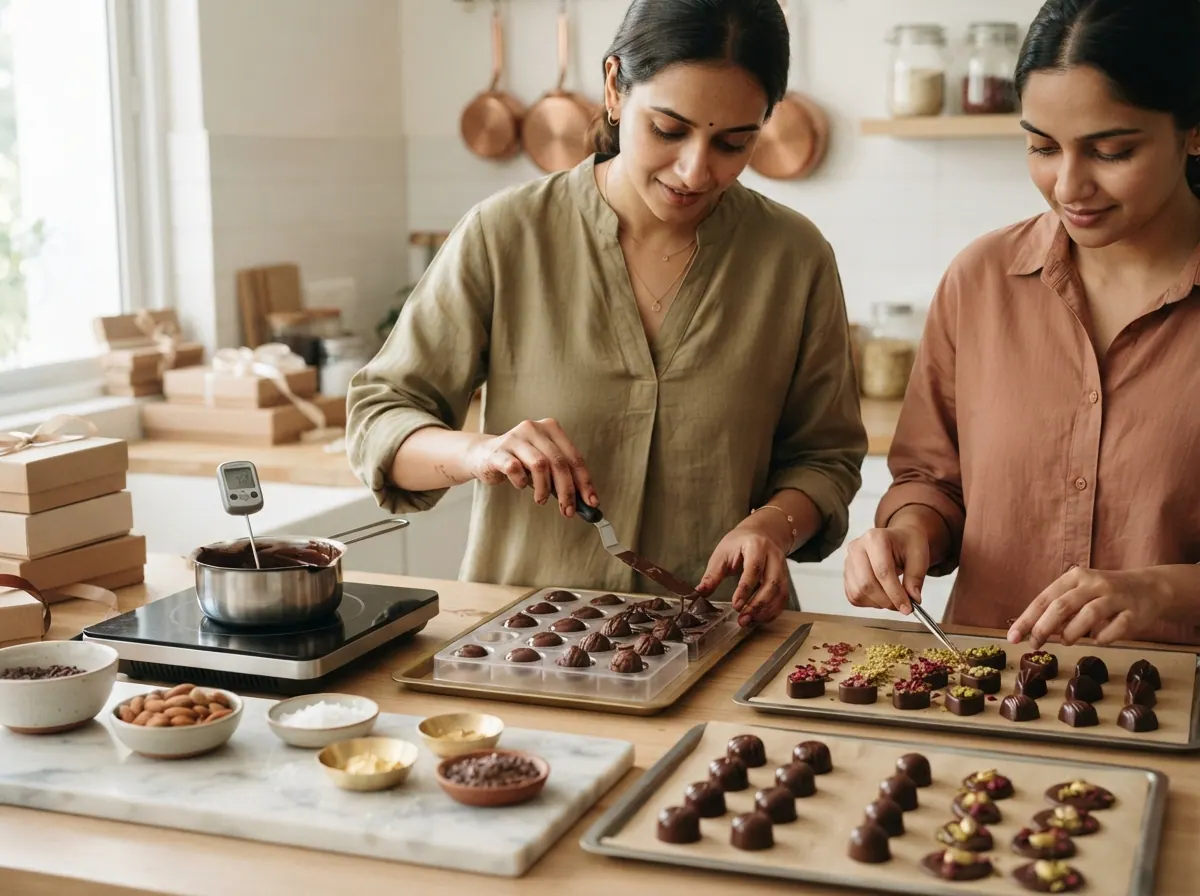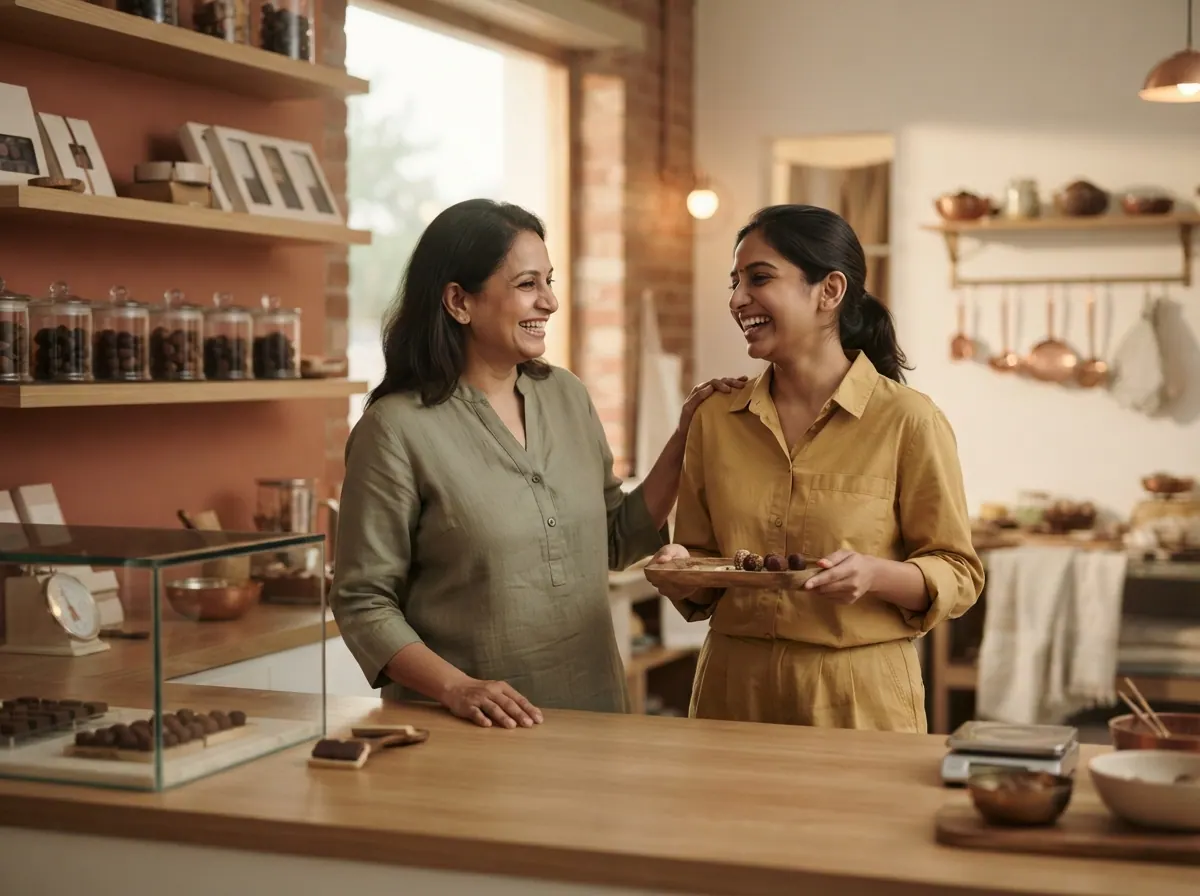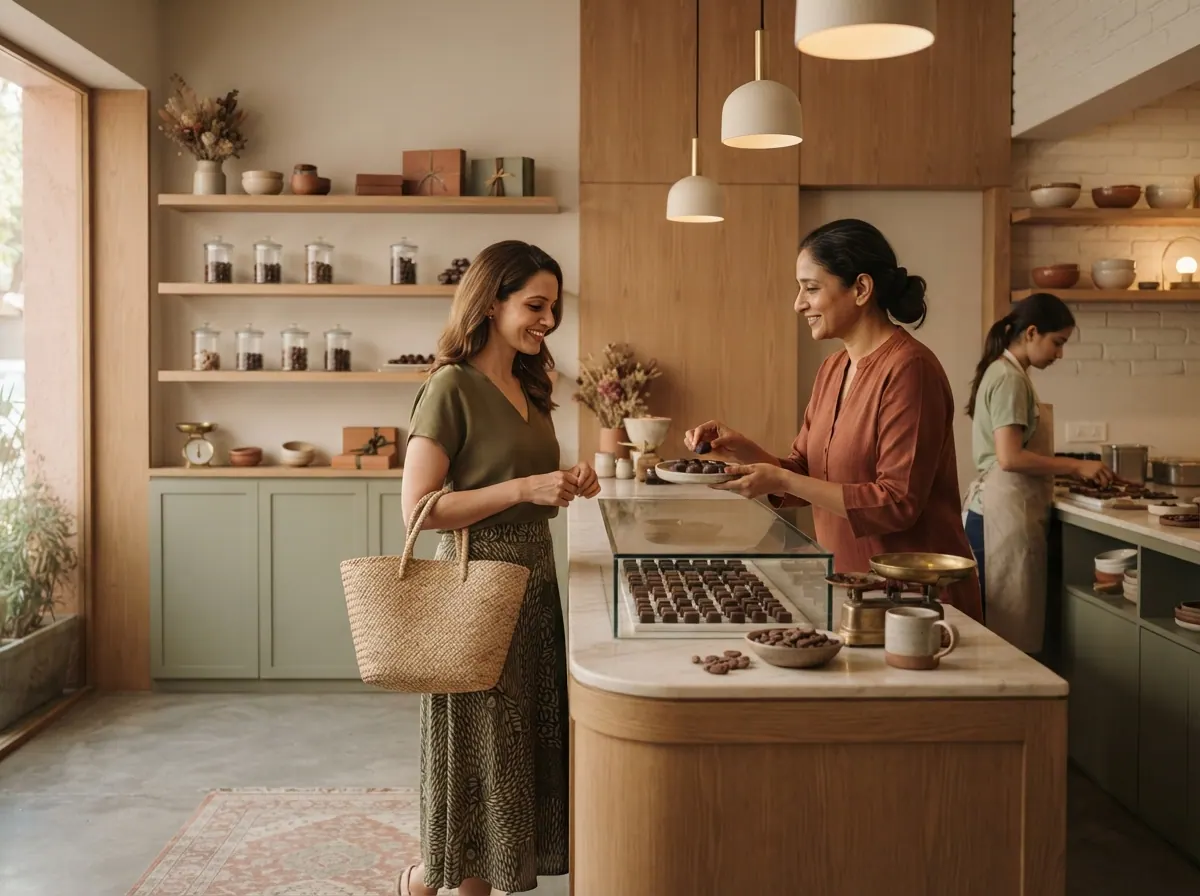
To start a homemade chocolate business in India you need a cool room, good chocolate, moulds, a way to temper or melt it safely, attractive boxes, an FSSAI registration, and about ₹20,000–60,000 to start from home or up to about ₹2 lakh with a fridge and a tempering machine. The product is easy to love and hard to keep in summer, and most money is made on festival gift boxes and orders from companies.
All figures here are estimates. Check prices near you before you spend.
What does it cost?
| Item | Home start | Small studio |
|---|---|---|
| Couverture or compound chocolate, first lot | ₹6,000–15,000 | ₹25,000–50,000 |
| Moulds and silicone trays | ₹3,000–8,000 | ₹10,000–25,000 |
| Melter or tempering machine | ₹3,000–12,000 | ₹30,000–60,000 |
| Refrigerator or chiller | ₹0–15,000 | ₹20,000–35,000 |
| Fillings: nuts, caramel, dry fruit, cream | ₹2,000–5,000 | ₹8,000–15,000 |
| Boxes, wrappers, ribbons | ₹3,000–7,000 | ₹10,000–20,000 |
| FSSAI and labels | ₹2,000–4,000 | ₹4,000–10,000 |
| Photos, Instagram page, samples | ₹1,000–3,000 | ₹5,000–12,000 |
| Total | about ₹20,000–60,000 | about ₹1.2–2 lakh |
Chocolate is the big cost, and wastage is also expensive. A batch that melts or blooms is lost money.
Couverture or compound?
- Couverture: real cocoa butter, shiny and smooth, melts in the mouth. It needs tempering, which means heating and cooling to exact temperatures. It costs more, and customers who know chocolate pay for it.
- Compound: easier to melt and mould, cheaper, and good for kids' chocolates and large orders. It does not taste the same, and you should say clearly on the label which one you used.
Many home makers start with compound to learn, then move to couverture for gift boxes.
How much can it earn?
Here is a small home-based studio selling 300 gift boxes a month at about ₹300 each, mixed between direct buyers, a cafe and small shops.
Sales
- 300 boxes × ₹300 = ₹90,000
Costs each month
- Chocolate: 45 kg × ₹600 = ₹27,000
- Fillings, nuts and cream: ₹6,000
- Boxes and wrappers, 300 × ₹35: ₹10,500
- Courier, ice packs and delivery: ₹6,000
- One helper: ₹9,000
- Power and cooling: ₹4,000
- Marketing and small items: ₹5,000
- Total = ₹67,500
Left over: ₹90,000 − ₹67,500 = about ₹22,500 a month.
Sales are uneven: Diwali and Rakhi may bring three or four times a normal month, and summer may bring a fraction. Spread the money over the year and keep some back.
What do you need before you start?
- A cool, clean room. Ideally an air conditioner, because even a warm kitchen ruins shine and snap.
- Practice with temperature. Buy a thermometer and make the same bar twenty times before selling.
- A story and a look. Chocolate is a gift, so your box and photos matter more than in most food trades.
- A delivery plan for summer, or a plan not to deliver in the hottest weeks.
Step by step
- Learn tempering from a short course or an experienced maker, and practise on compound first.
- Decide your range: 6 to 8 flavours, a few bars and one or two gift boxes.
- Apply for FSSAI and ask what the label must show, including allergens such as nuts and milk.
- Test shelf life by keeping samples in your boxes in normal room temperature for a few weeks.
- Price with all costs included, boxes, ribbons and delivery as well as chocolate.
- Take pre-orders for festivals, at least two or three weeks ahead, so you buy only what you need.
- Approach cafes, gift shops and offices with a sample box and a clear price list.
Which licences apply?
- FSSAI registration or licence for the food you sell. Which one depends on your size.
- Udyam registration can help with bank loans and schemes. Check with the office.
- GST as your turnover grows. Ask a CA.
- Labelling rules for packed food, including allergen details. Confirm with the licensing office before printing.
- Local permission if you operate from a rented place.
What goes wrong?
- Melting in transit. Summer couriers and delivery boys can spoil a whole box before it is opened.
- White streaks (bloom) from poor tempering or changes in temperature.
- Allergies. Nuts and milk can hurt customers, so labelling and keeping tools separate matter.
- Underpricing a gift box and forgetting packaging, ribbons and delivery.
- Festival overload. Taking more orders than you can make in the last week before Diwali.
- Cheap chocolate sold as premium. Buyers can taste the difference, and some will tell others.
Situations you will face
What would you do? Each choice costs something.
Getting started
Couverture tastes better but costs much more and needs tempering. Compound is forgiving and cheap.
- Buy couverture: Dearer, better taste
- Start with compound: Cheaper, plainer taste
A small tempering machine gives steady shine. A thermometer and a bowl cost a tenth, but need practice.
- Buy the tempering machine: Costly, steady shine
- Temper by hand: Cheap, many failed batches
At 33 degrees the chocolate will not set properly. An air conditioner is a big cost for a home maker.
- Buy a second-hand AC: Costly, work in any season
- Work only at night: No cost, long tired hours
Polycarbonate moulds give glossy shells but cost a lot. Silicone ones are cheap but the shine is dull.
- Buy polycarbonate moulds: Costly, glossy finish
- Use silicone moulds: Cheaper, plainer finish
Your first posts have drawn orders from friends of friends. FSSAI registration takes some weeks.
- Register first, take pre-orders later: Fee and wait, safe start
- Post photos, take names only: Builds a list, no sales yet
A printed box makes chocolates look like a gift, but you must order 500. Plain boxes with a ribbon are cheap.
- Order 500 printed boxes: High minimum, strong look
- Use plain boxes with ribbon: Cheap, plain look
First month
Forty bars show white bloom a day after setting. The room warmed up while they cooled.
- Remelt and redo them: Costs time and cocoa butter
- Sell them as seconds, cheap: Some money, trust dips
A parent wants chocolates for a child with a nut allergy. You make nut chocolates with the same tools.
- Decline and say why: Lose the order, honest
- Buy separate tools, then accept: Cost now, safer work
A customer in another city sends a photo of runny chocolate. The box sat in a hot van for a day.
- Refund and resend with ice pack: Costly, a loyal buyer
- Refund and stop outstation: Cheaper, smaller reach
A local cafe wants 5 kg of chocolate shards a week at a low price for their brownies.
- Supply at their price: Steady volume, thin margin
- Quote a higher price: Better margin, may lose them
Running it
A family wants small chocolate favours with a custom wrap in two weeks. It needs overtime and a lot of wrappers.
- Accept, hire two helpers: Rush cost, good profit
- Accept only 200: Easier, smaller profit
Three offices want gift boxes with their logo for Diwali. Each needs a custom sleeve and a bulk invoice.
- Take all three orders: Big sales, heavy overtime
- Take one, refer the rest: Calmer, less money
Your couverture supplier raises the rate sharply. Your boxes are priced and listed with shops.
- Raise prices a little: Margin holds, some buyers drop
- Hold price and absorb it: Buyers stay, margin thin
Customers still want delivery, but every courier trip risks melting. Insulated boxes add a lot to each parcel.
- Use insulated boxes and ice: Costly, deliveries safe
- Pause outstation orders: No risk, lose sales
A florist offers a tie-up: your chocolates in their hampers, with a share of each sale to them.
- Do the tie-up: More sales, shared margin
- Sell your own hampers: Better margin, more work
Mothers ask for cartoon-shaped chocolates in small bags. Character moulds can bring copyright trouble.
- Offer plain animal shapes: Safer, plainer look
- Buy licensed character moulds: Costly, popular and safe
Sisters ask for chocolate hampers with rakhis. Orders come in the last week, and courier slots fill fast.
- Take pre-orders only: Steady work, fewer sales
- Accept all late orders: More sales, rushed work
When things go wrong
The fridge warmed up and 20 kg of filled chocolates are soft and bent out of shape.
- Remake the whole lot: Costly, perfect for customers
- Buy an inverter: Big cost, safe next time
A batch of cream-filled chocolates smells sour after a week. A few were already delivered to a shop.
- Recall them and refund: Costly, trust kept
- Warn buyers and refund: Costly, honest warning
A local sweet shop sells chocolates in boxes close to your design at a lower price.
- Redesign your box: Design cost, stand apart
- Cut price on your range: Keeps buyers, thin margin
A company took 150 boxes and says accounts will pay next quarter. You bought chocolate on credit for it.
- Press for payment, pause orders: Safe, may lose the client
- Wait and keep supplying: More at risk, client stays
A helper who learned your fillings starts selling similar chocolates from home.
- Launch a new signature flavour: Costs trials, stay ahead
- Let it go, focus on service: No cost, some buyers leave
Growing
Neighbours ask you to teach chocolate making. Classes bring cash but take away production time.
- Start paid weekend classes: Extra income, less making time
- Keep making only: No extra, steady output
A company's HR wants a catalogue and sample boxes for their annual gifting. Samples cost a lot to make.
- Prepare catalogue and samples: Cost now, bigger orders
- Quote from WhatsApp photos: Cheap, less convincing
Orders have outgrown your kitchen. A small shop-front is available with room for a counter and a work area.
- Rent the shop, fit AC: Rent and setup, higher output
- Stay home, rent a fridge: Cheaper, slower growth
Buyers want sugar-free and dark options. They need different ingredients and extra testing.
- Develop a dark, low-sugar line: Test costs, new buyers
- Stay with your milk range: No cost, narrower market
A gifting site offers to list your boxes. They take a commission and want specific packaging.
- List with new packaging: Packaging cost, wider reach
- Keep Instagram and WhatsApp: No fee, slower growth
A premium store will stock your bars if you can show a tested shelf life.
- Pay for a lab test: Costly, larger shelves
- Skip and sell directly: No fee, smaller reach
Last year you ran out of boxes in the final week. Buying early ties up cash for months.
- Order boxes and chocolate early: Cash tied up, no stock-out
- Order closer to the date: Cash free, risk of shortages
A supplier offers to teach you to make chocolate from cocoa beans. The grinder and winnower cost a lot and the learning is long.
- Invest in a small grinder: Big cost, a unique product
- Keep buying couverture: Predictable, no risk
Is it right for you?
Chocolate suits you if you like careful, detailed work, can handle heat and temperature control, and enjoy design and selling gifts. It suits you less if you want steady daily income, since your biggest weeks come around festivals.
A simple test: make and sell 30 gift boxes to friends and offices for one festival, and track how many you finished on time. If you enjoyed it and the numbers work, register and continue.
Before you print a price list, make one box the way a customer would receive it: packed, wrapped, carried in a bag and left in a warm car for an hour. If it still looks good, you know your packing works. If not, fix the box and ice pack first, because that is cheaper than refunds.