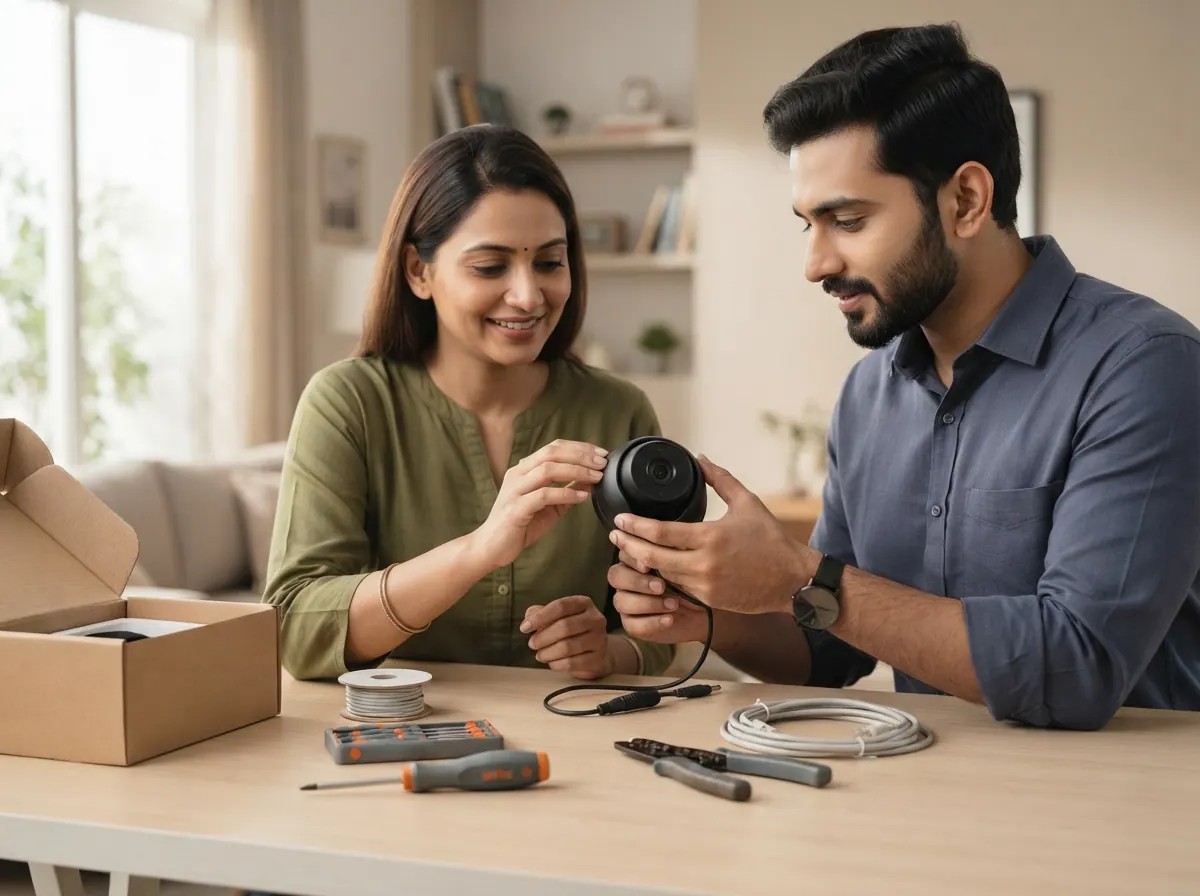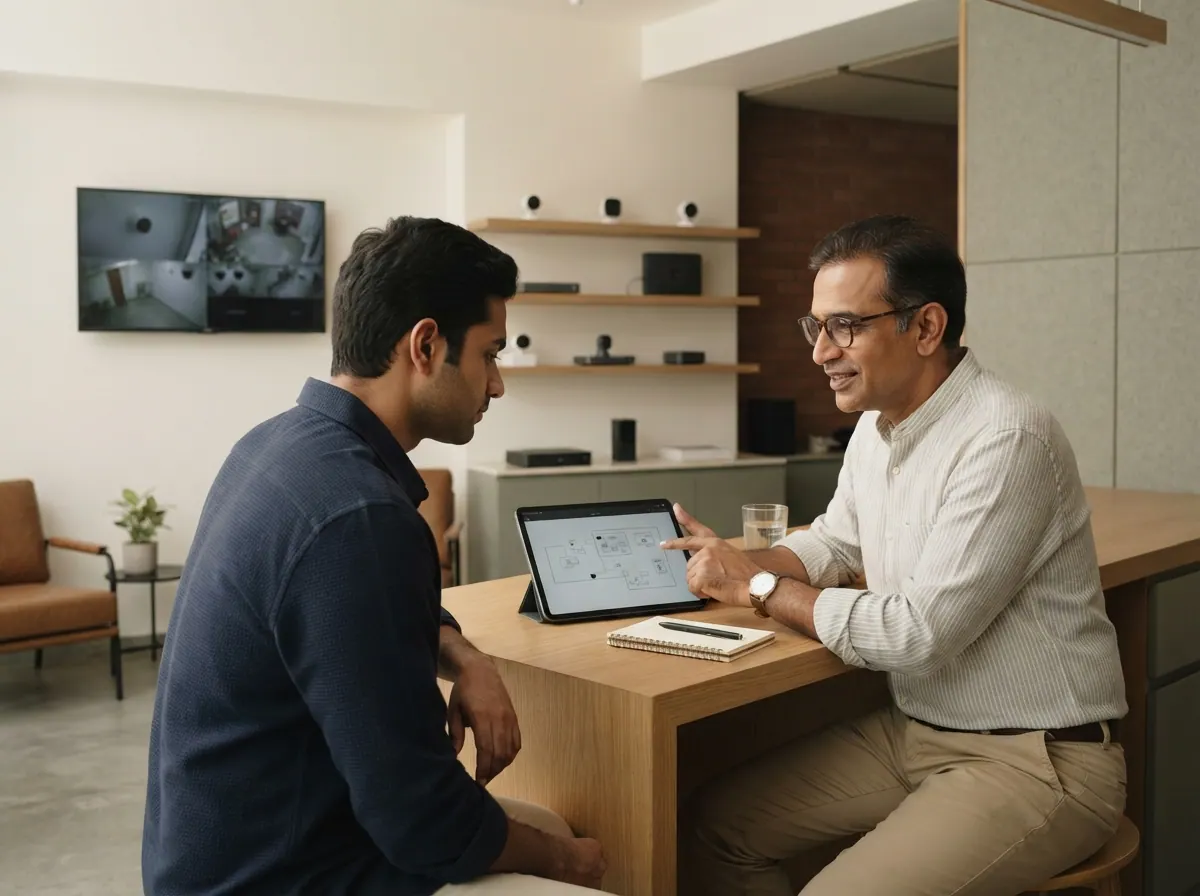
To start a CCTV installation business in India you need basic tools, a small demo kit, a dealer who will give you cameras on fair terms, and about ₹50,000 to ₹3 lakh. The lower end is a one-person installer working from home. The higher end is a small shop with stock and a helper. The money is made in two places: the margin on each job, and the yearly maintenance contracts that keep customers with you.
All figures here are estimates. Check prices near you before you spend.
What does it cost?
| Item | Installer from home | Small shop with stock |
|---|---|---|
| Tools: drill, ladder, crimper, LAN tester, multimeter | ₹15,000–25,000 | ₹25,000–40,000 |
| Demo kit: 2 cameras, DVR, small monitor | ₹10,000–20,000 | ₹20,000–35,000 |
| Stock of cameras, DVRs, hard disks, cable | ₹10,000–30,000 | ₹70,000–1.5 lakh |
| Shop deposit and basic fit-out | None | ₹30,000–60,000 |
| Visiting cards, phone, local promotion | ₹3,000–8,000 | ₹8,000–15,000 |
| Working capital for the first months | ₹15,000–30,000 | ₹30,000–60,000 |
| Total | about ₹50,000–1.1 lakh | about ₹1.8–3 lakh |
Most beginners do better starting from home, buying material from a distributor only when an order is confirmed. Stock that sits on a shelf goes out of date quickly, as new models arrive.
What kind of system will you sell?
- Analog HD cameras with a DVR. The usual choice for a small shop or home. Cheaper, and simple to repair.
- IP cameras with an NVR. Clearer pictures and easier to expand, but costlier, and they need good network cable and often a PoE switch.
- Wireless or app-based cameras. Popular for homes, but your customer must have a stable internet connection.
For every job, the parts that matter are the surveillance-grade hard disk, a proper power supply and good cable. Customers see only the camera, but complaints usually come from the disk or the power.
How much can it earn?
Take a fairly settled one-man business with a helper, doing small 4-camera jobs and some maintenance.
Margin from installations
- Customer pays about ₹22,000 for a 4-camera set with installation
- Your cost: cameras ₹7,200 + DVR ₹3,000 + hard disk ₹3,200 + cable, power and fittings ₹2,500 = ₹15,900
- Margin per job: ₹22,000 − ₹15,900 = about ₹6,100
- 10 jobs in a month × ₹6,100 = ₹61,000
Other income
- 30 AMC customers × ₹3,000 a year = ₹90,000 a year, or ₹7,500 a month
- 6 paid service calls × ₹500 = ₹3,000
- Total income = ₹61,000 + ₹7,500 + ₹3,000 = ₹71,500
Monthly costs
- Helper = ₹10,000
- Fuel and transport = ₹4,000
- Phone, promotion = ₹3,000
- Small office or godown rent = ₹6,000
- Replacing faulty parts under warranty = ₹3,000
- Total = ₹26,000
Left over: ₹71,500 − ₹26,000 = about ₹45,500 a month.
Getting to 10 jobs a month usually takes many months of site visits, quotes and referrals. In early months, 3 or 4 jobs is more common, and then the same costs eat much more of what you earn.
What do you need before you start?
- A distributor. Meet two or three, compare prices and warranty terms, and ask how a faulty camera is replaced and how long it takes.
- A way to learn. Work with an installer for a few weeks, or take a short course from a distributor. You must be able to set up remote viewing on a phone.
- A bike or small vehicle and a ladder you can carry.
- Samples to show. A working demo, with live view on your phone, sells better than any brochure.
Step by step
- Learn the basics: cable laying, connectors, power, DVR setup and mobile viewing.
- Register your business and open a current account. Ask a CA about GST.
- Create a rate card: price per camera, per metre of extra cable, and per visit.
- Start with people you know: shops, clinics, small offices, and apartments.
- Visit the site before you quote. Check camera positions, cable path and power points.
- Give a clear bill with warranty terms and the name of the brand.
- Offer a yearly maintenance contract at handover, and note the renewal date.
Which licences apply?
- Business registration and GST if your turnover needs it. Ask a CA.
- Shop or trade registration from your local body, if you open a shop.
- Privacy and placement. Cameras inside private spaces such as changing rooms or toilets are a legal and moral problem. Housing societies often have their own rules too. Ask your local police station or a lawyer if you are unsure.
- Government or large contracts may have extra requirements. Confirm with the department concerned.
What goes wrong?
- A cheap hard disk. A normal desktop disk fails early in a DVR that records all day. Use a disk made for surveillance.
- Poor camera position. A camera pointed at the sun or too high up records only dark shapes.
- No power backup. When the power goes, the DVR stops. A small UPS saves the footage and the DVR.
- Customer forgets the password. You then get called at night. Write the login clearly in the handover and reset it with the owner.
- Selling the cheapest set to win the job. It breaks in monsoon, and the customer blames you.
- No follow up. Customers who never hear from you after the sale rarely call you again.
Situations you will face
What would you do? Each choice costs something.
Getting started
One distributor is cheaper but replaces faulty cameras slowly. Another charges more and swaps them within days.
- Buy from the cheaper one: Lower cost, slow replacements
- Pay more for fast swaps: Higher cost, happier customers
You can learn by helping an installer or pay for a distributor's training in IP cameras and NVR setup.
- Pay for the training: Fee now, fewer site mistakes
- Help an installer unpaid: Free, but takes weeks
Shop owners ask to see how it looks on a phone. A working demo kit costs money you have not earned yet.
- Build a live demo kit: Costly, wins more orders
- Show brochure and videos: Cheap, buyers stay unsure
A strong hammer drill drills concrete without trouble. A cheap one overheats on the second wall.
- Buy the good drill: Costly, jobs finish on time
- Buy the cheap drill: Saves money, slower and risky
The distributor offers a discount if you buy 20 cameras. You have no orders yet.
- Buy 20 cameras now: Better rate, cash is tied up
- Order only per job: Cash safe, slower to deliver
A clinic and a small company want a proper tax bill. You have not registered yet.
- Register with a CA: Fee now, bigger clients
- Keep serving cash buyers: No fee, lose some clients
First month
A cloth shop owner has a quote from someone else that is much lower. You know the parts in it are weak.
- Hold your price, explain parts: May lose the job
- Match with cheaper parts: Win a thin job, risk faults
Your first job needs 20 metres more cable than you quoted. The customer says the price was fixed.
- Absorb the extra cable: Lose margin, build trust
- Ask for the extra cost: Fair, but customer is unhappy
A cheaper normal hard disk is on your shelf. Surveillance disks cost more and last longer in constant recording.
- Fit a surveillance disk: Costs more per job
- Fit the cheap disk: Saves money, likely to fail
The shop's door is the best view, but afternoon sun washes out the picture. Moving the camera means drilling again.
- Move it and re-drill: Free fix, lost half a day
- Leave it as it is: Quick, footage useless at noon
The owner wants the password to be 1234 so staff remember it. You know anyone can then watch the feed.
- Set a strong password: Takes time, feed stays private
- Do what they ask: Quick, risk of misuse
A customer calls at 10 pm, afraid the system has stopped. It may only be a power cut.
- Guide by phone, visit next day: No cost, small risk
- Go over right away: Fuel and time, customer thrilled
The only socket is behind a crowded board of fans and chargers. A proper line costs extra and takes time.
- Add a proper power point: Costs more, safer system
- Ask owner to call an electrician: Delay, owner annoyed
Running it
A society committee asks for a quote. They want payment after three months and a free year of service.
- Accept with part advance: Big job, cash tight
- Ask full payment on delivery: Safer, they may refuse
Power cuts stop recording on many jobs. A UPS adds cost, and some customers say it is too expensive.
- Include a UPS in quotes: Price higher, fewer breakdowns
- Offer it as an option: Competitive price, more faults
Customers call only when something fails. A paid yearly plan means regular visits for a fixed fee.
- Sell yearly maintenance plans: Visit costs, steady income
- Charge per call only: No commitment, irregular income
Your helper climbs a long ladder on a two-storey front with no one holding it. A fall would be serious.
- Buy a harness and ladder stand: Costs money, safer work
- Hire a second person to hold: Extra daily wage, slower margin
A new distributor gives you a higher margin, but the brand is unknown and service support is thin.
- Stay with your current brand: Lower margin, steady support
- Switch to the new brand: Higher margin, support risk
A customer's DVR restarts every few hours. It may be the power adapter or an old disk, and you need to find out which.
- Test and replace the weak part: Costs parts, fixes it properly
- Reset it and move on: Cheap, fault may come back
Schools and offices ask for sharper pictures and many cameras. IP systems need network tools and a PoE switch.
- Learn and stock IP systems: Costly, bigger orders
- Stay with analog sets: Cheap, miss larger clients
New orders have dried up after the festival rush. Your helper's salary is still due.
- Visit old customers for upgrades: Time and fuel, new orders
- Wait for orders to return: No cost, income slips
When things go wrong
Water got into three cameras you installed last year. Their warranty is over but customers blame you.
- Repair them at half cost: Costs money, keeps goodwill
- Charge the full price: Fair on paper, customers upset
A theft happened near your customer's shop. They ask you to copy the footage, but the owner is not in town.
- Wait for the owner's consent: Slower, correct and safe
- Ask police for a written request: Slow, protects you legally
A shop owner says your cameras did not record a theft. You find the cable was moved by the shop's own electrician.
- Fix it free, keep the customer: Costs a visit, saves the name
- Charge for the visit: You are right, customer angry
A camera burned out after a wiring fault in the customer's wall. The brand will not cover it.
- Replace it and keep goodwill: Costs you, trust gained
- Explain and charge the cost: Fair, customer may leave
Growing
A counter near the market costs rent but lets walk-in customers see your samples.
- Rent the counter: Rent each month, more walk-ins
- Keep working from home: No rent, fewer new buyers
Work is piling up and one team cannot cover all the sites. A second installer needs training and tools.
- Hire and train a second team: Salary and tools, more jobs
- Turn some work away: No new cost, lose customers
The school offers a big contract, but pays in two parts and wants a clear written plan and a service promise.
- Prepare a proper project plan: Time and costs, a big contract
- Decline the big job: Stay small, no cash risk
More families ask for phone-view cameras, door sensors and alarms. This means new products and learning.
- Add smart home products: Stock cost, wider market
- Keep shop and office work: Cheap, skip a growing market
A few happy customers would write a Google review if you asked. A small thank-you gift costs money.
- Ask and send a small gift: Small cost, more calls
- Do not ask: No cost, fewer calls
Is it right for you?
This work suits someone who is comfortable with ladders, cables and small tools, and who enjoys explaining things calmly to shop owners. It suits you less if you want a fixed salary from the first month, because the first months are mostly visits and quotes.
A good test: spend two weeks helping an installer. If you enjoy fixing a problem on site and handing over a working system, start from home, build up your maintenance contracts, and add a shop later.