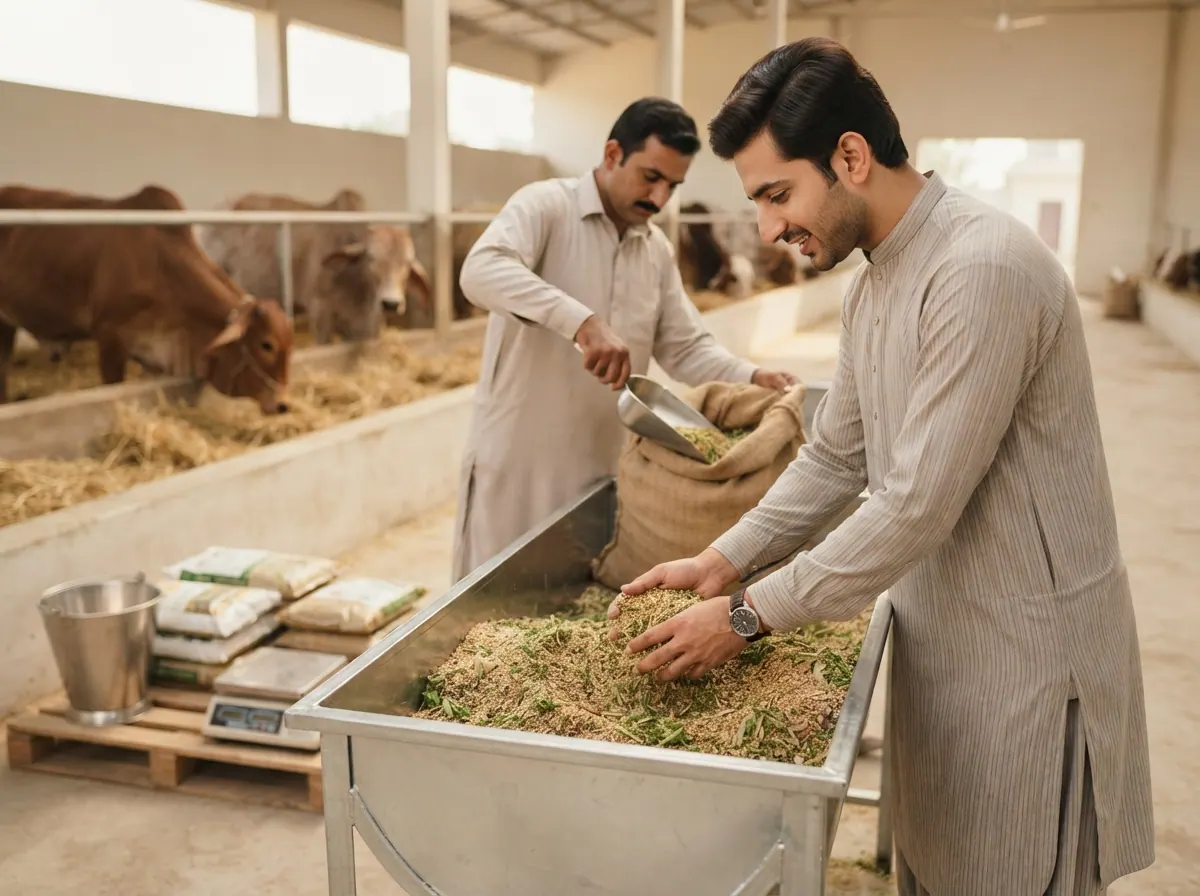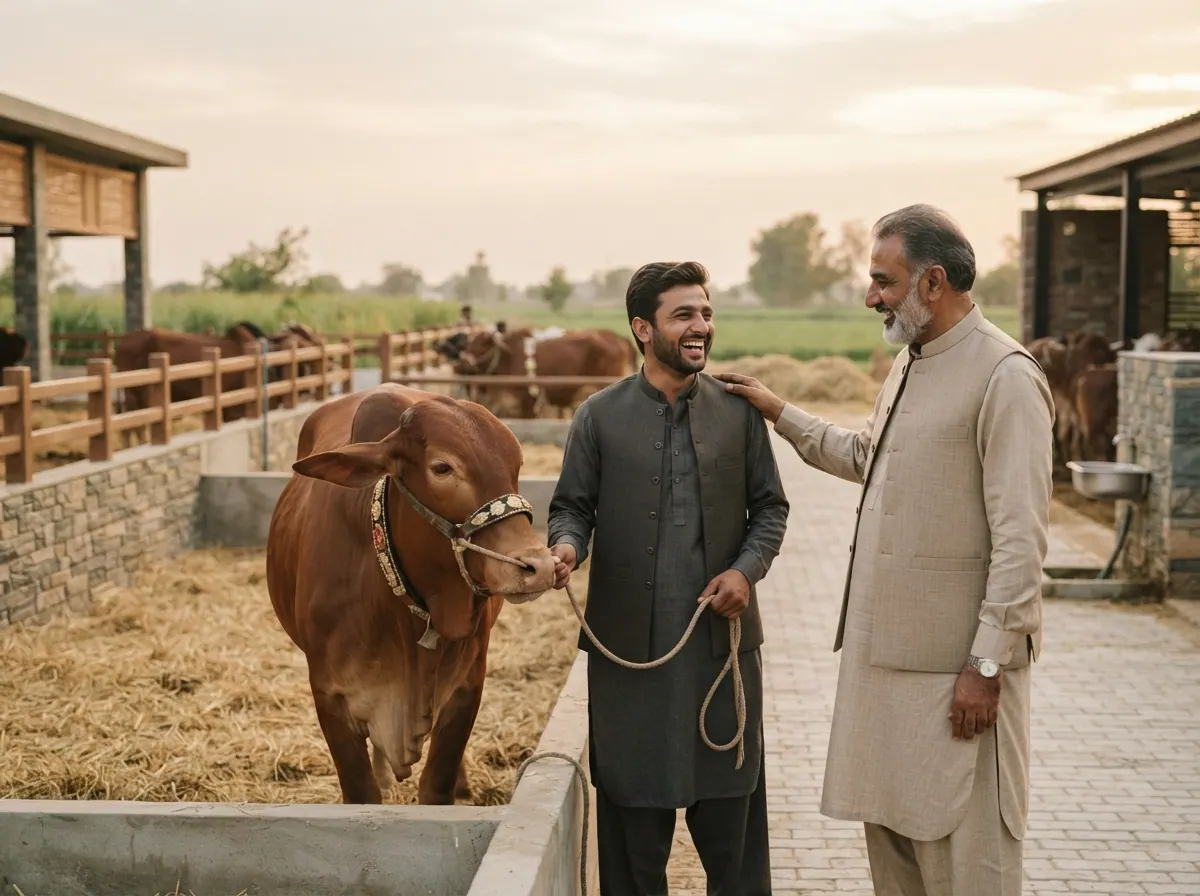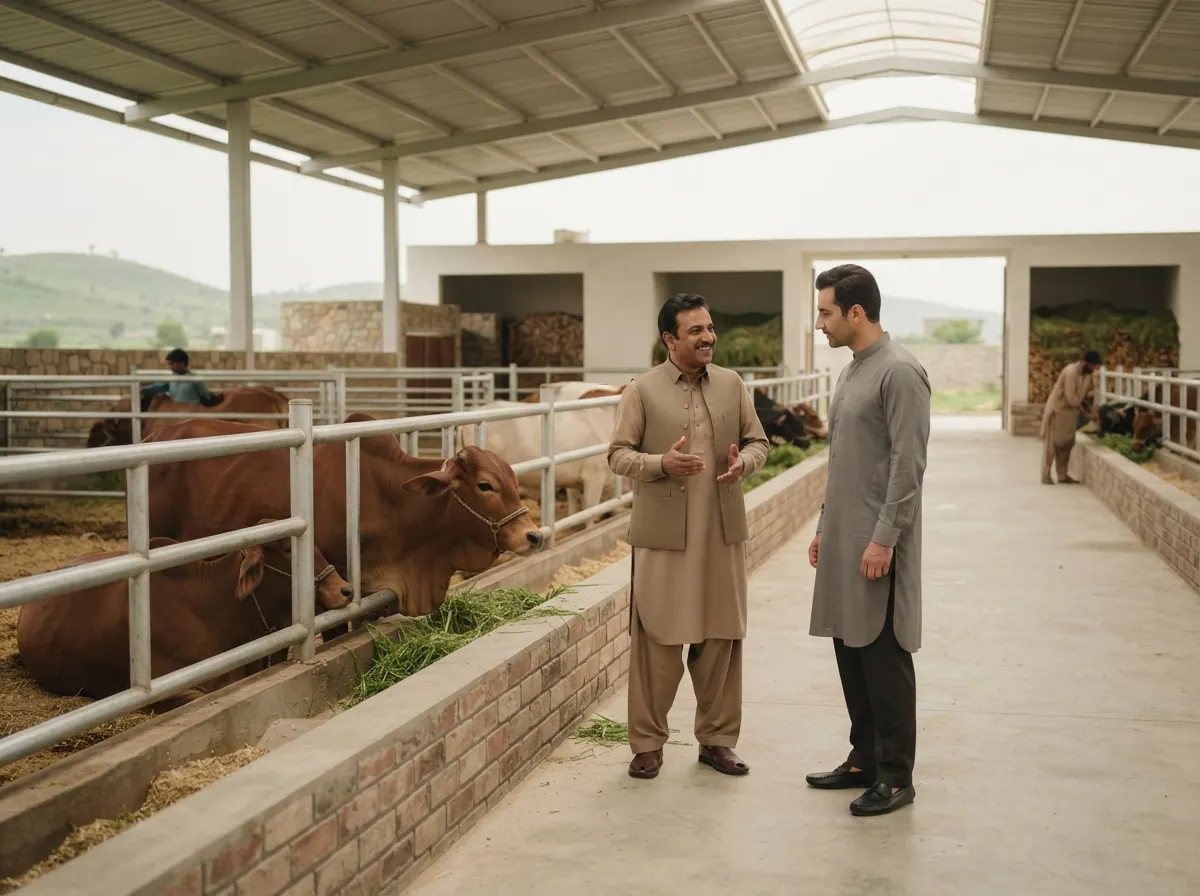
To start cattle fattening in Pakistan you need a shaded pen with a dry floor, healthy young bulls bought at the right price, a feed plan you can afford for months, and about Rs 640k for a small pen or up to about Rs 4.8m for a larger farm. You do not make your money from milk. You buy lean animals, feed them well for several months, and sell them at a good weight before Eid ul Azha, when demand for qurbani animals is highest.
All figures here are estimates. Check prices near you before you spend.
What does it cost?
| Item | Small pen (about 8 animals) | Larger farm (about 50 animals) |
|---|---|---|
| Young bulls or calves | Rs 320,000–360,000 | Rs 2.2–2.5m |
| Shed with shade and drainage | Rs 90,000–110,000 | Rs 700,000–900,000 |
| Chaff cutter, troughs, water tank | Rs 30,000–40,000 | Rs 150,000–200,000 |
| Feed for the first months | Rs 100,000–120,000 | Rs 900,000–1.1m |
| Vet, vaccines, ear tags | Rs 15,000–20,000 | Rs 70,000–100,000 |
| Transport and mandi costs | Rs 30,000–40,000 | Rs 150,000–200,000 |
| Total | about Rs 640k | up to about Rs 4.8m |
This assumes you already own the land. Feed is the number that moves the most, so ask three feed sellers for prices before you decide how many animals to buy.
Which animals should you buy?
Choose animals that buyers near you pay well for, and that you can see are healthy at purchase:
- Sahiwal and Red Sindhi bulls: known desi breeds, usually calm and heat-tolerant. Many buyers like their look.
- Cholistani: a hardy desi type from the dry south of Punjab, suited to heat.
- Crossbred bulls: often grow faster on good feed, but ask your vet how they handle summer heat.
- Age and teeth: young animals with clean, healthy eyes and a steady walk. Ask an experienced trader or vet to look at the teeth and body before you pay.
Bringing home an animal with a cough or loose motion can infect your whole pen.
How much can it earn?
Here is a worked example for one cycle of 8 animals. These numbers are assumptions, not a promise.
Money in
- 8 bulls sold at about Rs 115,000 each = Rs 920,000
Money out
- Buying 8 young bulls at about Rs 45,000 each = Rs 360,000
- Feed: about Rs 280 a day × 150 days × 8 animals = Rs 336,000
- Vet and vaccines: Rs 16,000
- Transport and mandi costs: Rs 20,000
- Total = Rs 732,000
Left over: Rs 920,000 − Rs 732,000 = Rs 188,000 for the cycle.
Over five months that is about Rs 37,600 a month. If you pay a worker Rs 25,000 a month, your cost rises by Rs 125,000 and you keep about Rs 63,000 for the cycle. One dead animal removes about Rs 45,000 of purchase cost plus the feed already given. A drop in the Eid price of Rs 10,000 per animal removes Rs 80,000.
What do you need before you start?
- A fixed sale plan. Count back from Eid ul Azha to know when to buy. Buy too late and the animals are too light.
- Feed you can afford. Wanda (concentrate), cottonseed cake, wheat bhusa, and green fodder like berseem, maize or sorghum are all common. Mixing them in the right proportion is a vet's or extension officer's work.
- A vet. Ask which vaccines and deworming are due, for example against foot-and-mouth disease and haemorrhagic septicaemia, and when.
- Drinking water and shade. Heat stress slows weight gain more than most people expect.
- Cash to survive a bad season. Some years prices drop and some years feed rises.
Step by step
- Visit two farms that fatten for Eid. Ask what they bought, fed and sold in the last season.
- Prepare the pen. A raised or sloped floor, shade, a trough for each animal and clean water. Wet mud is where foot problems and flies start.
- Buy in lots from a mandi or farm with a vet's help. Check each animal and keep new ones apart for the time your vet advises.
- Vaccinate and deworm on your vet's plan.
- Weigh or measure each animal every few weeks if you can, so you know which ones are gaining and which are not.
- Change feed slowly. Sudden changes can cause stomach trouble.
- Decide your selling route early: your own pen, a nearby mandi, or a standing buyer. Each has different fees and risks.
Which licences apply?
A small pen has less paperwork than a shop, but rules differ by province and city:
- Local permission. Your local council or municipality may have rules about animals near homes. Ask first.
- Mandi fees. Markets charge their own fees and have their own rules, so ask before you take animals there.
- Movement and health papers. Moving animals between districts may need health papers. Ask your livestock department.
- Loans and schemes. Banks and some programmes offer livestock loans. Terms change, so ask the livestock department and your bank.
- Tax. Ask an accountant how your sales are treated.
What goes wrong?
- Buying a sick animal at the mandi. One animal with fever or cough can spread illness to the pen.
- Heat and flies. Summer heat can slow growth and cause stress.
- Feed price rises. If your feed cost rises while your selling price is fixed, your profit disappears.
- Missing the Eid window. Animals unsold after Eid lose price while you keep paying for feed.
- Lameness and swollen feet. Wet, dirty floors are the usual cause.
- Theft or loose animals. Valuable animals need a secure gate and a night watch.
Situations you will face
What would you do? Each choice costs something.
Getting started
A trader at the mandi offers cheap bulls and says there is no time to check. A farm sells known animals at a higher rate.
- Buy at the mandi: Cheaper, health unknown
- Buy from a known farm: Costs more, healthier stock
Sahiwal bulls look calm and sell well locally. Crossbreds may gain faster but cost more to feed in heat.
- Buy Sahiwal bulls: Steady buyers, slower gain
- Buy crossbred bulls: Faster gain, higher feed cost
The mason quotes a sloped concrete floor. Mud floors cost little but turn into slush in monsoon.
- Pour a concrete floor: Costly, dry feet
- Keep a mud floor: Cheap, lame animals later
June heat is coming. A proper roof is expensive and a thatch cover is cheaper but weaker.
- Build a tin roof: Costly, cooler animals
- Use thatch for now: Cheap, replace each year
A feed dealer offers a fixed price on cotton seed cake for three months. You must pay in advance.
- Pay and lock the price: Big bill, steady cost
- Buy feed week by week: Keeps cash, price may rise
Eid is about five months away. Buying now costs more feed days. Buying later saves money but animals may be light.
- Buy now: More feed cost, heavier animals
- Wait a month: Less feed, lighter animals
A government vet visits rarely. A private vet charges a monthly fee but answers calls the same day.
- Hire a private vet monthly: Fee each month, quick help
- Rely on the government vet: Cheap, slow when sick
First month
One bull you bought last week has a cough and a runny nose. The other animals are in the next pen.
- Isolate and call the vet: Costs money, protects the pen
- Keep it in the pen: Saves effort, may spread
The bulls leave much of the wanda in the trough. A slower change takes time, but waste costs money.
- Mix in slowly over days: Slower, less waste
- Force the full feed now: Faster, stomach trouble risk
Your chaff cutter stops on day ten. A mechanic can fix it or you can cut by hand.
- Repair the machine: Cost now, quick feeding
- Cut by hand: No cost, slow and tiring
Flies and dust fill the trough with muck every day. A cleaner pipe system costs a lot.
- Fit a cleaner water system: Costly, healthy animals
- Clean the trough by hand: Cheap, daily work
Every bull looks the same after a week. A tag and notebook cost little but need daily time.
- Tag and keep records: Small cost, clear numbers
- Remember by looks: Free, mix-ups later
Running it
One bull is thinner than the others after a month. The vet suspects worms.
- Deworm and test: Costs money, per vet advice
- Sell it early: Cash now, a small price
The temperature is very high for a week. Animals eat less and pant. A fan system costs money.
- Add fans and water spray: Costly, steady gain
- Wait for the heat to pass: Free, slower gain
Green fodder is plentiful this week. Silage takes labour and a pit but keeps feed cheaper later.
- Make silage: Work and cost now
- Buy green fodder fresh: No setup, price risk
Ticks are biting the bulls in the shed. Spraying the whole pen takes materials and a worker.
- Treat the whole pen: Costs money, per vet advice
- Treat only the worst ones: Cheaper, may return
Your pen worker says they want a higher wage. Training a new person takes time.
- Raise their pay: Costs more each month
- Look for a new worker: Free, a week of mess
A neighbour has a weighing scale for hire. It shows who is gaining and who is not, but renting takes a day.
- Hire the scale: Small fee, good data
- Judge by eye: Free, easy to be wrong
A trader offers part-payment now for three bulls at a fixed price, well before Eid.
- Take the advance: Cash now, fixed lower price
- Decline and wait: No cash now, Eid price risk
When things go wrong
The floor is wet and two bulls are limping. The vet says they will lose weight if not treated.
- Treat and dry the floor: Costs now, saves weight
- Treat only the two: Cheaper, others may follow
The cost of cottonseed cake rises sharply. Your sale price is not changing.
- Pay for the feed: Keeps growth, less profit
- Cut the ration: Saves money, lighter bulls
Rain has turned the pen to mud. Animals stand in water and the flies are increasing.
- Raise the floor and drain: Costs now, healthier animals
- Wait for the rain to stop: Cheap, risk to health
A bull was stolen from a pen nearby. A night guard costs a lot but your animals are worth a lot more.
- Hire a night guard: Costs each month, safer
- Fit a strong lock only: Cheap, still risky
One bull is found dead in the morning. The vet asks to check the others for the same illness.
- Call the vet to check all: Costs now, protects the rest
- Bury it and carry on: No cost, risk to others
Prices at the mandi look weak and fewer families are buying. Every extra day costs feed.
- Hold a week for better price: Feed cost, may improve
- Sell now at the lower price: Cash now, thin profit
Growing
Families visit before Eid. Selling at the farm gate avoids mandi fees but buyers bargain hard.
- Sell at the farm gate: Lower fees, steady sales
- Take animals to the mandi: Higher price, fees and risk
A buyer asks to book a bull weeks before Eid with a small advance. Taking bookings needs photos and time.
- Take advance bookings: Cash early, work required
- Wait and sell at Eid: No extra work, price risk
You made a profit. A second shed costs a lot and you must find double the feed money.
- Build the second shed: Costly, more animals
- Stay at the same size: Safe, steady profit
A butcher wants steady animals through the year. Year-round work brings regular money but no Eid price.
- Supply the butcher: Steady money, lower price
- Stay with Eid only: Higher price, once a year
A bank offers a loan for more animals. Repayment starts before the next Eid sale.
- Take the loan: More animals, monthly payments
- Use your own savings: Slower, no debt
Is it right for you?
Cattle fattening suits you if you have a place to keep animals, can be with them every day, and can accept a thin margin that depends on one season. It suits you less if you need monthly income, if you cannot afford to lose an animal, or if you cannot be there at feeding times.
A good test: start with 4 to 8 animals for one Eid cycle. Write down every rupee of feed and cost, and decide after the sale whether to go bigger.