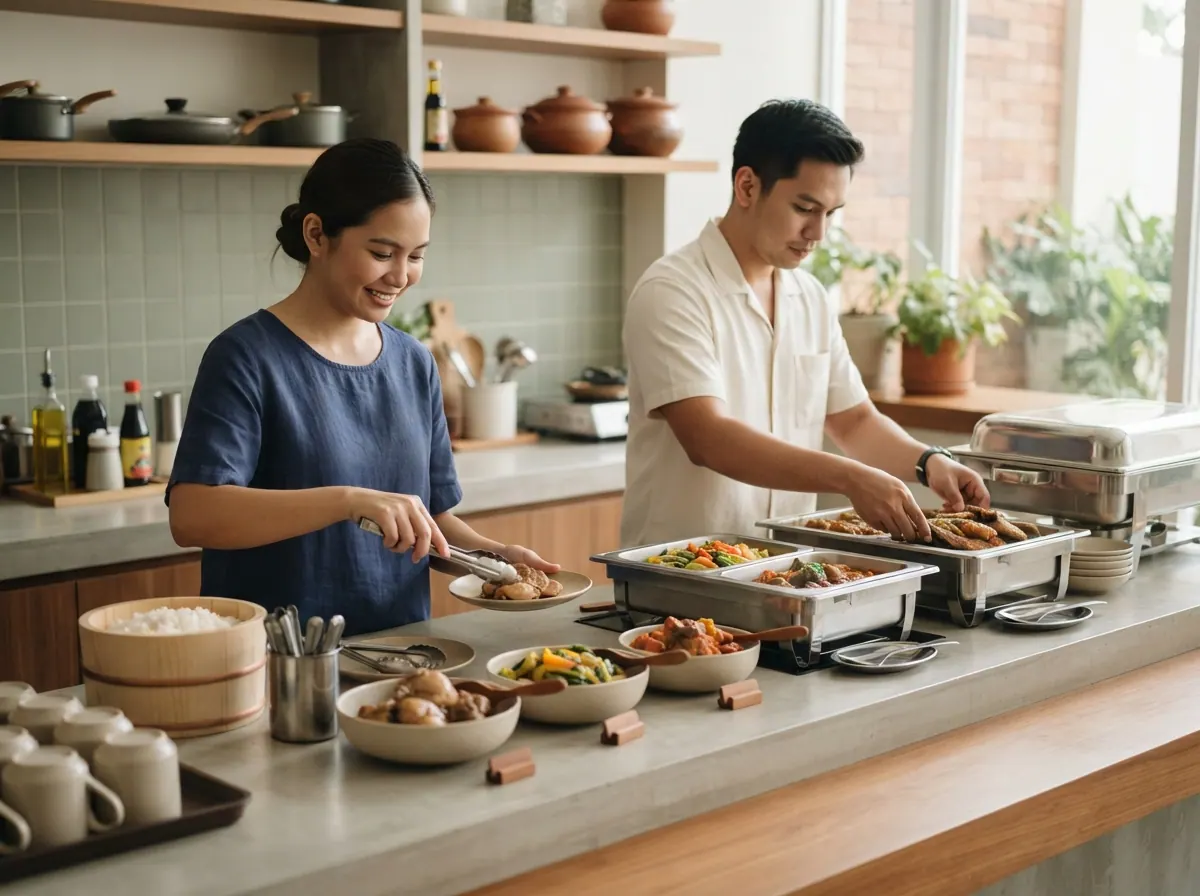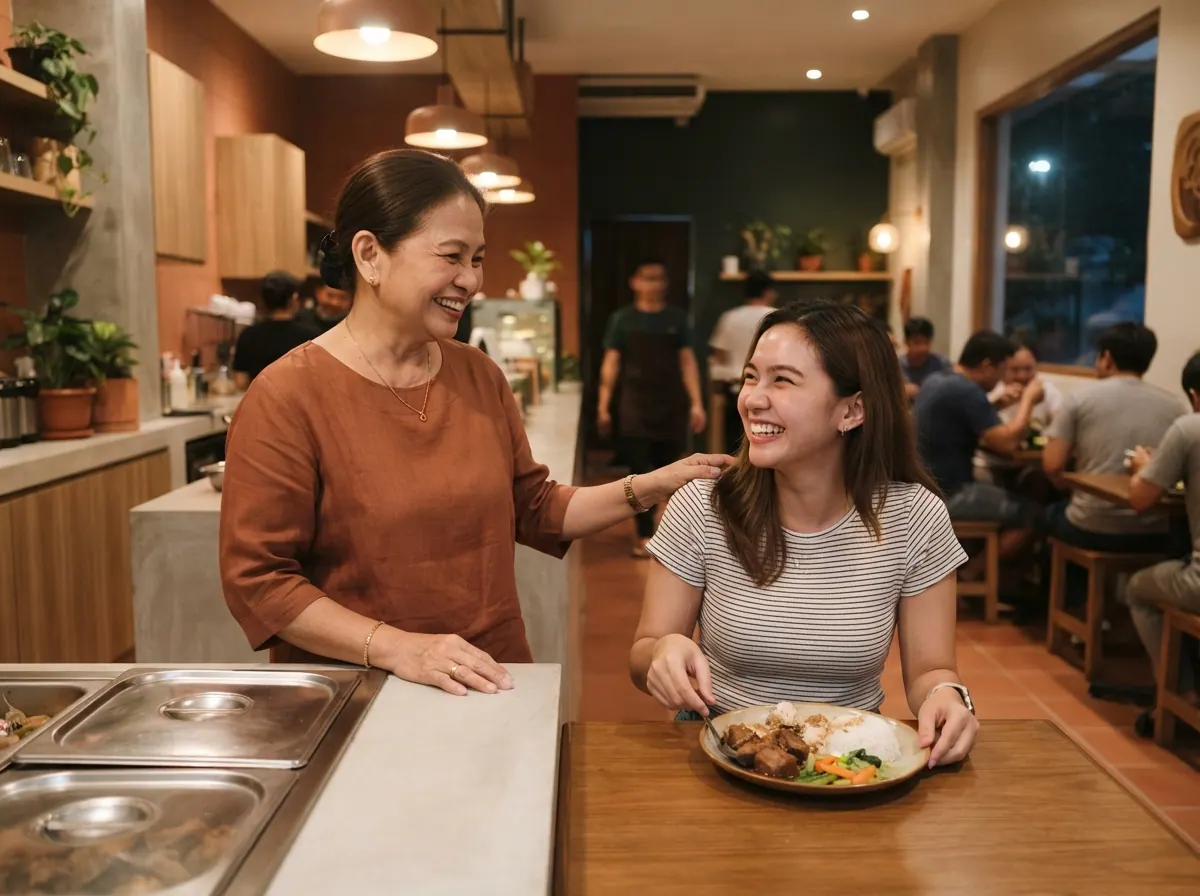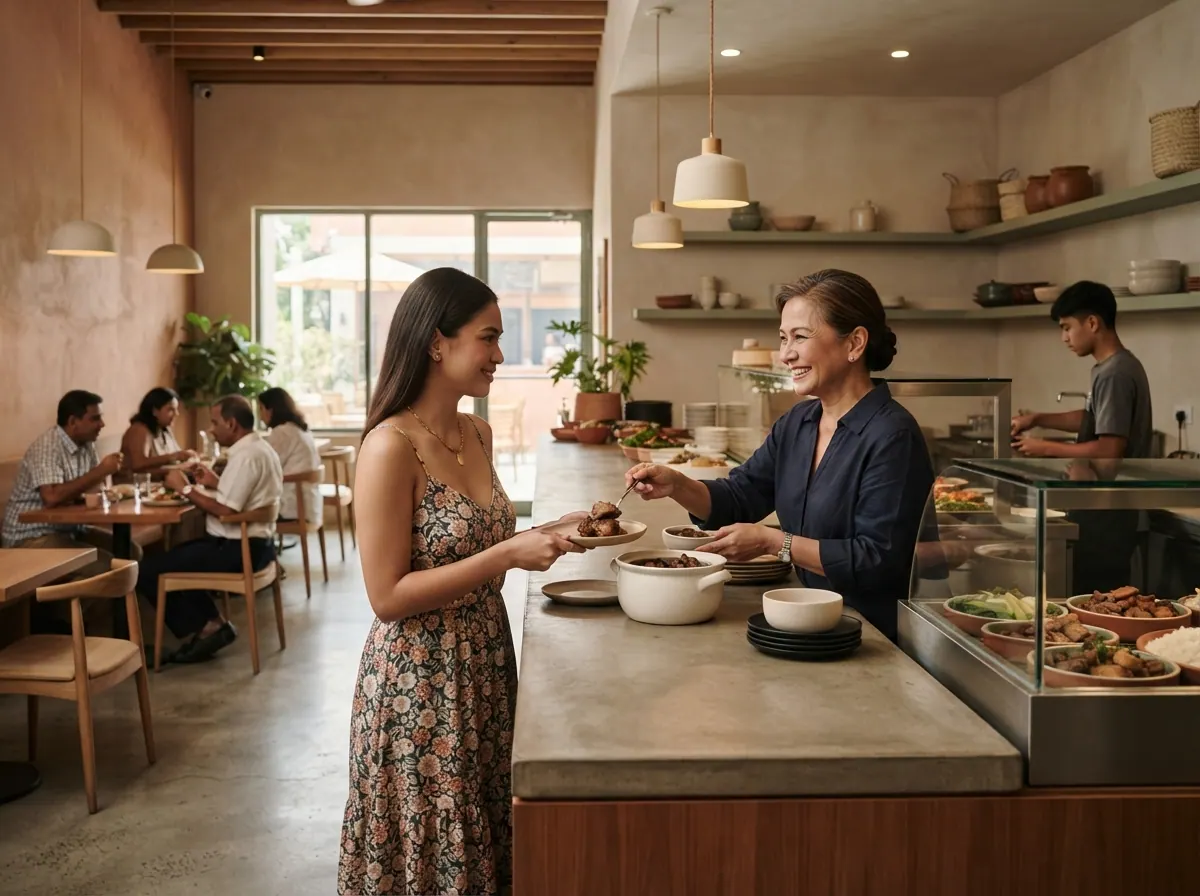
To start a carinderia in the Philippines you need a small place with a gas stove, a clean counter and tables, a menu of a few ulam that cook well in big pots, and about ₱32k for a very small start or up to about ₱320k for a bigger one with a paid cook. The carinderia sells rice meals to workers, students and neighbours, so the money comes from many ₱50 to ₱100 sales a day, not from a few big ones.
All figures here are estimates. Check prices near you before you spend.
What does it cost?
| Item | Very small setup | Bigger setup |
|---|---|---|
| Deposit and first month's rent | ₱6,000–15,000 | ₱40,000–80,000 |
| Stove, LPG tanks, big pots, steamer | ₱8,000–15,000 | ₱30,000–50,000 |
| Counter, food display, tables and chairs | ₱5,000–10,000 | ₱40,000–70,000 |
| Plates, utensils, containers, water drums | ₱3,000–6,000 | ₱15,000–25,000 |
| Permits and health certificates | ₱3,000–6,000 | ₱10,000–20,000 |
| First week's food and gas | ₱5,000–10,000 | ₱30,000–50,000 |
| Cash reserve for slow days | ₱2,000–5,000 | ₱30,000–50,000 |
| Total | about ₱32k | up to about ₱320k |
The place and the first stock of food decide most of your spending. A spot near a school, office, factory or terminal has more buyers but a higher rent.
What should you cook?
A carinderia is built on what regulars want every day. A common set is:
- Rice: the main sale. Cook it fresh, because cold hard rice loses customers.
- A meat ulam: adobo or a pork dish that sells fast and holds well.
- A soup or sabaw: sinigang or tinola, popular on rainy days.
- A vegetable dish: pinakbet or ginisang gulay, cheap to make and good for repeat buyers.
- Fried fish or tokwa: quick to serve.
Start with four or five ulam, not twelve. Fewer dishes mean less waste and faster cooking.
How much can it earn?
Here is a worked example for one month at a small carinderia with a cook and a helper. These are assumptions, not a promise.
Sales
- About 85 customers a day × about ₱70 average = about ₱6,000 a day
- ₱6,000 × 26 open days = ₱156,000 a month
Costs each month
- Food (about 45% of sales) = ₱70,200
- Rent = ₱8,000
- Cook and helper (₱10,000 each) = ₱20,000
- LPG (about 4 tanks) = ₱4,000
- Electricity and water = ₱3,500
- Permits, cleaning, packing, small repairs = ₱2,000
- Total = ₱107,700
Left over: ₱156,000 − ₱107,700 = about ₱48,300 a month.
If you cook and serve yourself, you save the wages and keep more. But a few slow weeks, wasted pots of ulam, or unpaid utang from regular customers can reduce this a lot. Count all unsold food at the end of each day.
What do you need before you start?
- A place where people already pass at meal times. Count how many people pass at lunch before you rent.
- A reliable source of ingredients. Know where to buy rice, pork, chicken, fish and vegetables at the palengke or from a supplier.
- A cook who can make the same taste every day. Regulars come back because the adobo tastes the same.
- A clean water supply, and a proper place to wash. Health inspectors look at these.
- A rule on utang. Many regulars ask to pay on payday. Decide your limit before you start.
Step by step
- Watch two or three carinderias near your spot at lunch for a few days. Notice which dishes are gone first and what they charge.
- Rent a proper space with a roof, water and a place for a counter. Avoid roadside or sidewalk setups.
- Register and get permits for the name, the place, and health certificates for everyone who handles food.
- Buy equipment in sizes that fit your cooking volume, starting with what you need on day one.
- Cook smaller portions at first and track how much you sell by dish.
- Keep a utang notebook, with names, amounts and due dates, and a limit per person.
- Add or drop dishes by what sells, not by what you like.
Which permits apply?
Rules differ by city, so ask your city or municipal hall. A carinderia usually needs these:
- Barangay clearance from your barangay hall.
- DTI business name registration for sole proprietors.
- Mayor's or business permit from city hall, renewed each year.
- BIR registration for tax. Ask the BIR or an accountant what applies to a business your size.
- Sanitary permit and health certificates for food handlers, from your local health office.
- Fire safety inspection, which is commonly asked for when you use gas.
Fees and requirements change, so confirm the current list before you spend.
What goes wrong?
- Cooking too much. Ulam left over at closing time is money lost. Cook in batches through the day.
- Utang that never gets paid. A few unpaid notebooks can eat a week of profit.
- Price of gas, meat or rice jumps. Your menu prices stay the same while costs rise.
- Food gets spoiled in the heat. Pork and fish spoil quickly, and a food poisoning case can close you.
- Rent rises. A good spot becomes too costly after you build your following.
- Staff leave. If only one person knows the recipes, you are in trouble.
Situations you will face
What would you do? Each choice costs something.
Getting started
A spot near a school has crowds at lunch but a high rent. A quiet street is cheaper but has few walkers.
- Rent near the school: High rent, many students
- Rent on the quiet street: Low rent, few buyers
The barangay clearance and health certificates will take two weeks. Neighbours are asking when you open.
- Wait for the permits: Fees and delay, safe
- Apply now, prepare the kitchen: No sales yet, kitchen ready
A large burner cooks big pots fast but costs more. Two small stoves are cheaper but slower at lunch.
- Buy the big burner: Costly, fast cooking
- Buy two small stoves: Cheaper, slower service
A friend says offer ten dishes to attract everyone. The cook says four will sell out faster.
- Start with four ulam: Less waste, less choice
- Offer ten ulam: More choice, more waste
The palengke has cheaper pork but you must go at 4 am. A supplier delivers at a higher price.
- Shop at the palengke: Cheaper, early mornings
- Use a delivering supplier: Costs more, saves time
Used plastic tables look old but cost half. New ones make a better first impression.
- Buy new tables: Costly, looks clean
- Buy used tables: Cheaper, looks worn
A cook from another carinderia wants a high wage. A beginner cooks for less but tastes vary.
- Hire the experienced cook: Higher wage, steady taste
- Hire a beginner: Lower wage, uneven taste
First month
The lunch rush is bigger than you expected and the rice is gone. Cooking more takes 30 minutes.
- Cook a big new pot: Costs gas and food now
- Tell customers it is finished: No cost, lost sales
A jeepney driver eats every day and asks to pay on Friday. You know the driver but not the employer.
- Allow a small limit: May lose cash later
- Cash only: No risk, lose a regular
Rain keeps people at home for three days. You already cooked a lot of ulam.
- Offer a cheaper meal combo: Less money, less waste
- Cook a normal amount: Waste cost, no change
An inspector finds missing health certificates for your helper and a dirty drain. Fixing both costs money.
- Fix and get the certificate: Costs now, keeps you open
- Fix the drain, certificate next week: Part cost now, helper off food duty
In the afternoon flies land on the open dishes. Glass covers cost money, covers made of net cost less.
- Buy glass display covers: Costly, better look
- Use cloth and net covers: Cheaper, less protection
Running it
Your supplier says pork costs more. Adobo is your best seller.
- Raise the adobo price: More income, some lose interest
- Absorb the cost: Keeps customers, lower profit
Your gas costs more this month, and you use four tanks. You can change to cheaper cooking methods only slowly.
- Keep cooking as before: Same taste, higher cost
- Cook fewer dishes: Lower gas, less choice
An office near you asks for 40 packed meals each day at a lower price per meal.
- Accept the order: Steady sales, thin margin
- Decline: No change, lunch stays calm
You have two pots of ulam left. Reheating overnight is not safe for some dishes.
- Sell cheaply at 3 pm: Less money, no waste
- Throw away the leftovers: Safe, a clear loss
Your helper comes after the lunch rush starts. Lateness means slower cooking.
- Have a firm talk: Free, may help
- Give a punctuality bonus: Costs more, steadier help
Office workers ask for a QR code. It needs a registered account and sometimes fees.
- Add a QR payment: More buyers, small fees
- Stay cash only: No fees, fewer buyers
You bought extra pechay and kangkong on a cheap day. Without a fridge, half will wilt before tomorrow.
- Buy a small fridge: Costly, less waste later
- Cook it all today: No cost, a heavy vegetable menu
When things go wrong
A customer says the food made them ill. You do not know the cause. Your helper used the same pot all day.
- Check the kitchen and apologise: Costs time, builds trust
- Pause the pot and check food: Lost dish, safer kitchen
Your LPG hose is cracked and smells slightly. A new regulator and hose cost money.
- Replace the hose today: Costs now, safe kitchen
- Close and call the gas dealer: Lose lunch sales, expert check
Someone owes you ₱3,500 and avoids you. Chasing costs time and bad feeling.
- Talk calmly and set a plan: Slow payback, keep the regular
- Stop all credit: Safer, lose some regulars
Your landlord says the rent goes up by a quarter next month. Moving means losing your regulars.
- Accept the new rent: Higher cost, stay put
- Look for another place: Moving costs, lose some regulars
An inspector asks for a fire extinguisher and a clear exit. You have neither.
- Buy an extinguisher, clear exit: Costs now, safe
- Buy an extinguisher now, exit later: Part cost, main risk covered
You find droppings near the dry store. Pest control costs money and time off.
- Hire pest control: Costs now, clean store
- Set traps yourself: Cheaper, may not be enough
Growing
A fiesta committee wants a big order in three days. Cooking more means renting extra pots and a helper.
- Accept and hire help: Big sales, costs and risk
- Decline the order: Safe, miss good money
A spot near a hospital is free. A second place needs a cook you trust.
- Open the second place: Costly, more sales
- Improve the first place: Smaller cost, steady sales
A supplier gives a lower price if you buy rice and meat monthly. You must pay in advance.
- Take the bulk deal: Cash out now, lower cost
- Keep buying weekly: Cash is safe, higher cost
Customers ask for turon and banana cue in the afternoon. It means more prep and a small stock.
- Add merienda: More sales, more work
- Keep only meals: Simple, miss afternoon sales
A lender offers a loan for a bigger kitchen. Weekly payments start right away.
- Take the loan: Growth, weekly payments
- Wait and save: Slower, no debt
Is it right for you?
A carinderia suits you if you like early mornings, can manage food cost every day, and can say no when a regular asks for more utang. It suits you less if you want a day off every week, or if you do not like dealing with many small cash sales.
A good test: for two weeks, work in a carinderia during the lunch rush. If you still want it, start with four ulam and a small space, track every peso, and grow slowly.