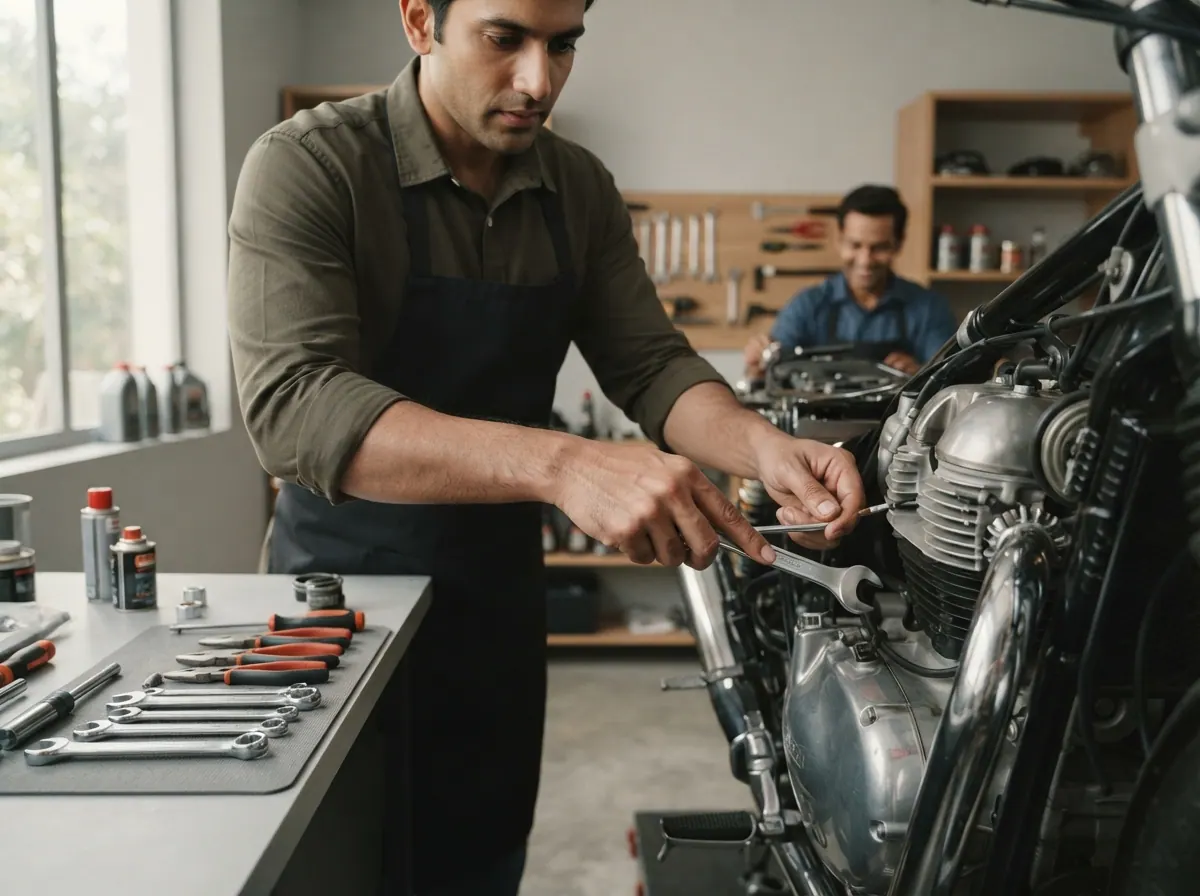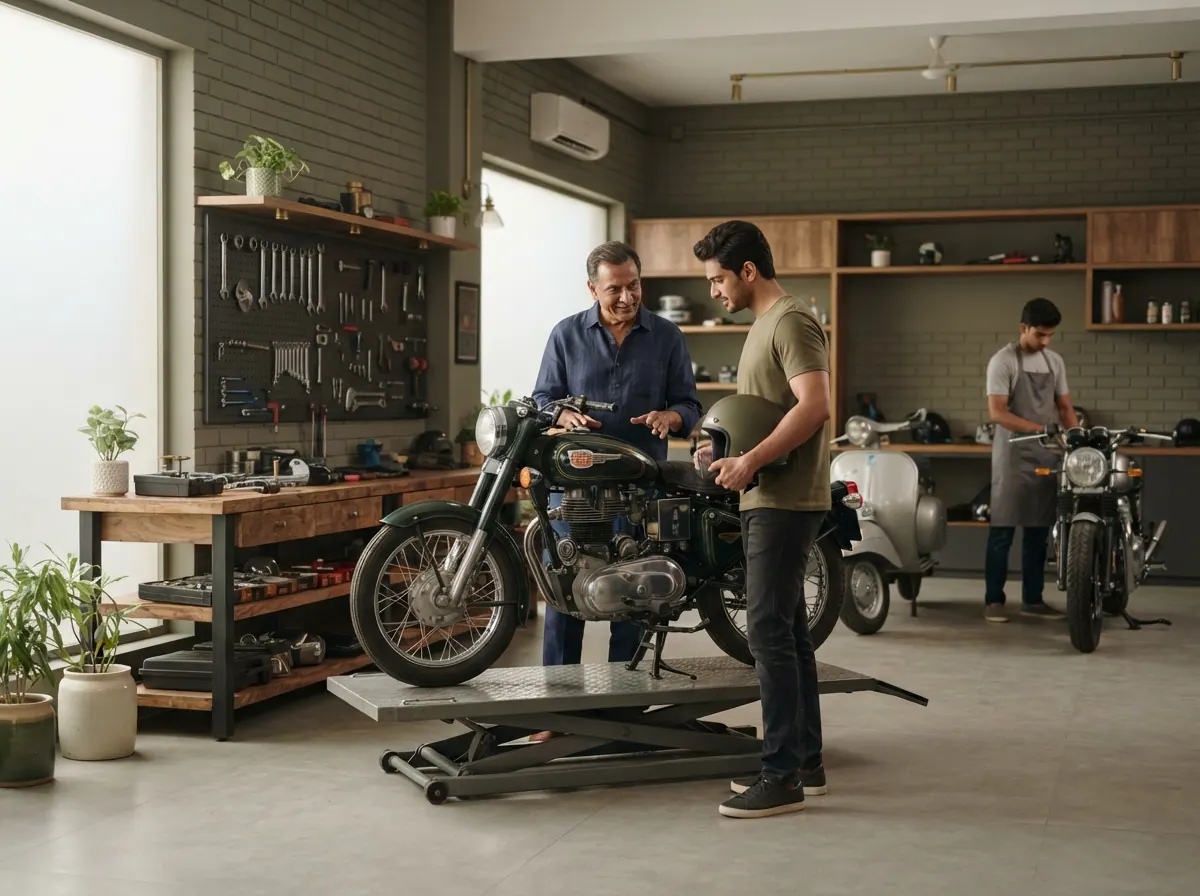
To start a bike repair shop in India you need a 150–300 sq ft garage on a road where bikes pass, a skilled mechanic, a good set of tools with an air compressor, a bike stand or lift, and about ₹50,000–3 lakh. A mechanic who already owns hand tools can start at the low end. The money comes from regular servicing and repeat customers. It is lost in wrong diagnosis, parts that fail again, and customers who feel cheated on the bill.
All figures here are estimates. Check prices near you before you spend.
What does it cost?
For a small rented garage:
| Item | Estimate |
|---|---|
| Rent deposit | ₹10,000–50,000 |
| Hand tool kit, torque wrench, spanners, pullers | ₹10,000–30,000 |
| Air compressor and tyre inflation | ₹8,000–25,000 |
| Bike stand or hydraulic lift | ₹3,000–40,000 |
| Battery charger, multimeter, carburettor cleaning set | ₹3,000–10,000 |
| Fuel injection scan tool (optional) | ₹0–25,000 |
| First stock: engine oil, filters, pads, chains, cables, bulbs | ₹10,000–50,000 |
| Signboard, billing, paperwork | ₹3,000–10,000 |
| Money for the first slow months | ₹3,000–60,000 |
| Total | about ₹50,000–3 lakh |
Hydraulic lifts and scan tools are what push the cost up. A basic stand and hand tools will do for the first six months.
How much can it earn?
A normal month for a small garage with an owner-mechanic, one helper and a second mechanic:
Sales
- 240 jobs a month × about ₹650 average bill = ₹1,56,000
- This includes routine servicing, oil changes, brake and clutch work, puncture and small electrical jobs
Costs
- Parts, oil and consumables sold = ₹70,000
- Second mechanic = ₹15,000
- Helper = ₹8,000
- Rent = ₹12,000
- Power = ₹2,500
- Waste oil disposal, cleaning, small tools = ₹4,500
- Total = ₹1,12,000
Left over: ₹1,56,000 − ₹1,12,000 = ₹44,000 a month, and this has to pay you as well.
Margins on parts are usually the cheap part of the job. Labour is where most of your profit sits, so a mechanic who finishes jobs right the first time makes you money. A repeat complaint costs you an hour for free and the customer's trust.
What do you need before you start?
- Mechanic skill with the common bikes in your area. Splendor, Pulsar, Activa, Jupiter, Bullet and Shine are common sights. Know their usual faults. Fuel-injected models need a scan tool and some patience.
- A road with passing traffic. Garages near a petrol pump, college, market or highway turn-off do well. A quiet lane works only for regular colony customers.
- A spare parts dealer who trusts you. Open an account for oil and common parts, and ask about return of unused items.
- A clear price list. Servicing, chain set change, brake pad change and clutch plate change should have stated labour charges. Customers quarrel over unclear bills.
- A safe place for waiting bikes. Customers will not leave a bike where it may be scratched or stolen.
Step by step
- Visit three garages on a Saturday and watch the queue. Note which jobs bring most customers.
- Take a shop on a road with parking space for a few waiting bikes, and with a shutter that locks well.
- Buy tools in a sensible order. A hand tool kit, a stand, a compressor, a charger. Add a scanner when FI bikes begin to arrive.
- Open an account with a spares dealer and buy a small lot of fast-moving parts only: pads, chains, clutch cables, bulbs, plugs.
- Paint a clear price board. Servicing, puncture, chain change, oil change with the oil brand and the price.
- Take a photo or note before you open a bike. Write the complaint on a job card with the customer's name and number.
- Show the old part when you replace it, so the customer sees the work.
- Keep a record of every customer. Remind them of the next service by call or WhatsApp after about three months.
Which licences apply?
- Shops and Establishments registration, and a local trade licence where your municipality asks for one.
- Udyam registration is free and helps with loans later.
- Used oil and waste. Store old engine oil in a drum and give it only to authorised collectors. Ask the state pollution control board how it applies to garages of your size.
- Fire safety. Keep a fire extinguisher and keep oil and fuel away from sparks.
- GST depends on your turnover. Servicing and parts may be taxed differently, so ask a CA.
Confirm all of this with your local office, since rules vary by state.
What goes wrong?
- A mechanic who leaves with your customers. Customers follow the person they trust. Keep a customer register and spend time with them yourself.
- Repeat complaints. A bike that stalls again after a carburettor cleaning costs you an hour and a reputation. Test ride before you hand over.
- Fake or poor spares. A cheap brake pad that fails costs you more than it saves. Buy only from a dealer you trust, and tell customers which parts are original and which are aftermarket.
- Bill disputes. A customer who expected ₹400 and gets a ₹1,800 bill will never return. Tell them before you open the engine.
- Idle vehicles in your lane. Bikes left for weeks block your space and may be damaged. Fix a limit and tell people.
- Waiting too long for parts. If you promise tomorrow and the part arrives in four days, customers go to the next garage.
- Monsoon slowdowns and festival rushes. Fewer bikes come out in heavy rain, and Diwali and wedding months fill your day. Plan stock and staff for both.
Situations you will face
What would you do? Each choice costs something.
Getting started
A simple stand costs little. A hydraulic lift saves your back and speeds up work, but takes space and money.
- Buy a simple stand: Cheap, slower and tiring
- Buy a hydraulic lift: Costly, faster jobs
A local dealer will give parts on credit if you buy a bigger first lot. Smaller lots cost cash up front.
- Take the big lot on credit: More parts, a bill to clear
- Buy small lots for cash: Safe, waiting for parts
More fuel-injected bikes now come to your lane. Without a scan tool you send them away or guess.
- Buy the scan tool: Costs now, new customers
- Skip it for now: No spend, lose FI work
A shop by the petrol pump gets passing bikes and charges higher rent. A colony lane shop is cheap but quiet.
- Rent near the pump: High rent, more walk-ins
- Rent in the colony: Low rent, slow start
Customers keep asking the rate for servicing. A clear board takes some bargaining away, and shows your lowest prices.
- Paint a clear board: Trust, less haggling room
- Write quotes on job cards: Small printing cost, fewer disputes
You work alone and bikes pile up by evening. A mechanic costs a monthly wage even on slow days.
- Hire a mechanic: Faster jobs, fixed wage
- Work longer hours alone: No wage, tired and slower
You have two drums of used oil. A scrap buyer offers cash; an authorised collector takes it for a small fee.
- Give to authorised collector: Small fee, clean record
- Store in sealed drums outside: Small cost, less smell and fire risk
First month
A customer asks for the cheapest chain set. Original costs ₹1,600 and local costs ₹900 but wears sooner.
- Fit the original: Costly, lasts longer
- Fit the local one: Cheaper, may be back soon
A Splendor you cleaned the carburettor of is back with the same fault. The owner is annoyed.
- Recheck for free: Costs your time and a gasket
- Charge a fresh cleaning: Earns, customer may leave
Opening the clutch showed worn plates and a bent rod. The owner expected a ₹500 job and now faces ₹2,500.
- Call first, explain with parts: Slower, trust builds
- Fix only the quoted work: Smaller bill, extra work waits
A helmet left on a bike disappeared while it waited. The customer is sure it was in your shop.
- Pay for a new helmet: Costs, saves your name
- Search together, pay half: Costs you, fair to the customer
A friend brings a bike and expects free work because you started together. Parts still cost you.
- Charge only for parts: Costs your labour
- Charge normal rates: Pays fully, friend may sulk
Running it
Your dealer's new brake pads feel light and the box print is blurry. Replacing the whole lot costs you money.
- Return the lot, buy original: Costly, safer brakes
- Ask dealer for a swap only: No refund, wait for stock
Everyone wants a service before travel. You can stay late or turn customers away.
- Hire a temporary helper: Wage cost, extra income
- Book only what you finish: Calm, miss some sales
For ten days the lane floods and almost no one comes. Your rent and wages still fall due.
- Run a pre-monsoon offer: Discount, pulls them in
- Wait it out: No spend, quiet days
Passing riders stop for puncture repair. A tube and tubeless kit costs little and brings walk-ins.
- Set up a puncture corner: Small cost, steady walk-ins
- Refuse small jobs: Less noise, fewer new faces
The owner says payment will come next week, every week. The bike is taking space and your dues are unpaid.
- Hold it, send a notice: Space lost, firm stance
- Release it on promise: Goodwill, risk of non-payment
A nearby showroom sends accident-repair bikes, but pays after 45 days and checks work closely.
- Take the tie-up: Volume, slow payment
- Stay with walk-in customers: Fast cash, smaller sales
The landlord wants ₹3,000 more a month. Moving means losing your signboard and your regulars know this lane.
- Pay the higher rent: Costs monthly, no disruption
- Sign a longer agreement: Smaller rise, bigger deposit
When things go wrong
The mechanic opens a garage two lanes away. Some regulars say they will follow.
- Call regulars, offer a service deal: Costs a discount, keeps most
- Let it go, hire a new one: Wage cost, some lose trust
The compressor stops in the middle of a busy morning. A rewinding takes days; a new one costs more.
- Buy a new compressor: Costs more, quick restart
- Repair the old motor: Cheaper, shop slows down
A bike's tank leaked while a helper was welding nearby. No one was hurt, but the smell stayed all day.
- Buy extinguisher, set a rule: Costs now, safer shop
- Move petrol, buy extinguisher: Small cost, lower fire risk
A scooter came back noisy after an oil change. You find the helper poured a different grade.
- Drain, refill, apologise: Costs oil, builds trust
- Refill and share the oil cost: Costs a little, honest answer
A new shop advertises a ₹299 basic service. Some of your regulars are asking why you charge more.
- Match with a lighter package: Keep them, lower margin
- Hold price, show checklist: Some leave, others stay
You bought parts for a bike model few people use. They sit on the shelf and tie up your cash.
- Sell back to dealer at a loss: Loss now, cash freed
- Hold it, wait for demand: Money stays stuck
A Bullet you overhauled smokes after two weeks. The owner says ₹9,000 was paid for nothing.
- Open it again, free of labour: Costs time and parts
- Inspect together, share the parts: Costs parts, fair look at cause
Growing
You have 400 customers in a notebook. A simple tool can remind them to return after three months.
- Set up a WhatsApp list: Time and a little cost
- Rely on walk-ins: No effort, fewer repeats
More owners ask if you can service electric scooters. Training and tools cost money.
- Train and buy basic tools: Costly, a new customer base
- Stay with petrol bikes: No spend, risk later
A friend offers a shop at a good rent in a growing colony. You would need a mechanic you trust.
- Open the second garage: Big cost, more reach
- Improve this garage first: Smaller spend, slower growth
Office workers will pay extra for bike pick-up and drop. A small vehicle and a rider add monthly cost.
- Start pick-up service: Extra income, extra cost
- Do not offer pick-up: Simple, miss office riders
Is it right for you?
A bike garage suits you if you enjoy fixing machines, can stay patient with an angry customer, and do not mind dirty hands and long hours. It helps to explain faults in plain words. People trust the garage that shows them the old part and the reason.
It suits you less if you want a clean desk job or a quick return. In the first months you will wait for regulars, and you will need to stand in the shop through the week and on Sundays. Try this first: work for three months in a good garage, ask the owner which jobs bring regulars, and start your own shop with that knowledge.