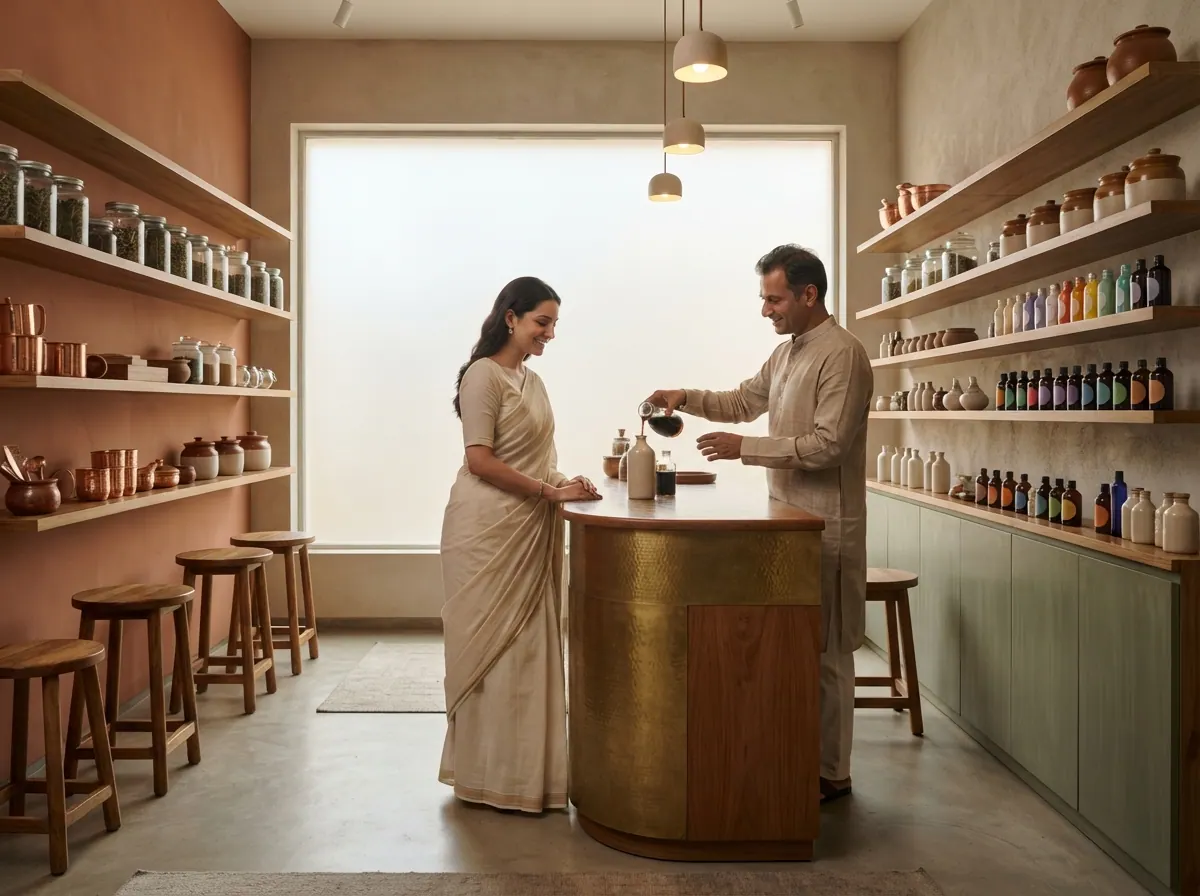
To start an ayurvedic or herbal store in India you need a shop in a busy market lane or near a clinic, stock bought from licensed makers and trusted wholesalers, FSSAI registration for foods, and about ₹1–5 lakh. Most of that money sits on your shelves as stock. The business works when regulars come back every month for the same products, not when a big opening day sells out.
All figures here are estimates. Check wholesale and rent prices near you before you spend.
What does it cost?
| Item | Small shop | Larger shop |
|---|---|---|
| Rent deposit | ₹30,000–60,000 | ₹80,000–1.5 lakh |
| Shelving, glass jars, counter | ₹25,000–50,000 | ₹70,000–1.2 lakh |
| Starting stock | ₹40,000–1.2 lakh | ₹1.5–2.5 lakh |
| Weighing scales, packing, labels | ₹8,000–15,000 | ₹20,000–35,000 |
| Grinder or sieve, if you sell powders | ₹10,000–20,000 | ₹25,000–40,000 |
| FSSAI, shop registration, GST help | ₹5,000–12,000 | ₹8,000–15,000 |
| Signboard and opening promotion | ₹5,000–10,000 | ₹15,000–25,000 |
| Float for the first 2 months | ₹25,000–40,000 | ₹60,000–90,000 |
| Total | about ₹1.5–3.3 lakh | about ₹4.3–7.3 lakh |
A very small shop with fewer lines can start at ₹1 lakh. Pushing past ₹5 lakh makes sense only when you already know what your area buys.
Stock is where beginners overspend. A shelf of 200 products looks impressive, but a quarter of it may never move. Start with 40 to 60 fast lines.
What do you sell, and what do you not?
A pansari or herbal shop usually sells a mix:
- Loose herbs and spices: items like turmeric, tulsi, neem, amla, triphala, ashwagandha and dried hibiscus, sold by weight.
- Packaged products from licensed makers: oils, churnas, chyawanprash and similar brands that carry proper labels.
- Herbal teas and honey: blended or sourced, with FSSAI rules applying to foods.
- Attar and incense: small bottles, sold by the ml or tola.
- Daily items: dry fruits, desi sugar, dried flowers for puja.
Never say a herb or product cures, treats or reverses a disease. A customer with diabetes, high blood pressure or a child with a fever should see a doctor first. You can say what a product is, what it is traditionally used for, and read out what the maker's label says.
How much can it earn?
Here is a settled shop in its second year, serving about 40 customers a day with an average bill of ₹300.
Income each month
- 40 customers × ₹300 = ₹12,000 a day
- ₹12,000 × 26 days = ₹3,12,000 a month in sales
- Margin on mixed stock is often 20 to 35%. Take 25%: ₹3,12,000 × 0.25 = ₹78,000 gross profit
Costs each month
- Rent = ₹20,000
- One helper = ₹12,000
- Electricity and packing = ₹4,000
- Wastage and expired stock = ₹5,000
- Transport and small costs = ₹3,000
- Total = ₹44,000
Left over: ₹78,000 − ₹44,000 = about ₹34,000 a month.
That is before your own work. If your family helps in place of the helper, you keep about ₹46,000. The big swing is wastage. Powders lose scent and colour, oils turn, and anything past its date must be thrown away. Over-buying can turn a ₹34,000 month into a ₹25,000 one.
What do you need before you start?
- Knowledge of the products. Customers ask how to use things. Learn from the maker's label and a qualified practitioner, and never guess about health.
- Reliable suppliers. Bills, batch numbers, packing dates and expiry dates. A cheap powder with no label is a risk.
- Clean storage. Dry, shaded, covered. Moisture and insects ruin herbs and spices.
- A steady crowd. A shop near a clinic, a temple or a busy market sees more repeat buyers than a quiet corner.
Step by step
- Spend a week as a customer in five similar shops. Note what moves, what is priced high and what the owners say about slow items.
- Choose the location. Look at foot traffic at your opening hours and check that a clinic, a temple or a vegetable market is within a few minutes.
- Open accounts with 3 to 5 suppliers. Take small first orders. Ask for credit only after a few months of clean payment.
- Register. Apply for FSSAI and the other registrations below before you sell any food item.
- Set up for freshness. Label every jar with its date of packing. Stock in small quantities and rotate old items to the front.
- Price with a margin you can defend. Loose items sell on trust, so show weights openly and keep scales calibrated.
- Build regulars. Keep a notebook of regular customers and what they buy. A call when their usual item arrives keeps them from going elsewhere.
Which licences apply?
Rules vary, and some change, so confirm with the local office.
- FSSAI registration or licence for foods, spices, herbal teas, honey and anything customers eat or drink.
- Shop and establishment registration with your state or municipal body.
- GST registration when your turnover crosses the limit. Ask a CA what applies to you.
- Ayurvedic medicines. Making them needs a licence from the state licensing authority. For selling, rules are set by the state, so ask your state drug or AYUSH licensing office what is needed.
- Advertising. There is a law against advertising that claims a product cures certain diseases. Ask a lawyer or the licensing office before you print a banner or post a claim online.
- Weights and measures. Scales are checked and stamped under the legal metrology rules. Ask your local legal metrology office.
What goes wrong?
- Making health claims. A line like "cures diabetes" on a banner or video can bring a notice and hurt a customer who stops treatment.
- Buying unbranded powders. Loose powders can carry adulteration or dust, and you will not know which batch caused a complaint.
- Too much stock. Expiry dates arrive faster than sales. Oils, churnas and teas all have a shelf life.
- Pest and moisture. Monsoon months bring insects and damp into jars. Use tight lids and check weekly.
- Customers asking for medical advice. You are not a doctor. Be clear about that and politely send them to one.
- Copycat products. A cheap "ayurvedic" brand with a similar label can confuse customers. Show the maker's name and batch details clearly.
Situations you will face
What would you do? Each choice costs something.
Getting started
A shop near an ayurvedic clinic costs ₹10,000 more a month than one in a quiet lane.
- Take the clinic-side shop: Higher rent, steady footfall
- Take the quiet lane shop: Cheaper, slower sales
A wholesaler shows you 200 products. You have money for about half, and you do not know what sells here.
- Buy 200 lines: Looks full, money tied up
- Buy the 50 fastest lines: Leaner, some asks unmet
A trader offers loose herb powders at half the price of branded ones. They come without batch numbers or labels.
- Buy only labelled products: Costs more, easy to trace
- Buy small lots with bills: Mandi trips, tighter margin
You want to sell blended herbal teas and honey from day one. Registration takes a couple of weeks.
- Register first, sell later: Fee and delay, legal
- Sell only loose herbs till then: Free, limited range
Glass jars look good and keep damp out. Plastic bags are far cheaper.
- Buy glass jars with lids: Costly, better look and freshness
- Use sealed plastic: Cheap, stock spoils faster
The second-hand scale you bought is not stamped by the weights office. It looks accurate to you.
- Buy and stamp a new scale: Cost and a visit, trusted
- Use the old scale for now: Free, risk of a fine
A trader in Kannauj style offers a box of twelve attars. Margins are good, but each bottle is expensive.
- Buy a small attar set: Costly, high margin if it sells
- Wait until customers ask: Keeps cash, misses fans
First month
An older customer asks if a powder you stock will cure sugar. Three packets would sell today.
- Say: see a doctor first: Honest, fewer sales today
- Say it helps a little: Careful words, fewer sales
While tidying you find packets of a churna that expired last week. They sit at the front of the shelf.
- Remove and throw them away: Lose the stock value
- Return them to the wholesaler: May get a credit, takes time
A nearby colony of 80 flats might become regulars. Samples of teas and spice mixes cost money.
- Give samples with a flyer: Costs, builds regulars
- Wait for walk-ins: No cost, slow start
A mother wants to know what is in an oil for a baby. You have only half read the label.
- Read the label together: Takes time, trust grows
- Say it is all natural: Quick, not an answer
The evening rush is too much alone. A helper costs ₹12,000 a month but does not know the products.
- Hire and train a helper: Salary, shorter queues
- Keep serving alone: Saves salary, long waits
Running it
Some spice powders have clumped and a few jars have tiny insects after a week of rain.
- Throw away spoiled jars: Loss now, clean shop
- Buy silica packs and sealed lids: Cost, avoids repeats
Navratri and Diwali bring demand for puja herbs, dry fruits, incense and attar. Buying early needs cash.
- Stock up heavily: More sales, risk of leftovers
- Buy a moderate amount: Safer, some sell-outs
A printer offers a banner saying a product 'removes all joint pain'. A rival uses similar wording.
- Print a plain product banner: Honest, slower interest
- Skip the banner: No cost, no push
A customer who buys ₹3,000 of stock monthly wants to pay at month end. Others will ask next.
- Give small credit: Keeps loyalty, risk of delays
- Cash or UPI only: Safe, the customer may leave
Your usual wholesaler is a week late and your fast-selling herbal tea is out of stock.
- Buy from a costly local dealer: Higher cost, no gap
- Wait for the supplier: Cheaper, lost sales
A local ayurvedic practitioner asks you to stock the products prescribed and tell patients where to find them.
- Stock the prescribed items: Steady buyers, money in stock
- Stock only what you can verify: Slower, safer for you
You could blend and pack your own tea for a better margin. It needs clean packing and a proper label.
- Blend and label properly: Label cost, better margin
- Sell a branded tea only: Easy, lower margin
Regulars ask you to send things home. Delivery boys and packing cost time and money.
- Start local delivery: Costs a rider, more orders
- Only counter sales: Simple, lose some regulars
When things go wrong
An inspector checks your tea and honey stock. Two items have no clear label and one is out of date.
- Fix labels and discard the old: Cost now, fewer problems
- Ask for a few days: No cost, risk of a notice
A local video says unbranded spices in the market are mixed with colour. Your customers are asking.
- Show bills and test results: Cost of testing, trust rises
- Ignore the rumour: Free, sales may dip
A customer says they felt unwell after using a herb bought here. You had only said how a neighbour uses it.
- Advise a doctor, offer refund: Costs money, shows care
- Refund and stop selling it: Lose the stock, keep trust
A branded chain opens close by with glossy packaging and a big launch discount.
- Offer a loyalty card: Discount cost, keeps regulars
- Stay on loose, fresh items: No cost, small loss of buyers
Two attar bottles and some dry fruits have gone missing in a month. Evenings are crowded.
- Fit a camera and lock case: Cost, fewer losses
- Accept the small loss: No cost, losses repeat
Growing
Customers ask for sealed products from reliable brands. A wall of racks and stock costs real money.
- Add a branded wall: Bigger bills, money in stock
- Keep it mostly loose: Cheaper, smaller baskets
A licensed unit offers to pack a tea under your label. You must pay for a minimum batch and design.
- Order a first batch: Higher margin, big upfront
- Not yet: No risk, no extra margin
A friend offers a small shop space in another market. You would need a trusted person to run it.
- Open the second shop: Big outlay, more sales
- Strengthen the first shop: Safer, slower growth
A qualified ayurvedic doctor offers to give a free talk in your shop on daily routine and diet.
- Host the talk: Small cost, new faces
- Skip it: No cost, no buzz
Sales are rising and your CA says you may soon need to register and file returns each month.
- Register early and file properly: Fees, a clean record
- Wait for a notice: No cost, risk of penalty
Is it right for you?
A herbal store suits you if you like talking with older customers, can learn about products patiently, and keep clean, labelled stock. It suits you less if you want to sell "miracle" products, because those are exactly what bring trouble.
A good test: before taking a lease, sell a small range of well-known packaged products and loose spices from a friend's counter for a month, and see which 15 lines sell every week. Open your own shop around those lines.