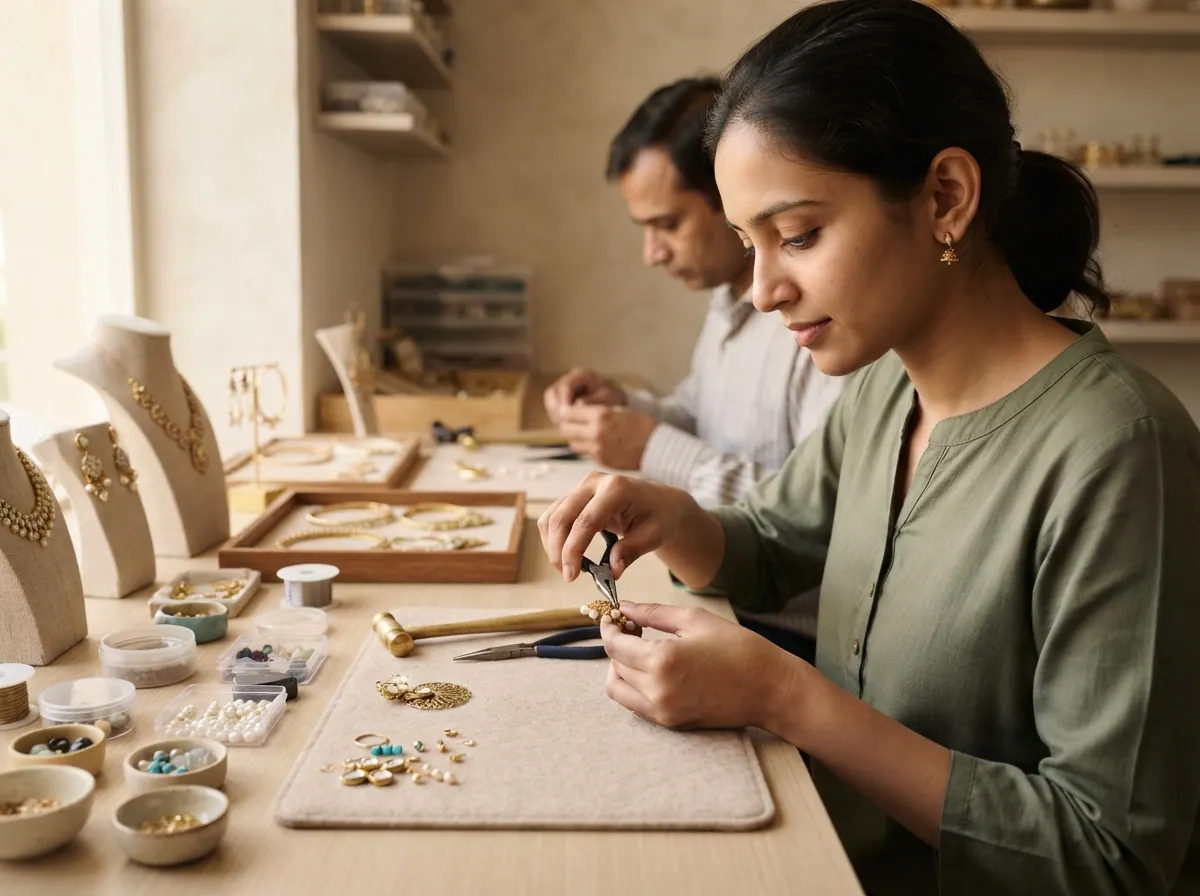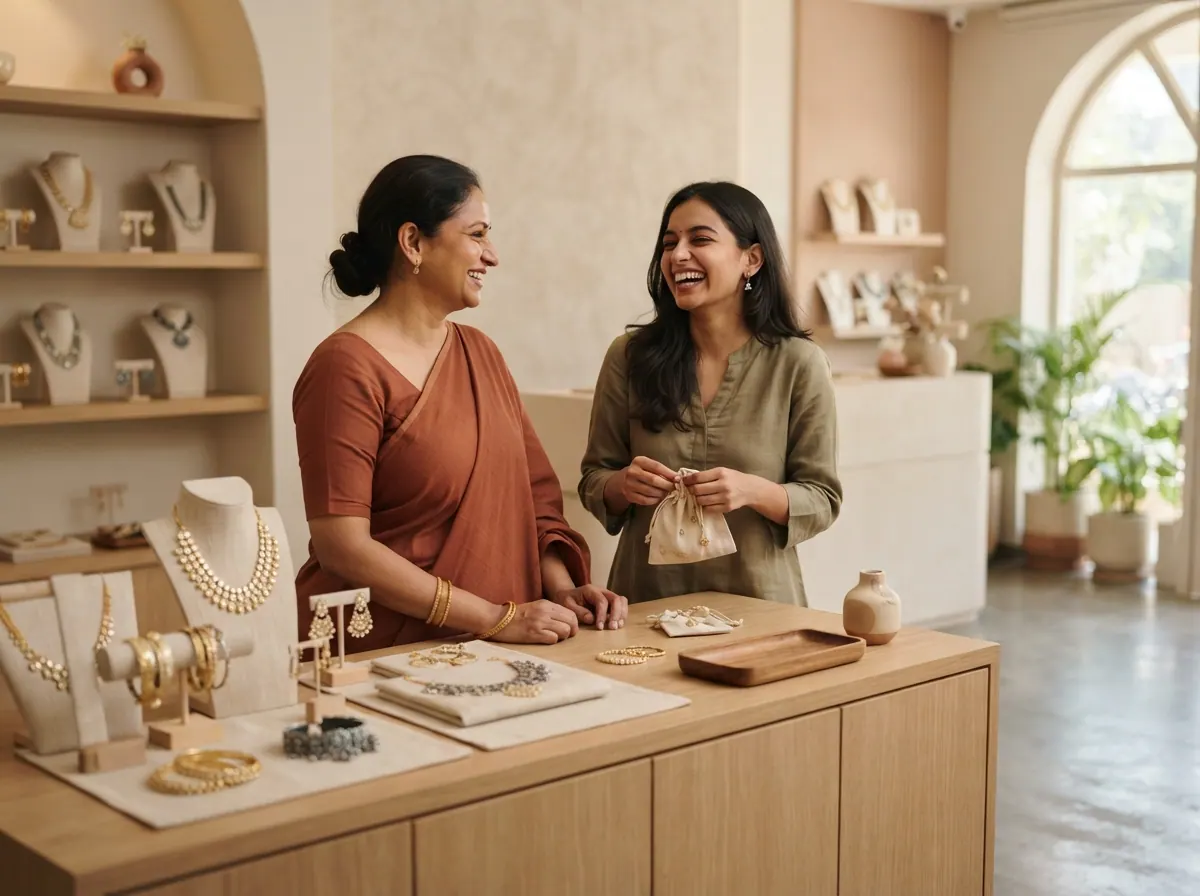
To start an artificial jewellery business in India you need a reliable wholesale source, an eye for what sells in your town, neat display and packing, and about ₹20,000–3 lakh. From home with a small stock sold on WhatsApp and Instagram, you can begin near ₹20,000–50,000. A small shop with proper lighting and a wide range sits near ₹3 lakh. The money is made on the gap between wholesale and selling price. It is lost on pieces that go out of fashion, tarnish or get returned.
All figures here are estimates. Check prices near you before you spend.
What does it cost?
For a small shop of about 100–150 sq ft:
| Item | Estimate |
|---|---|
| Rent deposit | ₹20,000–70,000 |
| Glass counter, wall display, lights, mirror | ₹30,000–90,000 |
| First stock: necklaces, earrings, bangles, sets | ₹40,000–1.2 lakh |
| Boxes, pouches, anti-tarnish bags, price tags | ₹5,000–15,000 |
| Signboard, billing and UPI scanner | ₹8,000–25,000 |
| Registration and paperwork | ₹3,000–10,000 |
| Money for the first slow months | ₹20,000–40,000 |
| Total | about ₹1.3–3 lakh |
A home business skips the rent, counter and signboard. A box of stock, trays, good photos and packing material can start the work for ₹20,000–50,000. Do not buy every design. Test with small lots.
How much can it earn?
Here is a normal month for a small shop with one helper:
Sales
- 300 pieces × about ₹400 = ₹1,20,000
Costs
- Stock cost: 300 × about ₹200 = ₹60,000
- Helper = ₹13,000
- Rent = ₹10,000
- Packing, boxes and tags = ₹3,500
- Instagram ads and photos = ₹3,000
- Power and phone = ₹1,500
- Small things = ₹500
- Total = ₹91,500
Left over: ₹1,20,000 − ₹91,500 = ₹28,500 a month, and this has to pay you as well. The helper is set at ₹13,000, the low end of what a counter job in Delhi's Chandni Chowk was listed at (₹13,000–18,000). A small town may pay less.
The ₹200 average cost includes pieces you later sell at a discount. If returns, tarnish and unsold pieces rise, the real cost per piece rises too. Wedding and festival months, when sets sell by the dozen, are far better than the rest of the year.
What do you need before you start?
- A clear customer. School and college girls buy ₹100–300 earrings. Brides' families look for ₹1,500–5,000 sets in kundan or temple style. These are different stocks.
- A wholesale source you have tested. Delhi's Sadar Bazar and Chandni Chowk are well-known wholesale markets, with minimum orders often 50–200 pieces. Jaipur and Rajkot are also sourcing cities, so check with local sellers what each is best for. Buy a small lot, wear it and wash it before you reorder.
- An understanding of finish. Gold-plated, rhodium and oxidised finishes last differently. Know what you are selling and say so to the customer.
- Safe storage. Moisture makes pieces tarnish. Use small zip bags with anti-tarnish strips for sets.
- A good mirror and light. Women want to see the necklace on themselves before buying.
- Instagram or WhatsApp. Clear photos on a plain background sell more than long descriptions.
Step by step
- Visit a few jewellery shops in your area as a customer. Notice which counters are crowded and which pieces are picked up.
- Choose your customer and price range. Two bands at most.
- Do your first buying trip with a list and a limit. Buy small lots across many designs. Match earrings and sets so you can sell them together.
- Test a piece from each lot. Wear it for a day, rub it with a cloth and keep it near water.
- Tag and photograph on the day of purchase. Write your cost in a code and keep a stock list.
- Start a WhatsApp catalogue and Instagram page. Post new pieces regularly and reply fast.
- Make sets and combos with earrings, a necklace and bangles. These raise the bill without much more effort.
- Buy festival and wedding stock early, before the lane is crowded with other buyers.
- Count slow pieces every month and discount or bundle anything that has sat for 60 days.
Which licences apply?
- Shops and Establishments registration, and a local trade licence where your municipality asks for one.
- GST depends on your turnover and how you sell. Marketplaces usually ask for a number from the first sale, and any relief for small sellers should be checked. Imitation jewellery is commonly listed at 3% GST, but sources differ, so check the rate with a CA.
- Udyam registration is free and helps if you want a loan later.
- Hallmarking rules apply to gold and silver jewellery. If you sell real gold or silver, you need different permissions. This guide is about imitation jewellery. Do not call imitation jewellery gold or silver.
Confirm all of this with your local office or a CA, since rules vary by state.
What goes wrong?
- Buying what you like. Your taste may not be your town's taste. A first lot is a test.
- Tarnish and colour fade. A necklace that turns green on the skin after two weeks brings returns and a bad word.
- Fashion moves quickly. A design that sold in Navratri does not sell in March.
- Sets with missing pieces. One earring lost from a set makes the whole set hard to sell.
- Returns from online orders. Courier, packing and the returned piece can eat the profit from the sale.
- Credit to friends and shops. Small shops buy from you on credit and then delay.
- Allergic reactions. Some customers react to cheap metal. Tell people what the base metal is and give a simple refund option.
Situations you will face
What would you do? Each choice costs something.
Getting started
Jaipur has kundan and oxidised pieces that look rich. Rajkot has gold-plated fashion pieces that sell fast to college girls.
- Buy kundan and oxidised in Jaipur: Higher price, bridal buyers
- Buy gold-plated fashion in Rajkot: Cheaper, quick sales, less special
A room at home costs nothing but few people pass by. A small shop costs a deposit and rent before any sale.
- Start from home: Low cost, slower growth
- Take a small shop: Deposit and rent, more walk-ins
Zip bags with anti-tarnish strips cost ₹5 each. Without them, pieces in humid weather turn dull.
- Pack every set in a bag: Small cost, pieces stay bright
- Use plain paper: Cheaper, tarnish risk
Everything looks beautiful. Buying one of each design would eat most of your cash.
- Pick 40 designs, 3 pieces each: Test the market, small lot
- Buy 120 designs, 1 each: Looks full, thin repeat
A good mirror and warm lights make stone pieces sparkle. Your counter budget is tight.
- Add lights and a large mirror: Costs money, more sales
- Use a small plain mirror: Saves money, dull display
A Jaipur agent says take ₹50,000 of pieces now and pay in 30 days at slightly higher rates.
- Take the credit lot: Fuller trays, higher price
- Buy a smaller lot in cash: Better rate, thinner display
A college girl will model your sets for reels in return for a fee. You have never made a video.
- Pay for the shoot: Costs money, new followers
- Take photos yourself: Free, less reach
First month
A customer returns a necklace after two weeks. They show a green mark on their neck and want their money back.
- Refund fully: Lose the sale, keep trust
- Offer another piece: No cash out, may not satisfy
A girl's ears swelled after wearing your oxidised earrings. Their mother calls you upset.
- Refund and suggest a doctor: Costs money, shows care
- Offer a safe-metal replacement: Costs a piece, safe metal
A necklace set lost its matching earrings in the tray. Without them the set will not sell at full price.
- Buy a matching pair: Time and cost, full price sale
- Sell the necklace alone, cheaper: Quick cash, lower margin
A bride's aunt wants ten matching sets for bridesmaids at a big discount. Your cost per set is ₹350.
- Give 15% off: Thin margin, big sale
- Give 5% off only: Better margin, may lose them
A friend wants ₹6,000 of sets for their shop on credit. They say they will pay in 20 days.
- Give it on credit: Cash stuck, sale made
- Ask for half now: Cash safe, little awkward
A college fest invites you to sell earrings and bangles for two days. Stall fee is small but you must carry stock and pay for a helper.
- Take the stall: Fee and helper, quick sales
- Skip it: No cost, no new crowd
A bright orange set looked good at the wholesaler. After a month none have sold.
- Mark them down 40%: Cash back, lose margin
- Hold for the wedding season: Cash stuck, better price later
Running it
Wedding season starts in six weeks. Kundan and temple sets cost more and sit if not sold.
- Order a big bridal lot: High risk, strong sales
- Order a small lot: Safer, may run out
Your helper is on leave for three days of the Diwali rush. Customers will queue at the counter.
- Hire a part-timer: Small cost, more sales
- Handle it alone: Saves money, slow service
A shop nearby is selling the same kundan set at ₹100 less. The stones look similar.
- Match their price: Lower margin, keep sales
- Bring new designs: Costs more, stays ahead
A marketplace invites you to list jewellery. It needs GST, filing every month and returns at your cost.
- Get GST and list: Fees and filing, wider reach
- Keep selling locally: Simple, local customers
Oxidised silver-look pieces were fashion last season. Now girls want light pastel sets and your trays are full.
- Buy the new style: Costs cash, catches fashion
- Clear old stock first: Cash back, slow shelf
Five parcels came back this week with worn or missing pieces. Courier costs both ways are yours.
- Set a clear return rule and photos: Some customers leave
- Accept all returns: Customers happy, losses grow
Two small shops in nearby towns want to buy sets from you at wholesale rates, but pay in 15 days.
- Supply with part advance: New income, some risk
- Stick to retail: Better margin, smaller volume
Your helper knows every regular and handles the counter well. A bigger shop has offered them more.
- Give a ₹2,000 raise: Higher cost, they stay
- Hire a new helper: Saves pay, regulars may miss them
Rent goes up 12% from next month. A cheaper shop one lane over would lose some walk-ins.
- Pay the higher rent: Higher cost, customers stay
- Move to the cheaper shop: Saves rent, fewer walk-ins
When things go wrong
A customer shows a payment screenshot and leaves with a ₹1,800 set. The money does not reach your account.
- Check the bank alert every time: Slower billing, safe now
- Chase and complain: Time spent, may not recover
Your count is short by ten earrings this week. The counter is crowded at evening hours and you cannot see every hand.
- Add a camera and glass trays: Costs money, deters theft
- Keep stock behind the counter: Free, fewer impulse buys
A damp week left white spots on twenty oxidised pieces. More are stored in the same cupboard.
- Buy silica gel, clean pieces: Small cost, protects stock
- Sell the dull ones cheaper: Some money, a lower image
A new lot of 60 sets has stones that fall off at a light tug. The wholesaler says returns cost courier.
- Return the lot: Courier cost, shelves clean
- Glue and sell as discount: Some money, returns likely
Growing
A karigar can make 50 sets in your own designs and your brand name if you pay in advance.
- Order your own 50: Cash stuck, your name grows
- Keep buying readymade: Safe, looks like others
A women's club offers a stall for a three-day Diwali sale. The fee is high and your shop will run short-staffed.
- Book the stall: High fee, many new faces
- Stay in your shop: Saves money, regular sales
Customers from other cities keep asking how to order. A website needs photos, courier tie-up and returns.
- Build the website: Costly, sells at night
- Use a WhatsApp catalogue: Cheap, limited reach
Is it right for you?
An artificial jewellery business suits you if you notice what women wear, enjoy suggesting a set for an outfit, and can pack neatly and reply fast on WhatsApp. It also helps if you like going to wholesale markets and picking pieces yourself.
It suits you less if you want fixed income each month. Sales jump around festivals and fall in between, and stock goes out of fashion. Try this first: buy 30 pieces across two price bands, sell them from home and on WhatsApp for a month, and see which ones go first. It costs little and teaches you what to stock.