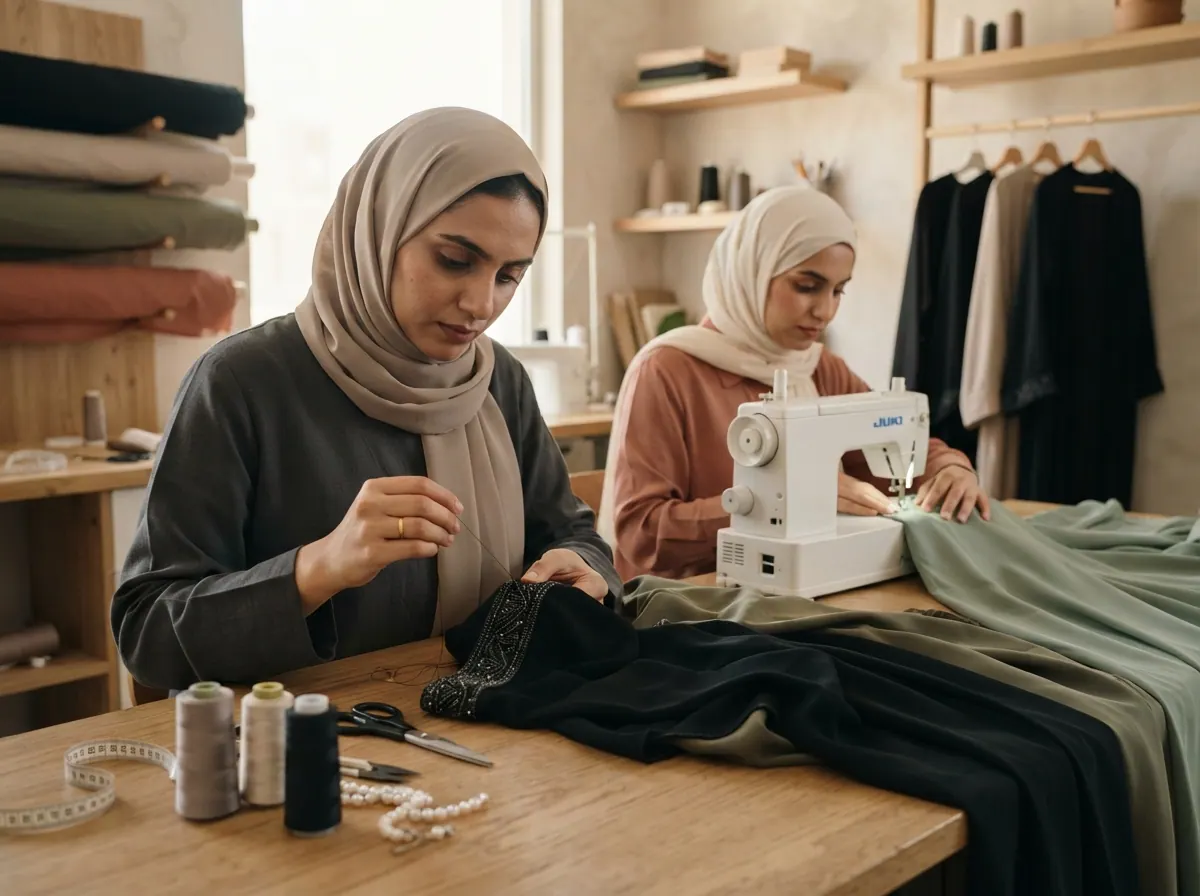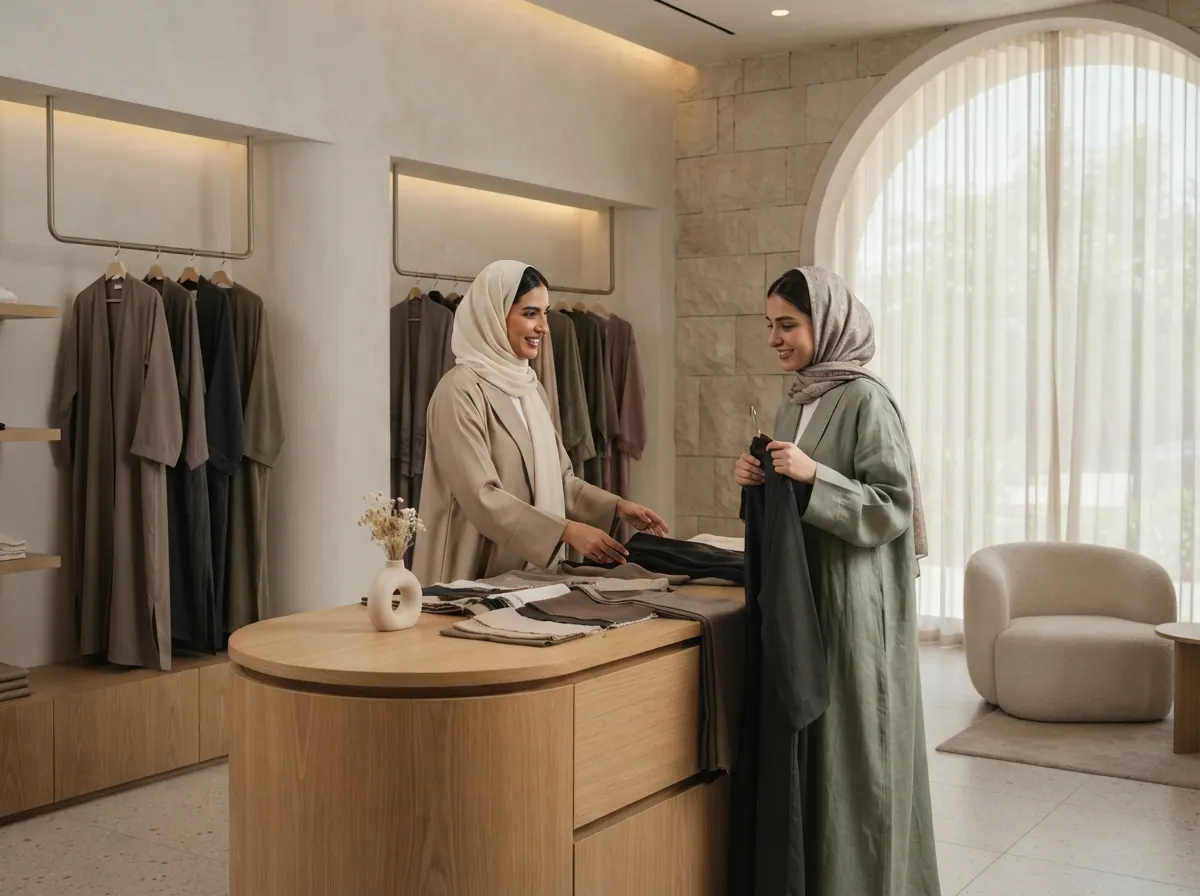
To start an abaya business in Saudi Arabia you need a clear design style, a reliable tailor or supplier, good fabric, photos, an online shop or social channels, and about SAR 19,000–110,000. You are selling fit, fabric and trust, mostly through Instagram, Snapchat, TikTok and WhatsApp. The first months are about testing a small number of designs and learning which sizes and colours sell, before spending on large stock.
All figures here are estimates. Check prices and rules near you before you spend.
What does it cost?
| Item | Small online brand | Larger brand with stock |
|---|---|---|
| First batch of abayas (30–60 pieces) | SAR 8,000–18,000 | SAR 20,000–40,000 |
| Fabric samples and pattern work | SAR 1,000–3,000 | SAR 3,000–8,000 |
| Photography, models and video | SAR 1,500–5,000 | SAR 5,000–10,000 |
| Online shop, domain and payment set-up | SAR 500–3,000 | SAR 3,000–8,000 |
| Registration, licences and accountant | SAR 1,000–4,000 | SAR 3,000–6,000 |
| Packaging, labels and hangers | SAR 800–3,000 | SAR 2,000–5,000 |
| Ads for the first three months | SAR 4,000–10,000 | SAR 10,000–18,000 |
| Working cash for returns and delivery | SAR 2,000–8,000 | SAR 5,000–12,000 |
| Total | about SAR 19,000–55,000 | about SAR 51,000–110,000 |
If you use a tailor who makes to order, you can keep stock small at the start. A workshop with your own machines and tailors costs much more and is a later step.
How much can it earn?
Income depends on how many orders your ads and followers bring in, and how many come back as returns. Here is an illustration for a small brand in a steady month, not the Ramadan peak.
One month
- 120 orders × average SAR 320 per order = SAR 38,400
- Returns and exchanges: 10% = SAR 3,840
- Sales kept = SAR 34,560
Costs that month
- Cost of the abayas sold (about 45% of price): 120 × SAR 144 = SAR 17,280, less returns put back in stock, about SAR 1,700, so about SAR 15,580
- Ads = SAR 6,000
- Delivery and packaging: 120 × SAR 22 = SAR 2,640
- Payment fees, about 2.5% of sales = SAR 860
- Phone, tools and part-time help = SAR 1,500
- Total = SAR 26,580
Left over: SAR 34,560 − SAR 26,580 = about SAR 7,980 a month before tax and before paying yourself.
Ramadan and Eid months can be much stronger, but you need to buy the stock earlier and the ad costs rise. A bad guess on colours or sizes can leave you with unsold stock.
What do you need before you start?
- A style that is yours. A cut, a fabric, a colour range or a detail that makes the brand easy to recognise.
- A tailor or supplier you trust, who delivers on time and keeps the same quality between batches.
- Good sizing. Make a clear size chart and test it on real people of different heights.
- A plan for returns and exchanges. Customers often change size or colour.
- A content plan. Clear photos in daylight, short videos, and honest descriptions of fabric.
Step by step
- Decide your range: everyday abayas, open front, kimono style, formal, or hijab and accessories. Start with a few designs, not twenty.
- Visit tailors and fabric markets, compare samples and ask for a trial piece before ordering a batch.
- Test on a small batch, such as 30 to 60 pieces, in two or three sizes and colours.
- Register the business and set up payments, with help from an accountant.
- Take photos and videos that show the real colour and the way the fabric moves.
- Open your online shop and social accounts, and connect delivery and cash-on-delivery or card payments.
- Start with a small ad budget, watch what each order costs, and stop what does not pay.
- Plan for Ramadan and Eid several months ahead: new designs, stock and delivery capacity.
Which licences apply?
Rules can change, so confirm each point with the relevant office or an accountant:
- Commercial registration and a business licence through the Ministry of Commerce and your municipality. Ask what applies to online or home-based sellers.
- Tax registration and VAT. Saudi Arabia has VAT, and there are registration rules by sales size. Ask the tax authority (ZATCA) or an accountant what applies to you.
- Online store registration. There is a platform for registering online shops with the Ministry of Commerce. Ask about the current process.
- Customs and import rules if you import fabric or ready-made abayas.
- Product labelling and consumer rules, including return and refund terms.
- Foreign workers. If you hire, ask about work permit and labour rules.
What goes wrong?
- Sizing mistakes. If sizes run small, returns climb and customers stop trusting the brand.
- Fabric that fades or sheds. One bad batch gets spread across reviews and social posts.
- Copied designs. Another seller copies your best seller and sells it for less.
- Late delivery before Eid. Missing the date loses sales and trust.
- Ad costs rise faster than sales. An ad that worked last month stops paying.
- Too much stock. You buy a large batch of one colour that goes out of fashion.
Situations you will face
What would you do? Each choice costs something.
Getting started
A tailor offers a lower price per abaya for 100 pieces. You have never sold your own design.
- Order 100 pieces: SAR 14,000, lower unit cost
- Order 40 pieces: SAR 7,000, higher unit cost
A softer fabric feels better but costs more. A cheaper one looks fine in photos but wears faster.
- Use the better fabric: SAR 40 more per piece
- Use the cheaper fabric: Save on cost, more complaints
The sample sleeve is too short and the shoulder pulls. The tailor says it is the pattern.
- Pay for a corrected pattern: SAR 600 and a week
- Order anyway and fix later: Saves time, risks bad fit
Customers vary in height. A wide size range needs more stock. A narrow one fits fewer buyers.
- Offer five sizes: More stock cost, fewer returns
- Offer three sizes: Less stock, more returns
A studio shoot looks polished. Daylight photos with friends cost little but may look less premium.
- Book a small studio shoot: SAR 3,000, strong first look
- Shoot in daylight yourself: SAR 200, more real
You can register now or start selling to friends first. The accountant says to register early.
- Register the business: SAR 2,500, proper receipts
- Take pre-orders, register next week: Small delay, cheaper start
First month
Snapchat and Instagram ads can bring orders fast. An influencer post costs more but feels personal.
- Run paid social ads: SAR 3,000, quick orders
- Pay a small influencer: SAR 2,000, slower trust
Several parcels come back unopened. Delivery costs are lost and the abayas must be re-checked.
- Ask for a small deposit: Fewer orders, fewer refusals
- Keep cash on delivery: More orders, more lost costs
Customers say your size 54 runs small. Exchanges cost delivery both ways.
- Pay for free exchanges: SAR 1,200, happy customers
- Charge delivery for exchanges: Saves money, some complaints
A customer shows a photo of an abaya that turned grey at the seams.
- Replace and test the dye: SAR 400 and a call to the supplier
- Offer a small refund: SAR 100, supplier unchanged
Buyers post photos wearing your abayas. Sharing them needs permission.
- Ask permission and repost: Free, builds trust
- Offer a small voucher for photos: SAR 15 each, more content
Running it
One courier is cheap but slow. Another costs more but delivers within two days.
- Use the faster courier: SAR 5 more per order
- Use the cheaper courier: Saves money, slow parcels
Ramadan and Eid bring a surge. Stock must be ordered months early, and the tailor books up.
- Order a large Ramadan batch: SAR 25,000, risk of leftovers
- Order a moderate batch: SAR 12,000, may sell out
An ad that cost SAR 25 per order now costs SAR 45. Sales are slowing.
- Change the photos and offer: SAR 1,500, may recover
- Pause ads for two weeks: Save money, fewer orders
A customer posts that the fit was poor and the abaya arrived wrinkled.
- Reply politely and fix it: Refund or exchange
- Reply defensively: Feels fair, looks harsh
Customers argue about returns. A written policy sets limits but may put some buyers off.
- Publish a fair policy: Clear rules, a few lost sales
- Decide case by case: Flexible, more arguments
Customers ask for matching scarves. They sell in higher numbers but need fabric and stock.
- Add a hijab line: SAR 5,000, higher basket size
- Stay with abayas only: Simple, smaller baskets
A shop wants 30 pieces at a lower price and pays in 30 days.
- Accept wholesale: Volume now, lower margin
- Decline politely: Keep your price
Your black open abaya is sold out. A reorder takes three weeks.
- Reorder a bigger batch: SAR 9,000, risk of overstock
- Reorder a small batch: SAR 4,000, may sell out again
When things go wrong
Another online seller sells a near copy at a lower price with your photos.
- Report the photo use: Takes time, may help
- Launch a new design: SAR 4,000 for fresh stock
Half of your Eid batch is delayed by a week. Customers are already waiting.
- Pay for rush tailoring: SAR 3,000, deliver on time
- Tell customers and offer a discount: Honest, lower margin
You paid for a post with a big following but the orders do not come.
- Ask for a second post: Free redo, some goodwill lost
- Test smaller creators next: SAR 1,800, better targeting
Your supplier raises the fabric price by 15%. Competitors are not raising prices yet.
- Switch to a new supplier: SAR 1,500 in new samples
- Raise your prices a little: Some buyers leave
Forty beige pieces sit in the room. Customers prefer black and navy this season.
- Run a clearance sale: Lower price, free space
- Hold for next season: Cash tied up, same price
The supplier tagged a blend as pure. A customer asks for proof of fabric.
- Correct all labels now: SAR 500, honest labels
- Add a correction card to parcels: SAR 150, relabel next batch
Growing
Your yearly sales are close to the level where VAT registration may be required.
- Register with an accountant: SAR 1,500, set up properly
- Wait and watch: No cost, risk of late filing
Owning machines and tailors gives control but needs rent, wages and constant orders.
- Open a small workshop: SAR 40,000, more control
- Keep your tailor partner: Flexible, less control
A marketplace shop is easy, but your own website gives control and better customer data.
- Build your own store: SAR 6,000, own the customers
- Stay on social channels: Cheap, depend on platforms
Customers in nearby countries message you. Shipping, customs and returns get complicated.
- Test with one country: SAR 3,000 for shipping tests
- Sell only inside the Kingdom: Simple, steadier
You are tired of making every design alone. A designer costs monthly but brings new ideas.
- Hire a part-time designer: SAR 3,000 a month
- Keep designing yourself: Free, slower launches
Is it right for you?
An abaya brand suits you if you have an eye for design and fit, can work with tailors and suppliers, and are comfortable showing your brand online. It suits you less if you want quick profit without building a following, because trust and repeat buyers are what make the margins work.
A good test: order a small batch of one or two designs, sell them to friends and followers first, and note what customers say about the fit. If they come back for more and recommend you, grow slowly, one design and one batch at a time.