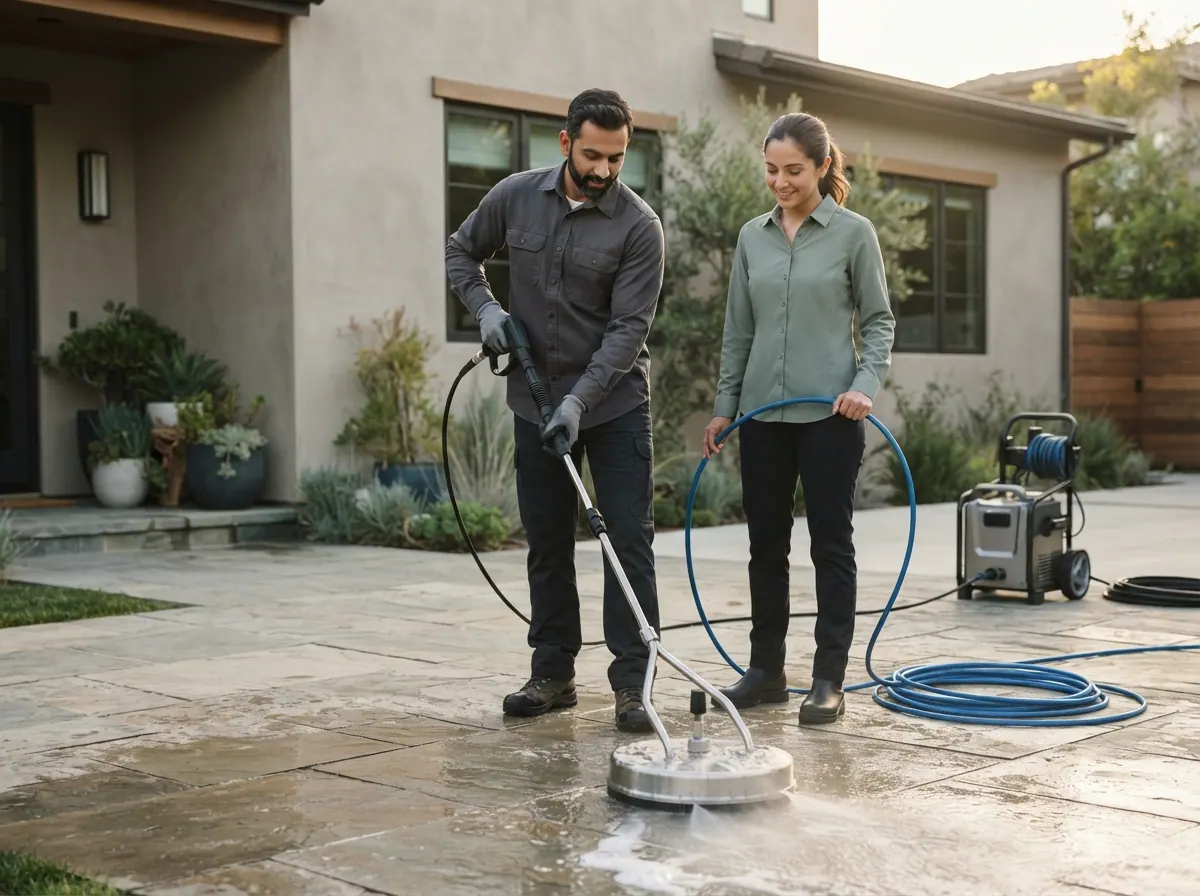
To start a pressure washing business in the US you need a gas pressure washer with good flow, a surface cleaner for driveways, a way to carry water and chemicals, insurance, a few customers and about $3,000 to $15,000. A used truck or trailer and a basic washer is the low end. A dedicated rig with a water tank, a hot water machine and several nozzles is the high end. Your profit depends on how many jobs you can book each week and how fast you finish each one.
All figures here are estimates. Check prices near you before you spend.
What does it cost?
| Item | Basic start | Full rig |
|---|---|---|
| Commercial gas pressure washer (3,000–4,000 PSI) | $800–1,800 | $1,800–4,000 |
| Surface cleaner, hoses, tips, wands | $300–800 | $600–1,500 |
| Soft wash pump or sprayer for house washing | $200–600 | $600–1,500 |
| Cleaning chemicals and first stock | $150–400 | $400–800 |
| Water tank or hose reel, and a trailer or truck rack | $500–3,000 | $2,000–6,000 |
| Safety gear, ladders, drop cloths | $100–300 | $300–800 |
| General liability insurance (first year) | $500–1,200 | $800–2,000 |
| Marketing and website | $100–400 | $400–1,000 |
| Total | about $3,000–8,000 | about $8,000–15,000 |
The surface cleaner is the tool that pays for itself. It cleans flat concrete much faster and more evenly than a bare wand.
What do you sell?
- Driveways, patios and sidewalks: the easiest first job, using a surface cleaner.
- House washing: done with low pressure and a cleaning mix for algae and dirt on siding.
- Fences and decks: wood needs lower pressure and care to avoid damage.
- Commercial work: storefronts, dumpster pads and parking lots, often in the evenings.
- Gutter fronts and windows: extras for a larger ticket.
Learn how each material reacts to pressure and chemicals before you sell it. Mistakes on siding, wood and windows cost real money.
How much can it earn?
Here is a one-person business with steady work in season.
Income
- 5 jobs a week at an average of $300
- 5 × $300 = $1,500 a week
- $1,500 × 4 weeks = $6,000 a month
Costs each month
- Cleaning chemicals = $450
- Fuel for truck and machines = $250
- Repairs and parts = $200
- Insurance share = $200
- Marketing = $300
- Truck and trailer costs = $400
- Total = $1,800
Left over: $6,000 − $1,800 = about $4,200 a month, before tax and before you pay yourself.
Five booked jobs a week is not guaranteed. Rain, cold weather and slow referral periods reduce it, and one bad damage claim can wipe out a month.
What do you need before you start?
- Water access. You may need your own tank, or customers who allow you to use their outside tap.
- Good flow, not just PSI. Gallons per minute decide how fast you clean.
- Chemical knowledge. Learn how cleaning mixes work, and how to rinse plants and protect surfaces.
- Insurance. Damage to windows, siding and plants happens to careful operators too.
- Photos. Before and after photos of each job are your best marketing.
Step by step
- Practise on your own driveway and on friends' homes until you can clean evenly with no stripes.
- Buy a commercial machine and a surface cleaner, and learn to maintain the pump.
- Register your business and buy insurance. Ask an accountant about tax rules.
- Price by the square foot or by the job, and include travel, setup and chemicals.
- Start with driveways and sidewalks, then add house washing after you learn low-pressure methods.
- Take before and after photos and ask for reviews on your online listing.
- Build a route of neighbours, because jobs on the same street save travel time.
Which licences apply?
Rules differ by state, county and city:
- Business licence and registration.
- Insurance. General liability is normal, and workers' compensation may apply once you hire.
- Wastewater and runoff rules. Many places restrict letting dirty water or chemicals run into storm drains. Ask your local environmental office.
- Chemical rules. Some products have handling and labelling rules.
- Water use limits. In drought areas, some places limit outdoor washing.
What goes wrong?
- Damage from too much pressure. Etched concrete, gouged wood and water behind siding are expensive to fix.
- Cheap machines that fail. A weak pump and low flow make jobs twice as long.
- Runoff problems. Dirty water and chemicals can harm gardens and storm drains.
- Underpricing. Beginners charge too little and then find fuel and time eat the profit.
- Weather. Rain, frost and cold limit work in many states.
- Ladders and heights. Falls are a real danger, and the jobs are not worth the risk without training.
Situations you will face
What would you do? Each choice costs something.
Getting started
A commercial washer costs $1,600. Renting one costs $90 a day, but you are not sure the work will come.
- Buy the commercial machine: $1,600, always ready
- Rent for the first jobs: $90 a day, no commitment
A flat-surface cleaner makes driveways much faster and stripe-free. A bare wand costs nothing extra.
- Buy a 20 inch surface cleaner: $450, faster flat work
- Use the wand: Free, slower and striped
Some customers have weak outdoor taps or no water at all. A tank on your trailer solves it but adds cost.
- Buy a 100 gallon tank: $900, any job possible
- Rely on customers' taps: Saves cash, some jobs refused
General liability costs about $800 a year. A friend says to wait until you have more income.
- Buy insurance now: $800, covers damage claims
- Wait for more jobs: Saves cash, risky on each job
House washing needs low pressure and cleaning mixes. You can learn from videos or pay for a short course.
- Pay for a course: $400, safe house washing
- Learn from videos only: Free, trial and error
A neighbour wants a driveway cleaned. A flat price per square foot looks low for the hour it will take.
- Quote a fair job price: May lose it, protects margin
- Quote cheap for a review: Low pay, photos and referrals
A neighbour asks for a quick clean of the front path. A good before and after photo takes time but sells your next job.
- Do proper photos and a post: $50 time cost, strong marketing
- Skip the photos: Free, no proof of work
First month
A narrow tip left lines in a concrete driveway. The customer notices when the surface dries.
- Offer to re-clean and discount: $200, trust kept
- Admit the marks, offer a discount: $100, honest but less goodwill
The pump starts leaking oil on your fourth job. A replacement is expensive.
- Rent while you repair: $150 plus repair, finish job
- Send customer home early: Free, unfinished jobs
Cleaner ran down a slope into a neighbour's flower bed after a house wash. Some plants look bleached.
- Rinse, replant and apologise: $250, trust kept
- Rinse the bed, offer to replant: $150, partial fix
A wet week cancels bookings, and a customer cannot rebook for a month.
- Offer gutter-front work indoors: Small income, tiring
- Wait out the rain: No spend, no income
Hardware store bleach costs less than a proper cleaning mix. Mix and dilution matter on siding and plants.
- Buy proper cleaning chemicals: $180, controlled results
- Use diluted bleach, cover plants: $100, careful, more work
A homeowner wants the driveway, patio and fence done in one day before a party on Saturday.
- Take it with a helper: $120 for a helper, good pay
- Decline, too much: Safe, lose the job
Running it
A restaurant wants its patio and dumpster pad cleaned after closing each month. The job is smelly and late.
- Take the monthly contract: Steady $350 monthly, late nights
- Stick to daytime jobs: Easier hours, less income
Grease and gum on commercial surfaces need hot water. A hot water unit costs a lot but opens new customers.
- Buy a hot water washer: $4,500, commercial work
- Stay with cold water: No spend, residential only
Three neighbours want a discount if you clean all three driveways in one day.
- Offer a bundle price: Less per job, saves travel
- Charge each at full price: Higher margin, they may say no
A dry summer brings outdoor water restrictions. Customers ask if you can still clean.
- Offer a low-water method: $600 gear, work continues
- Pause outdoor jobs: No cost, income stops
A homeowner wants an old wood deck brightened. Too much pressure can splinter the boards.
- Test a spot with gentle method: Slower, better result
- Turn up the pressure: Faster, risk of damage
A happy customer offers to post your work in the neighbourhood group if you give the customer a discount next year.
- Give a referral discount: $40 cost, new jobs
- Thank the customer only: Free, slower referrals
When things go wrong
The spray hit a double-pane window and water is now trapped between the glass.
- Report and file a claim: $500 deductible, covered
- Offer to pay it yourself: $900, quick fix
Your truck dies carrying the machine and tank. A tow and repair cost serious money.
- Pay for repair and reschedule jobs: $1,400, lose a week
- Rent a van for now: $350 rental, jobs continue
A city inspector warns that dirty wash water ran into the storm drain from your job.
- Buy a drain cover and recover water: $400, proper practice
- Use sandbags and a wet vac: $150, wash water collected
A customer compares your bill to a rival's quote and says it was too high.
- Explain the work and offer a small refund: $60, goodwill
- Stand firm: Keep money, poor review risk
The forecast shows frost. Water in your pump and hoses could freeze and crack parts.
- Drain and store gear indoors: Lose a day, protects the pump
- Leave it on the trailer: Free, risk of cracked pump
A property manager has not paid a $800 invoice for 60 days. They want another job done.
- Hold work until paid: Risks the account
- Do the job and keep waiting: More owed, client stays
Growing
You have more jobs than one person can do. A helper costs wages and needs training and insurance.
- Hire and train a helper: $1,800 monthly, more jobs
- Raise prices instead: Keeps solo, lose some jobs
A manager of several buildings wants monthly cleaning of entrances and parking areas.
- Bid with extra insurance: $700 cost, steady contract
- Stay with homeowners: No risk, slower growth
Roof washing earns well but needs height training, safe equipment and low-pressure methods.
- Subcontract to a trained roofer: Lower margin, safer
- Refer the customer elsewhere: No risk, no income
With two crews you could double jobs. A second truck, machine and tank is a big outlay.
- Build a second rig: $9,000, more jobs
- Improve your first rig: $1,500, steadier
Cold months are quiet. You can save money or add services like holiday light hanging.
- Add holiday lights service: $700 gear, winter income
- Save and rest: No spend, quiet winter
Is it right for you?
Pressure washing suits you if you enjoy visible results, can work outdoors in wet conditions and are comfortable learning surfaces and chemicals. It suits you less if you want predictable income all year, or dislike lifting hoses and tanks.
A good test: clean ten driveways and patios for friends and neighbours, time each job, and calculate your income per hour after fuel and chemicals. If it works, add house washing next, and grow your route street by street.