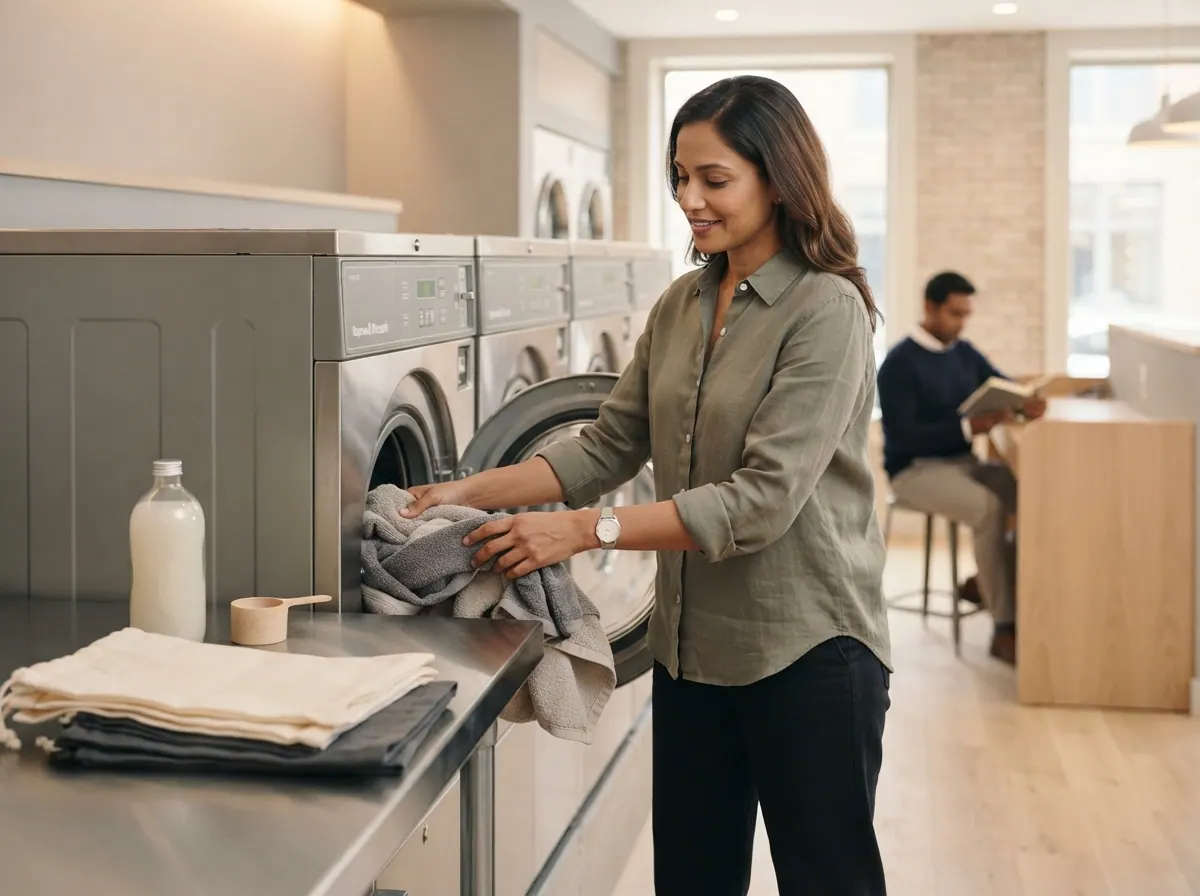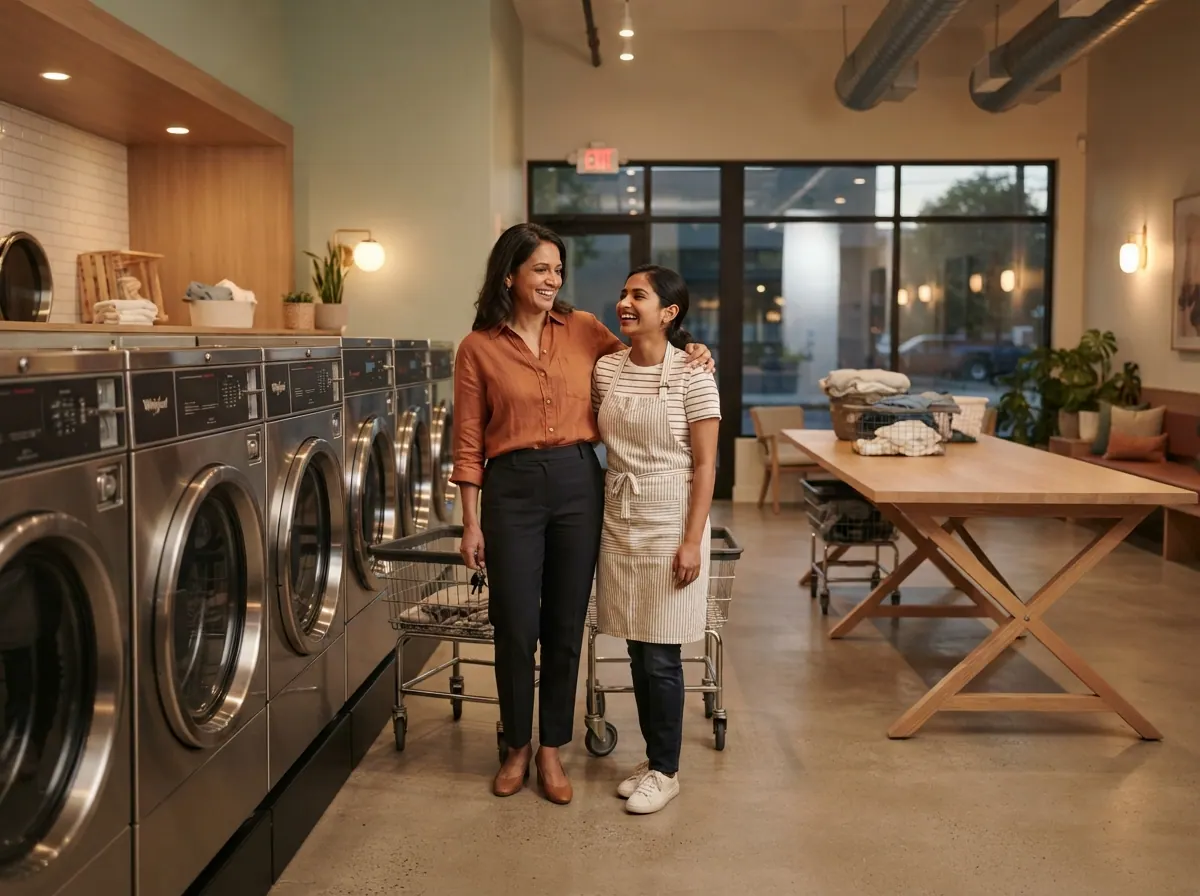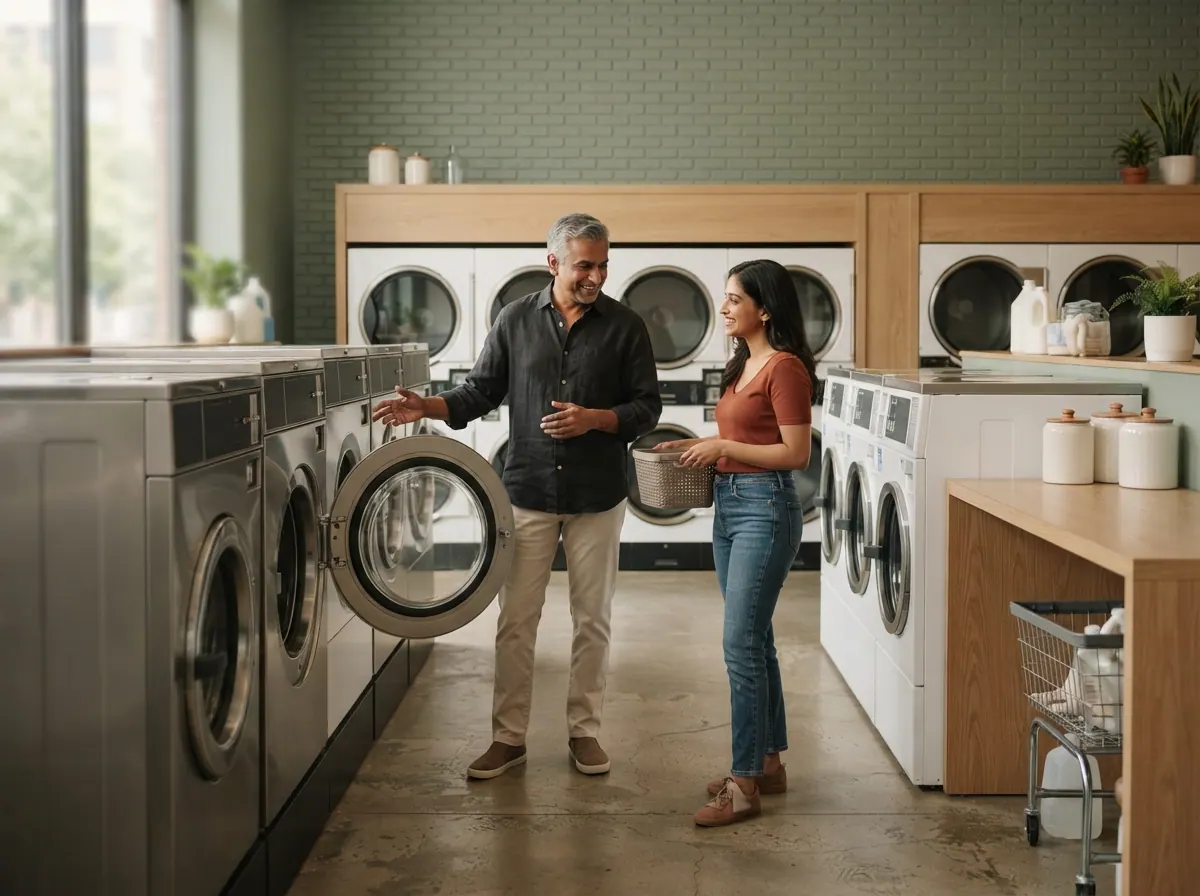
To start a laundromat in the US you need a space with enough water, drainage and gas or electric supply, a set of washers and dryers, a lease that fits the business, and roughly $150,000 to $600,000. The low end is a small store, often an existing one. The high end is a newer, larger store with many machines, card payment and a wash-dry-fold counter. Most of the money goes into machines and into plumbing that suits them, so the building matters as much as the equipment.
All figures here are estimates. Check prices near you before you spend.
What does it cost?
| Item | Small or existing store | Larger new store |
|---|---|---|
| Buying an existing store, or lease deposits and fit-out | $40,000–120,000 | $60,000–180,000 |
| Washers and dryers | $60,000–200,000 | $180,000–330,000 |
| Plumbing, venting, gas and electrical work | $15,000–50,000 | $50,000–120,000 |
| Payment system (coin, card or app) | $3,000–10,000 | $10,000–25,000 |
| Folding tables, seating, carts, signage | $5,000–15,000 | $15,000–40,000 |
| Permits, legal, insurance | $4,000–10,000 | $8,000–20,000 |
| Working cash for the first months | $15,000–45,000 | $40,000–85,000 |
| Total | about $150,000–300,000 | about $300,000–600,000 |
Equipment distributors often offer financing, and landlords may help with fit-out costs in exchange for a longer lease, but both add monthly payments that you must cover.
What do customers actually pay for?
- Self-service washing and drying: the core income, priced by machine size.
- Large capacity washers: the 30 to 80 pound machines earn more per load and suit blankets and big families.
- Wash-dry-fold: drop-off laundry sold by the pound, with an attendant doing the work.
- Vending and extras: detergent, softener, bags, and sometimes a snack or drink machine.
- Pickup and delivery: an option for busy customers and offices.
Wash-dry-fold has better margins than self-service, but it needs staff, space to fold and a system to keep each customer's clothes separate.
How much can it earn?
Here is a mid-size store, with steady trade in a neighbourhood with many renters.
Income
- Self-service sales = $24,000 a month
- Wash-dry-fold sales = $6,000 a month
- Total = $30,000
Costs each month
- Rent = $6,000
- Water and sewer = $4,000
- Gas and electric = $3,500
- Attendants (part-time cover) = $3,500
- Repairs and parts = $1,200
- Insurance = $500
- Loan payment on equipment = $4,500
- Supplies, software, other = $800
- Total = $24,000
Left over: $30,000 − $24,000 = about $6,000 a month, before tax and before you pay yourself.
If rent is $9,000 instead of $6,000, you keep only $3,000. If sales are $25,000, you keep about $1,000. The loan payment and the lease decide your profit far more than the number of machines.
What do you need before you start?
- A suitable building. Check water line size, drains, sewer connection charges, gas supply, ventilation for dryers and parking.
- Demographic fit. Look for many apartments without in-unit machines, a steady stream of foot traffic and few competing laundromats.
- A lease with fair terms. Ask for the length, renewal options and what the landlord pays for.
- Cash for the slow months. New laundromats usually take time to build a base of customers.
Step by step
- Visit five laundromats at busy and quiet times, and note which machines are used most and what they charge.
- Study the area. Count nearby apartments and check the competition. Look at what laundry in the area costs.
- Get quotes from two or three equipment distributors for the machine mix you plan, and from a contractor for plumbing and venting.
- Check the utilities. Ask the water utility about connection or capacity fees before you sign a lease.
- Arrange financing, which can include a bank or SBA loan and equipment financing. Ask a lender and an accountant what you qualify for.
- Install and test. Test every machine and the payment system before opening.
- Open with a clean, bright, safe store and an attendant on duty during the busy hours.
Which licences apply?
Requirements depend on your city, county and state, so confirm with each office:
- Business licence and tax registration.
- Building, plumbing, gas and electrical permits for the fit-out, and inspections before opening.
- Water and sewer approval or connection fees from your utility.
- Fire and safety rules, including lint cleaning for dryer vents.
- Insurance. Ask an agent about property, liability and equipment cover.
What goes wrong?
- The utility bill is higher than the plan. Water, sewer and gas often cost more than owners expected.
- Old machines break constantly. Cheap used equipment can cost more in repairs and lost sales.
- A lease that cannot be renewed. You invest in the build and then the landlord raises rent.
- Weak security or poor lighting. Customers avoid a store that feels unsafe at night.
- Lint and dryer fires. Vents and lint traps must be cleaned on a schedule.
- Slow ramp-up. A big loan payment arrives before sales are strong.
Situations you will face
What would you do? Each choice costs something.
Getting started
An older laundromat is for sale with real sales records. A vacant unit across town could be fitted with new machines.
- Buy the existing store: $90,000, customers from day one
- Build in the vacant unit: $140,000, new machines, slow start
The water utility says your unit needs a larger line and a sewer capacity charge before opening.
- Pay and upgrade the line: $12,000, enough water
- Cut to fewer washers: $3,000, fewer machines to rent out
A distributor offers refurbished washers at about half the price of new. New ones come with a warranty.
- Buy new machines: $60,000 more, warranty
- Buy refurbished: Saves $30,000, more repairs
The landlord offers a three-year lease with a rent rise. A ten-year lease costs more but locks in your fit-out.
- Sign for ten years: $4,000 more in rent a year, secure
- Take the three-year lease: Lower rent, risk of losing the site
Coin machines are cheap but need emptying. A card or app system costs more and drops rates for loyal customers.
- Install card and app payments: $12,000, easier for customers
- Stay with coin: $4,000, coin counting and theft risk
The contractor says the vent to the roof is long and needs more fans. Short vents cost less but must meet rules.
- Build the proper vent: $8,000, safe and legal
- Reduce the dryer count: $1,000, fewer dryers to rent
A rival has cheap wash prices. You can run half-price weeks to draw people in, but it reduces early income.
- Run a half-price opening week: $1,500 lost revenue, new faces
- Open at normal prices: Better margin, slower start
First month
Your first utility bill is $2,000 higher than you planned. Some washers use far more water.
- Swap the thirsty washers: $9,000, lower bills later
- Raise wash prices slightly: Extra income, grumbling regulars
Evenings are busy, but you are alone in the store and customers want help and a clean floor.
- Hire a part-time attendant: $1,400 monthly, cleaner store
- Work evenings yourself: Saves money, tiring
A customer's wet clothes are stuck in a jammed washer. The repair technician can come tomorrow.
- Refund, call the technician: $150 refund and call-out
- Put up an out-of-order sign: Cheaper, angry customer
The change machine has been broken into overnight and an unknown amount of cash is gone.
- Report it and add cameras: $2,500, record and deterrent
- Just replace the lock: $300, still exposed
A customer says a dryer smells hot. Lint has built up behind several machines.
- Hire a vent cleaner now: $600, safer machines
- Clean the lint traps yourself: Free, vents still dirty
A regular nurse wants you to wash and fold their scrubs by the pound. It needs space and a scale.
- Start wash-dry-fold: $2,500 setup, better margin
- Stay self-service: Simple, miss extra income
Running it
Sales are down after school holidays. The equipment loan payment is due as normal.
- Cut your own pay this month: Protects credit, less to take home
- Ask lender to defer a month: Fee added, breathing room
A brighter store with card machines opens a mile away. Some regulars try it and say it is clean.
- Repaint and add free Wi-Fi: $5,000, win back buyers
- Lower prices on big washers: Less income, keeps families
Customers complain their warm washes come out cold. A new commercial heater is expensive.
- Replace the heater: $7,500, steady hot water
- Patch it for now: $900, may fail again
People bring big rugs and dog beds that overload your largest washer and need extra rinses.
- Charge a clear heavy-load price: More income, some complaints
- Ban heavy items: Protects machines, loses buyers
Gas prices went up. Each dryer cycle now costs more than you charge.
- Raise dryer prices a little: Better margin, mild pushback
- Hold prices to keep customers: Lower profit per load
An online review says the floors were sticky and a dryer was out of order. Others agree.
- Deep clean and reply honestly: $400, trust restored
- Reply defensively: Free, looks poor
When things go wrong
A drain hose bursts overnight and water spreads across the floor and into the next unit.
- Call plumber, dry out and repair: $4,500, damage contained
- Mop up and carry on: $300, mould and leaks may follow
A small fire starts in a dryer. The sprinkler and staff put it out, but the machine is destroyed.
- File an insurance claim, inspect all vents: $2,500 deductible, safer store
- Replace dryer, skip the claim: $5,500, no insurer review
The payment system is down on a busy Saturday and customers have no coins.
- Hand out free coin rolls: $400 cost, customers stay
- Tell them to come back: No cost, lost busy day
Your lease renewal comes with a big rent rise. Moving the machines would close the store for weeks.
- Negotiate a longer lease: Smaller rise, locked in
- Accept and raise prices: Keeps store, some customers leave
Two machines have smashed doors after a night break-in. Your insurance has a deductible.
- Repair, add lights and cameras: $5,000, harder to repeat
- Repair only the doors: $1,800, same weak spots
Dirty water comes up through a floor drain in the middle of the day.
- Close, fix and sanitise: $3,500 and a lost day
- Close two days for a full clean: $6,000 and lost sales, spotless
Growing
A laundromat in the next town is for sale. A second store doubles your income and your worries.
- Buy the second store: $180,000, more income later
- Upgrade the first store: $25,000, steadier
A small hotel wants regular drop-off towels and sheets at a low rate per pound. It uses lots of machine time.
- Take the hotel contract: Steady money, lower rate
- Stick with walk-in customers: Better rate, uneven trade
Busy professionals ask for pickup. A van and a driver cost money but bring larger orders.
- Start a delivery service: $6,000 start, bigger orders
- Stay in-store only: No spend, smaller reach
Newer washers use less water and gas. A supplier offers financing but with a monthly payment.
- Replace five washers: $25,000, lower bills later
- Keep current machines: No spend, higher bills
A larger chain wants to buy your store. It would end your income but free your cash.
- Sell the laundromat: $50,000 deposit now, income ends
- Keep running it: Steady income, lots of work
Is it right for you?
A laundromat suits you if you are comfortable with a large upfront investment, can solve machine problems quickly, and like running a clean, steady, repeat-customer business. It suits you less if you cannot afford a loan payment on a slow month, or dislike dealing with leaks, breakdowns and tenants.
A good test: work a few weeks of weekend shifts in a laundromat, ask the owner for last year's monthly utility bills, and try to find the busiest and slowest days. If the numbers still work, buy or build one store, keep it very clean, and grow only after it pays its own way.