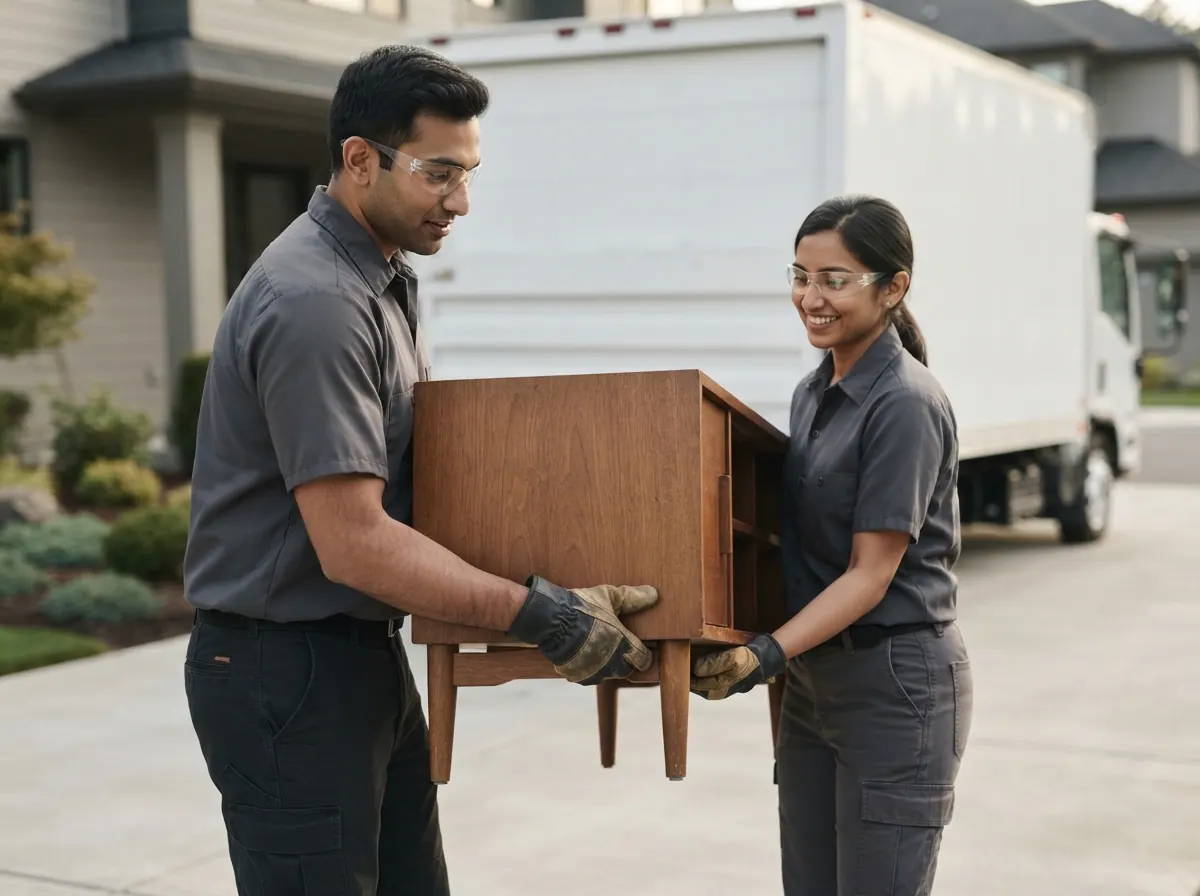
To start a junk removal business in the US you need a truck or trailer that can carry large loads, insurance, a way to dispose of what you collect, a pricing method by load, and about $10,000 to $50,000. The low end is a used pickup, a trailer and gear. The high end is a box truck or dump trailer with a helper and paid advertising. Your profit depends on how many jobs you can book each day and how much you pay to dump each load.
All figures here are estimates. Check prices near you before you spend.
What does it cost?
| Item | Pickup and trailer | Box truck or dump trailer |
|---|---|---|
| Used truck and trailer, or used box truck | $6,000–18,000 | $15,000–35,000 |
| Straps, tarps, dollies, gloves, boots, tools | $400–1,200 | $800–2,000 |
| General liability and commercial auto insurance | $1,500–4,000 | $3,000–6,000 |
| Business licence, LLC, permits | $200–800 | $500–1,500 |
| Website, signage, phone, booking software | $300–1,000 | $800–2,500 |
| Online ads in the first months | $500–1,500 | $1,500–4,000 |
| Working cash for fuel, dump fees and slow weeks | $1,500–4,000 | $4,000–8,000 |
| Total | about $10,000–25,000 | about $25,000–50,000 |
Insurance for a commercial vehicle is often a big part of the bill, so get quotes early and check what your personal vehicle policy excludes.
What do you sell?
- Household clean-outs: furniture, mattresses, boxes, old appliances.
- Garage, basement and storage unit clear-outs.
- Yard waste and renovation debris, which is heavy and often needs a bigger truck.
- Estate and landlord clean-outs: whole homes after a move or a tenant leaves.
- Donation and recycling pickups: items you take to a charity or recycler instead of the landfill.
Price by space on the truck, and charge extra for heavy items, stairs and anything that costs more to dispose of.
How much can it earn?
Here is a one-truck business with a helper on busy days.
Income
- 60 jobs a month at an average of $300
- 60 × $300 = $18,000 a month
Costs each month
- Dump fees: 60 loads × about $55 = $3,300
- Fuel = $1,200
- Helper (hourly, busy days only) = $3,000
- Insurance share = $700
- Truck payment = $900
- Online ads = $2,000
- Repairs and tyres = $600
- Total = $11,700
Left over: $18,000 − $11,700 = about $6,300 a month, before tax and before you pay yourself.
One expensive dump run, a truck repair or a slow week of bookings eats that quickly. Heavy loads like concrete and wet yard waste increase dump fees fast.
What do you need before you start?
- A disposal plan. Know where the nearest landfill, transfer station, recycler and charity drop-off are, and their fees and hours.
- A truck that can hold loads. Weight limits matter, so know your truck and trailer ratings.
- Insurance. Property damage, injuries and accidents are all real risks.
- A way to price and book. Photo quotes by text and an online booking form save trips.
Step by step
- Call local dumps and recyclers for fees by weight or volume, and what they refuse.
- Buy a reliable used truck or trailer and learn its limits.
- Register your business and get insurance. Ask an agent about commercial auto cover.
- Set your pricing table by quarter, half and full truck loads, plus extras.
- Build your online presence: a Google business listing, photos of your truck, and a simple booking form.
- Quote by photo whenever you can, and confirm what is included before you arrive.
- Sort loads to donate or recycle when possible, because it lowers dump fees and helps your reviews.
Which licences apply?
Rules vary by city, county and state:
- Business licence and registration.
- Insurance. General liability and commercial auto are standard, and workers' compensation may apply once you hire.
- Hauler or waste permits. Some places require a permit to haul waste for pay. Ask your local licensing office.
- Disposal rules. Landfills and transfer stations set what they accept and what they charge, including rules on hazardous items.
- Tax. Ask an accountant about sales tax and self-employment tax.
What goes wrong?
- Pricing without checking the load. A "quick garage" turns into a full truck of wet boxes.
- Hazardous items. Paint, chemicals and gas cylinders cannot go in a normal load.
- Back injuries. Mattresses, appliances and stairs are hard on your body.
- Heavy loads. Concrete, soil and wet debris overload trucks and raise dump costs.
- Property damage. Scraped doorframes and floors lead to claims.
- Slow ad weeks. Booking drops and fixed costs stay.
Situations you will face
What would you do? Each choice costs something.
Getting started
A used box truck holds more but costs far more. A pickup with a trailer is cheaper and needs more trips.
- Buy a used box truck: $24,000, bigger loads
- Buy a pickup and trailer: $11,000, more trips
A commercial auto and liability policy costs much more than personal cover. A cheaper plan has gaps.
- Buy proper commercial cover: $3,200 a year, safe
- Buy a cheaper policy: $1,800 a year, gaps in cover
Two dumps charge different rates, and one refuses mattresses and tyres. Calling takes time.
- Call and make a price sheet: A day's effort, accurate prices
- Guess prices for now: Quick, some jobs lose money
Customers like a simple price. Charging per item feels fair but takes longer to quote.
- Price by quarter and half loads: Easy quotes, some heavy losses
- Price per item: Fairer on small jobs, slower
A simple booking form with photo upload costs a monthly fee. It saves visits but needs setting up.
- Pay for booking software: $60 monthly, fewer wasted trips
- Quote by phone only: Free, many wrong guesses
Online ads cost money before a single call comes in. A Google business listing is free.
- Run ads for a month: $900, many leads
- Only use free listings: Free, slower start
Heavy items need two people. A helper by the hour costs money but protects your back.
- Hire a day helper: $150 a day, faster jobs
- Work alone and book small jobs: Free, back strain
First month
A customer called it a small garage. You find it fills the whole truck and needs a second trip.
- Re-quote honestly on site: Fair price, awkward talk
- Do it at the quoted price: Customer happy, lose $200
The customer pushed in a dozen paint cans and half-used chemicals with the job. The dump does not take them.
- Leave them, show the disposal site: Lose the extra, stay legal
- Pay to drop them at a hazardous site: $90 and time, safe
A sofa caught the frame on the way out. The customer notices before you load.
- Apologise and pay the repair: $120, trust kept
- Say it was already marked: Free, an angry review
Your landfill charges a special fee per mattress. A customer has six to remove.
- Charge a mattress fee: Clear and fair
- Absorb the cost for the sale: Keeps customer, thin margin
You loaded concrete and wet soil. The truck sits low on its springs and the road is steep.
- Unload half and make two trips: Lose a few hours, safe
- Sell the load as two smaller jobs: Extra visit, safe weight
A customer wants a half-load price for what you estimate as a three-quarter load.
- Stick to your price table: May lose the job
- Give a small discount: Win job, less profit
Running it
A house clean-out includes a good dining table. A charity shop would take it, but the drop-off costs time.
- Drop it at the charity: Time lost, lower dump fee
- Dump it with the rest: Quicker, higher fee
A national brand with uniformed crews is advertising in your area and customers are comparing prices.
- Offer free quotes and local reviews: Costs effort, stays personal
- Cut prices to compete: Less profit per job
A real estate agent wants you for pre-sale clean-outs at a fair discount, with regular jobs.
- Offer a partner rate: Steady jobs, lower price
- Keep standard prices: Better margin, no pipeline
Your dump raises its price per ton. Your price table was based on the old rate.
- Raise your prices a little: Protects margin, some pushback
- Hold prices for now: Keeps customers, less profit
A customer wants an old piano removed. It is very heavy, with stairs and a tight turn.
- Hire two extra movers: $300 extra cost, safe lift
- Decline, too risky: No injury risk, lost job
A family asks you to clear a house packed with years of items. It could take four days and many trips.
- Quote a fixed multi-day price: $3,500 income, lots of work
- Refer them to a clean-out specialist: No spend, lose the job
A neighbour wants a few bulky items at the curb collected quickly for a very low price.
- Set a minimum job price: Fair, may lose small jobs
- Take it at a low price: $40 income, thin after fuel and dump
When things go wrong
The truck stops on the way to the dump with a full load of furniture.
- Tow, repair and rent a truck: $1,600, jobs continue
- Repair only and pause jobs: $900, a week lost
A fridge shifts and you strain your back. A doctor tells you to rest for a week.
- Rest and hire help: $700 helper cost, heal
- Book only light jobs: Some income, risk of reinjury
A neighbour finds a pile of waste in a field and says your truck was seen nearby.
- Show dump receipts: Keeps records neat, proves it
- Deny without proof: Free, suspicion lingers
You drive 40 minutes with a helper and nobody answers. The appointment was confirmed.
- Charge a trip fee: $60, upset customer
- Rebook with no charge: Free, lose time and fuel
A tyre bursts on a heavy load. You need roadside help and a new set.
- Replace both rear tyres: $550, safe again
- Replace one and monitor: $280, wear stays uneven
Growing
You turn down jobs every week. A second truck and a hired driver would increase income.
- Buy a second truck: $22,000, more jobs
- Raise prices instead: No spend, fewer jobs
A scrap yard pays for metal, and some used appliances resell. It needs sorting and storage.
- Start sorting for resale: Extra $500 monthly, more work
- Dump everything together: Simple, higher fees
A builder wants weekly pickups of renovation debris at a flat rate. Loads are heavy.
- Sign a weekly contract: Steady jobs, heavy loads
- Stay with homeowners: Lighter loads, uneven
A dump trailer unloads fast and saves labour. It costs a lot and needs a stronger tow vehicle.
- Buy a dump trailer: $9,000, faster unloading
- Keep your current rig: No spend, slower unloads
Reviews bring the next customers. Asking takes seconds, and a printed card costs little.
- Hand out review cards: $40, better ranking
- Don't ask: Free, slow reviews
Is it right for you?
Junk removal suits you if you are fit, like solving a physical puzzle with each load, and can talk calmly to people in a stressful moment. It suits you less if you cannot lift, dislike dirt and smell, or need steady income in the first months.
A good test: help a junk hauler for two weeks, record each job's price, load size, and dump fee, and see what is left after fuel. If it still works for you, start with one truck and photo quotes, and add a second truck only when the first is fully booked.