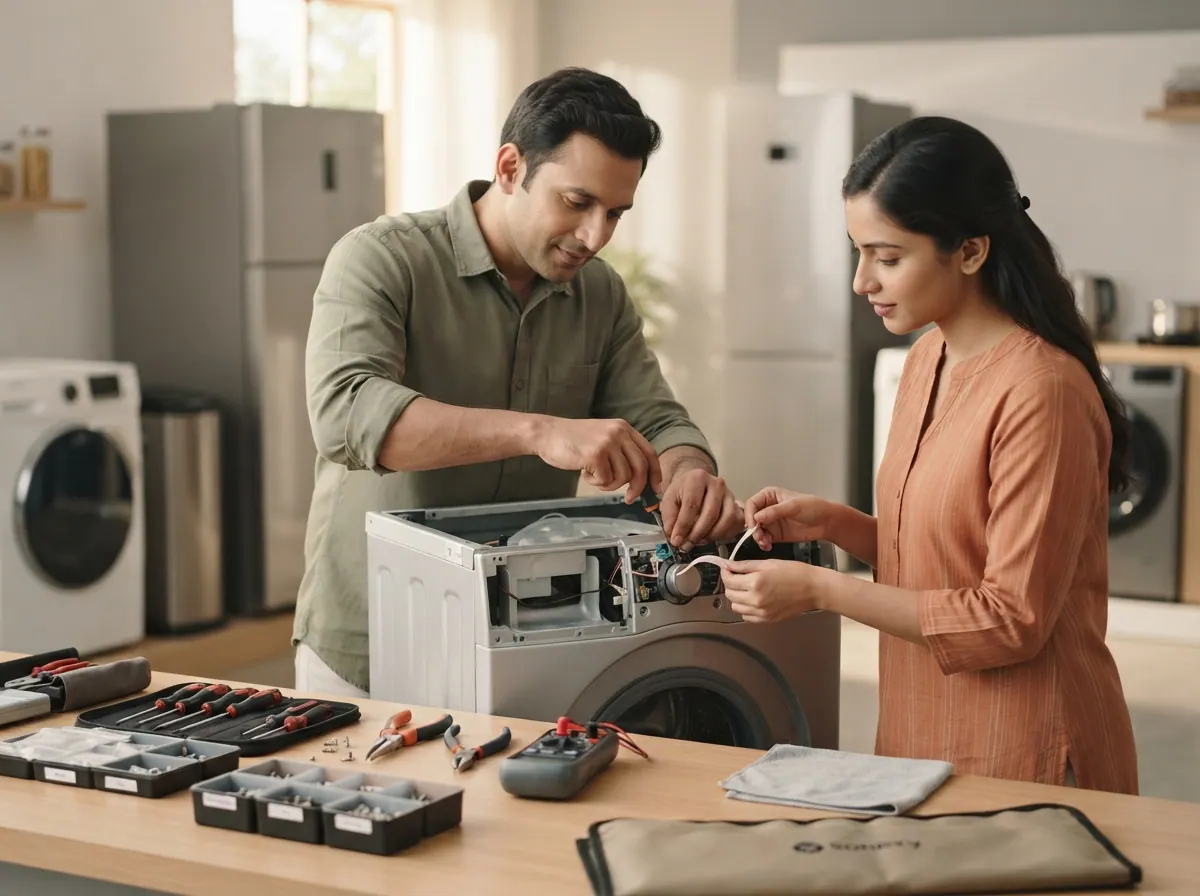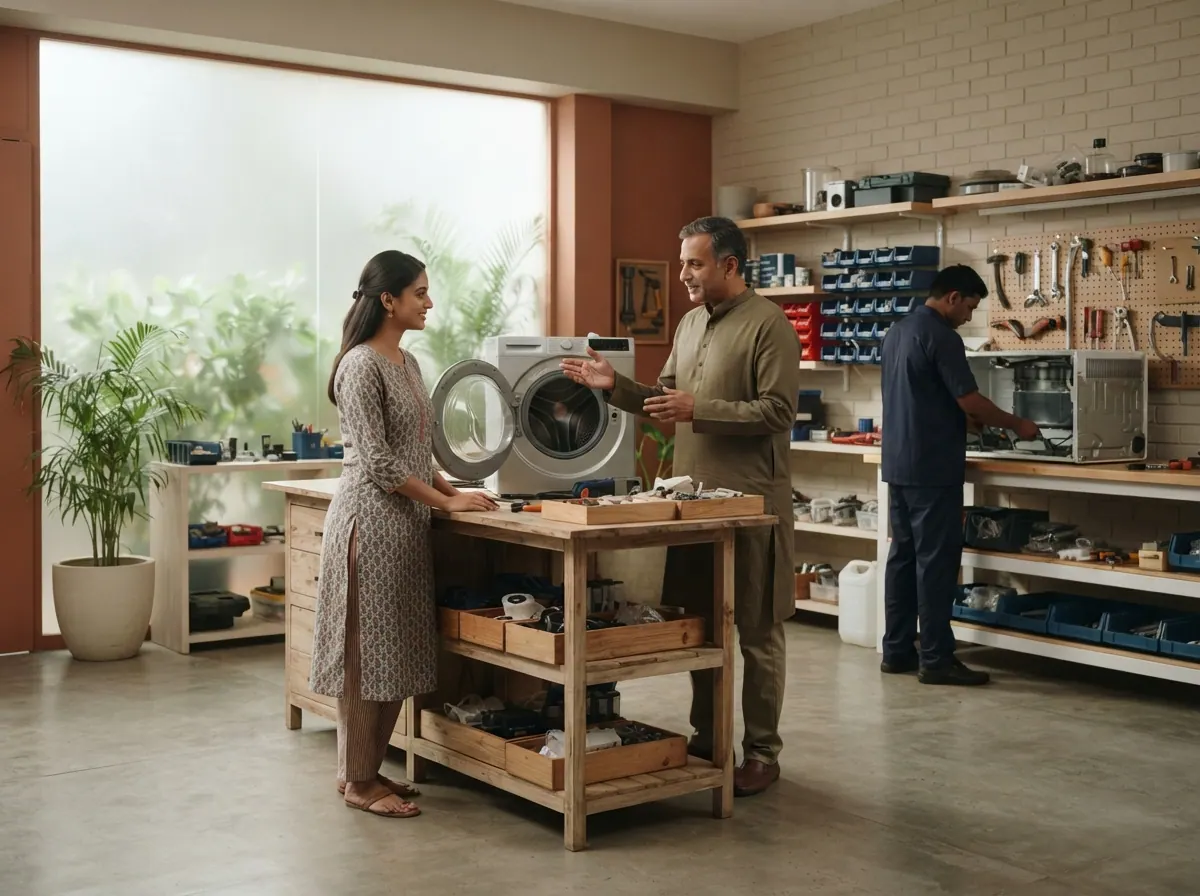
To start a washing machine and fridge repair business in India you need a technician who really knows the work, a multimeter and a set of fridge and machine tools, a work table in a small shop, a first stock of common spares, and about ₹50,000–3 lakh. A trained technician who visits homes with their own kit can start at a much lower cost. Money comes from labour and from the margin on spares. It is lost on wrong diagnosis, parts that fail again and customers who feel they were overcharged.
All figures here are estimates. Check prices near you before you spend.
What does it cost?
For a small rented shop of 150–250 sq ft:
| Item | Estimate |
|---|---|
| Rent deposit | ₹10,000–50,000 |
| Tools: multimeter, clamp meter, soldering set, brazing kit, vacuum pump, gauges | ₹15,000–70,000 |
| Work table, drum stand, shelves | ₹3,000–25,000 |
| First stock of spares: relays, thermostats, capacitors, belts, bearings | ₹10,000–80,000 |
| Signboard, billing software, cards, paperwork | ₹3,000–15,000 |
| Money for the first slow months | ₹9,000–60,000 |
| Total | about ₹50,000–3 lakh |
A vacuum pump and gauges for gas work cost about ₹6,000–8,000 at listed prices, so they are a small part of the tool cost. Stock is where owners overspend: rare boards and compressors can sit for a year.
How much can it earn?
A normal month for a small shop with one technician and a helper:
Income
- About 130 jobs × about ₹1,000 average bill (labour and parts) = ₹1,30,000
Costs
- Spare parts cost = ₹42,000
- Technician = ₹16,000
- Helper = ₹8,000
- Rent = ₹10,000
- Petrol for home visits = ₹6,000
- Power = ₹2,500
- Gas, solder and consumables = ₹4,500
- Call-backs and returned parts = ₹3,500
- Total = ₹92,500
Left over: ₹1,30,000 − ₹92,500 = ₹37,500 a month, and this has to pay you as well.
Labour pays better than parts. A fridge that needs only a relay and a clean-up earns more per hour than a compressor swap where most of the money goes to the dealer. In summer, fridge calls rise, and in the monsoon, washing machine calls bring steady jobs.
What do you need before you start?
- A technician with real hands-on skill. A fridge that cools but does not hold, or a washing machine that spins but does not drain, needs someone who can find the fault with a meter and not by swapping parts.
- Knowledge of both top-load and front-load machines. Drum bearings, drain pumps, door locks and control boards are the common repair jobs. Know the usual faults in the brands common in your area.
- A reliable spares source. One dealer for fridge parts and one for washing machine parts, with a fair return policy.
- A diagnosis habit. Charge a visit fee, tell the customer the fault and the cost before you open the machine, and keep old parts to show.
- A clear stand on old appliances. Tell customers honestly when repair costs more than a replacement is worth.
Step by step
- Work under a good technician for at least six months, or take a proper course, before you open your own shop.
- Buy a core tool set. Meters, soldering and brazing tools first, vacuum pump and gauges when you start gas work.
- Take a shop on a road with homes nearby and parking for pickup vans or customers' bikes.
- Build a spares starter stock. Only fast-moving items: relays, overloads, thermostats, door locks, drain pumps, belts.
- Set a visit fee and a rate card. Common jobs should have a typical range for labour.
- Offer a repair warranty on a repaired part, in writing. App platforms advertise 90 to 180 days, so a much shorter one may look weak. Choose a period you can keep.
- Tie up with local dealers and builders who sell appliances and may refer repairs after warranty.
- Keep a record of every customer and remind them for fridge servicing before summer.
Which licences apply?
- Shops and Establishments registration, and a local trade licence where your municipality asks for one.
- Udyam registration is free and helps with loans.
- Refrigerant and e-waste. Handling refrigerant gas and old boards may fall under state or central rules. Old boards and appliances are e-waste, and registered recyclers should handle them. Refurbishing for resale may make you a regulated refurbisher. Ask the state pollution control board how it applies to a shop of your size.
- Authorised service-partner status. Some brands appoint service partners. Ask the brand's local office about their terms.
- GST depends on your turnover. Repair services are listed at 18% once turnover crosses ₹20 lakh (₹10 lakh in special-category states). Services and parts may be taxed differently, so ask a CA.
Confirm all of this with your local office or a CA, since rules vary by state.
What goes wrong?
- Wrong diagnosis. You change a thermostat, but the real fault is the compressor. The customer pays twice and trusts you less. Use a meter before you replace anything.
- Unrepairable board. A burnt control board can cost more than the machine is worth. Tell the customer first.
- Fridge gas mistakes. Leaks that are refilled without being found return in weeks. Find the leak first and fix it properly. R600a gas is flammable, and technicians have died in compressor accidents, so learn the brazing and leak procedure before you do it alone.
- Old parts mistaken for new. A refurbished part sold as new breaks quickly. Mark clearly which parts are new.
- Customers who dispute the bill. A ₹300 estimate that becomes ₹2,400 after opening is a quarrel. Give a fault note and approval before you proceed.
- Warranty loss. Opening a machine still under brand warranty may void it. Ask the customer to check first.
- Dead stock of spares. Boards for old models sit unsold. Buy rare items only after an actual job.
Situations you will face
What would you do? Each choice costs something.
Getting started
A vacuum pump and gauges cost ₹18,000. Without them you cannot fix cooling faults or leaks properly.
- Buy the gas tools: Costly, full fridge work
- Do only electrical fridge faults: No spend, lose gas jobs
A spares dealer will give compressors on 30 days credit if you order six at a time.
- Take six on credit: Stock ready, debt to clear
- Order one per job: Safe cash, customers wait
A shop costs rent and a deposit. Home visits are cheaper but you carry tools on a bike every day.
- Rent a small shop: Rent cost, walk-in trade
- Do home visits only: Cheap, tiring, less trust
Many owners call and then do not repair after hearing the cost. A visit fee of ₹250 covers your trip.
- Charge a visit fee: Covers trips, fewer calls
- Visit free of charge: More calls, wasted trips
Washing machine boards cost ₹1,800 to ₹4,500 each and each model uses a different one.
- Stock the five common boards: Quick repairs, cash stuck
- Order on demand: Cash free, 2 to 3 day wait
Neighbouring shops charge ₹400 for a flush-and-clean and ₹800 for a drain pump change.
- Match their rates: Steady calls, thin margin
- Charge a little higher with a warranty: Fewer calls, more trust
A technician from a bigger shop wants a higher wage to join you. They know boards well.
- Hire them at their wage: Skill gain, higher cost
- Train a junior instead: Cheaper, slower to be useful
First month
A customer says the fridge worked fine a week ago. You suspect a relay but it could be the compressor.
- Test with a meter first: Takes an hour, right fix
- Change the relay and hope: Quick, may fail again
You quoted ₹600 for a top-load washer. Opening shows a failed motor and drum bearing, now ₹3,400.
- Stop, explain, ask approval: Slower, trust builds
- Fix the motor only, ask first: Smaller bill, half the repair
A front-load washer's board is burnt. A new board costs ₹4,200 and the machine is eight years old.
- Tell them honestly, let them choose: Lose the job, gain trust
- Offer a cheaper board, say so: Smaller sale, they know
A neighbour says they will send many friends if you give a half-price drain pump change.
- Give a small discount only: Friendly, small cost
- Refuse politely: Full price, may lose friends
A customer says you changed their compressor for an older one. They have a photo of the old serial.
- Show records and the old part: Costs time, clears you
- Dismiss the claim: Free, bad reputation grows
Running it
Fridge calls triple in one week. You cannot reach all of them before the weekend.
- Hire a temporary technician: Extra cost, extra income
- Prioritise old customers: Loyalty, miss new ones
Drain pumps, belts and door locks fail after wet weeks. Stock runs low and dealers are slow.
- Stock extra pumps and belts: Cash stuck, fast repairs
- Order per job: Cash free, customers wait
A store near you will send out-of-warranty repairs if you give it a share of each bill.
- Agree to a small share: Steady leads, thinner profit
- Skip the tie-up: Full profit, fewer jobs
Customers like a written warranty on a repaired part. It also brings call-backs you do not charge for.
- Offer the warranty: Trust, extra free visits
- No warranty: Less work, less trust
A brand offers jobs under warranty but pays low rates and wants quick reports.
- Join as service partner: Steady jobs, low rates
- Stay independent: Better rates, fewer jobs
Your back room is full of burnt boards, old motors and gas cylinders. A collector offers a small fee.
- Give to an authorised recycler: Small fee, tidy record
- Keep storing it: No cost, shop gets cramped
A customer needs a ₹6,500 compressor. If they cancel after you order it, the part is stuck with you.
- Take half in advance by UPI: Protects you, they may hesitate
- Order it on your own cash: They are happy, you carry risk
When things go wrong
A drain pump you fitted fails in three weeks. The customer is annoyed and has told the neighbours.
- Replace with an original pump: Costs more, firm fix
- Fit another cheap pump: Cheap, repeat risk
You refilled gas two weeks ago without finding the leak. It is cooling poorly again.
- Find the leak, fix it properly: Costs time and brazing
- Refill, warn it may leak again: Cheap, repeat visit likely
You bought boards for models that few people own. They sit on the shelf for months.
- Sell back at a loss: Loss now, cash freed
- Hold and wait: Cash stuck
A customer asks you to fix a one-year-old fridge. Opening it may void the brand's warranty.
- Ask them to call the brand: Lose the job, protect them
- Repair after they accept the risk: Slower, they agree first
A new shop advertises free visits and 90-day warranty. Your calls drop.
- Match with free visits: Keep calls, lose fee income
- Hold fee, show your skill: Some leave, others stay
They say the washer is working but not as before, and refuse to pay for the motor.
- Retest and show the fault is fixed: Costs a visit, may get paid
- Hold the old part until paid: Firm, may start a dispute
Growing
An app sends repair orders but keeps a share of each bill and wants quick arrival.
- Join the app: More orders, a cut each
- Use your own WhatsApp: Keep the money, slower growth
An apartment society asks for a yearly fridge and washer service plan with a fixed fee per flat.
- Offer the yearly plan: Steady money, fixed visits
- Charge per call: Flexible, uneven income
Home calls are piling up. A second technician with their own bike would cover another part of the city.
- Add a second visit team: More calls, more wages
- Raise your visit fee: Fewer calls, higher pay
Customers leave old but working washers with you. Cleaning and selling them could add income, but needs space.
- Start a small resale corner: Stock risk, new income
- Stay with repairs only: Simple, no new income
Customers ask for AC service. It needs more tools and a ladder, and the season is short.
- Add AC servicing: Cost now, summer income
- Skip AC, stay with fridge: No spend, lose AC work
Is it right for you?
Appliance repair suits you if you like finding faults, are patient with wiring and tiny parts, and can explain a problem in plain words. It helps to be honest when a machine is not worth fixing. That honesty is what brings people back with the next appliance.
It suits you less if you want results without learning for a few months. Fridge and board work take time to learn properly. Try this first: spend three months with a technician, visit homes with them, and note which jobs bring regular customers. Then decide whether you want a shop or home visits.