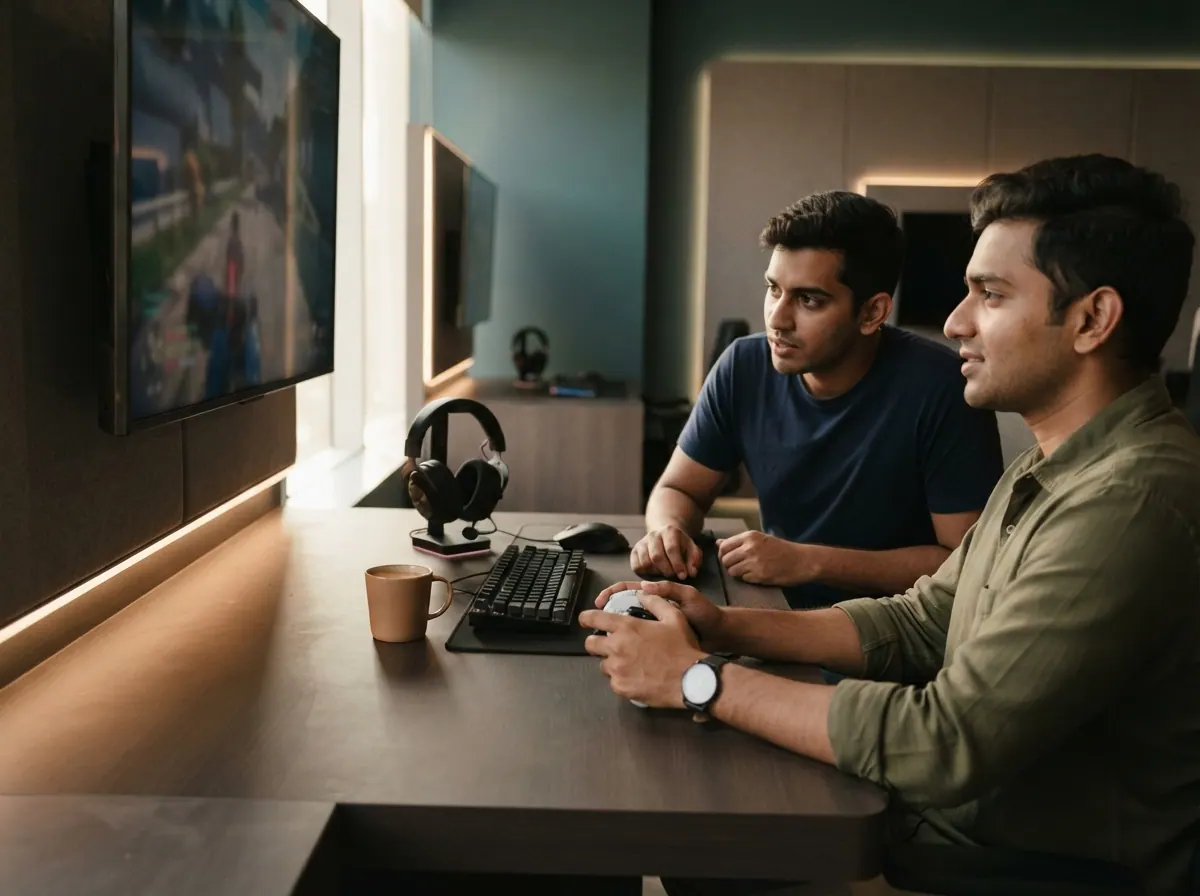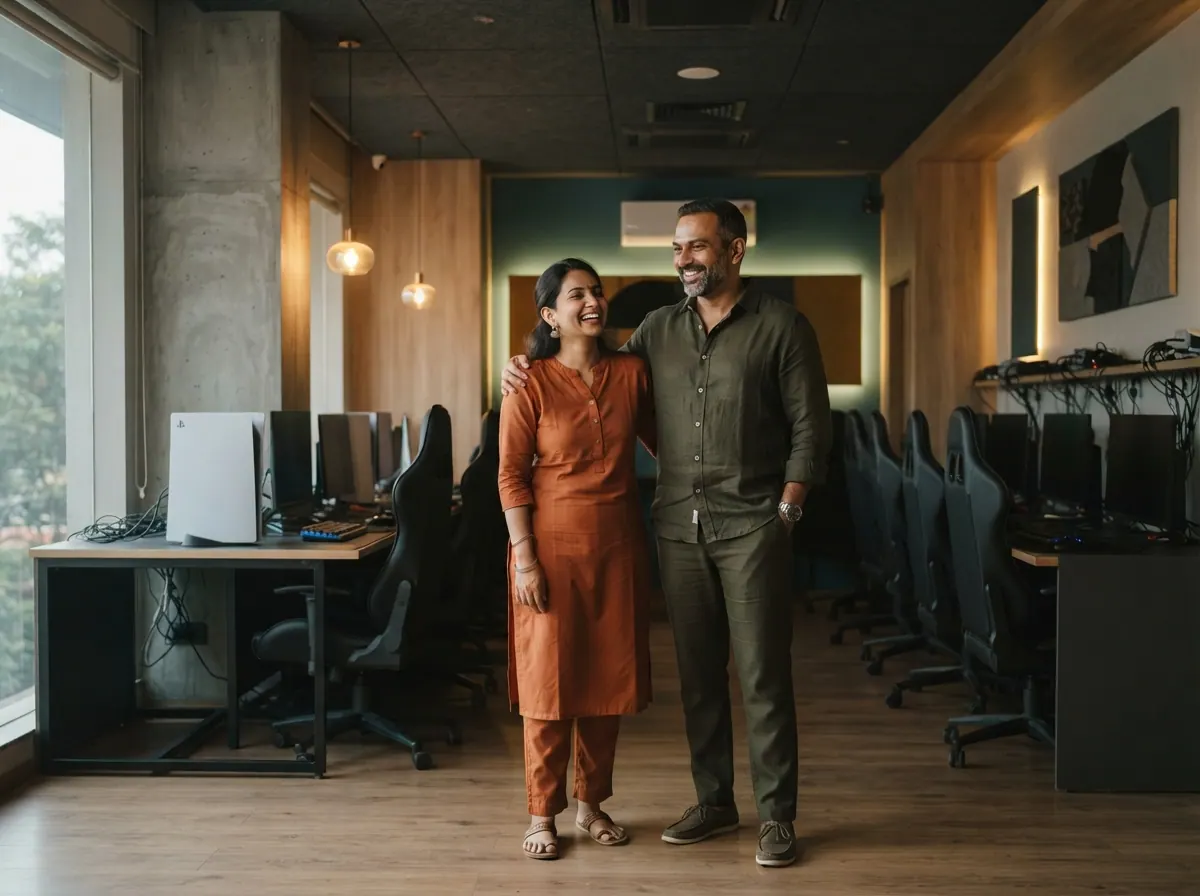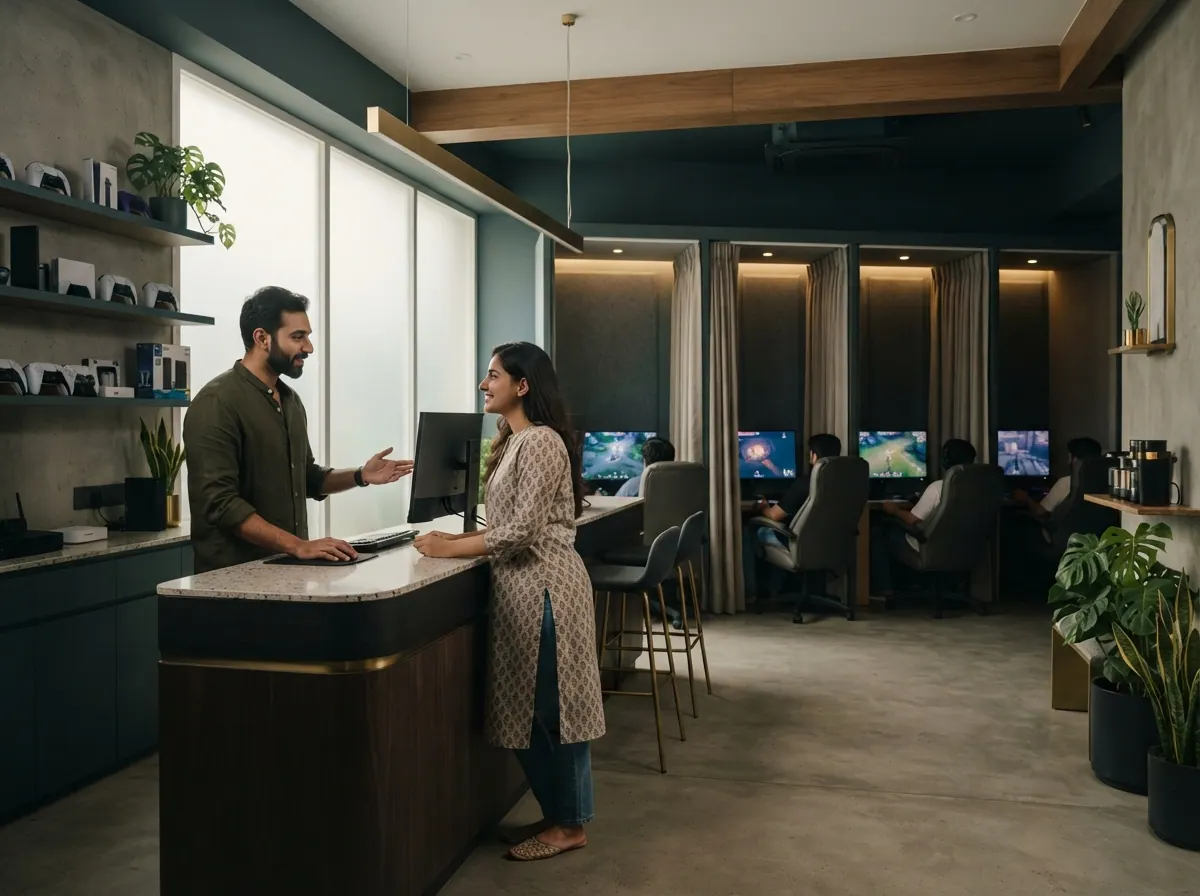
A gaming zone needs a rented room with good power backup, consoles or gaming PCs, comfortable seating and a clear hourly price. Expect about ₹2.3–3.5 lakh for a two-console starter room, or ₹6.5–9.7 lakh for a lounge with three PlayStations and four gaming PCs. The business earns by renting hours. Machines sit idle for much of the day, so rent, electricity and how full you are in the evening decide whether you make money.
All figures here are estimates. Check prices near you before you spend.
What does it cost?
| Item | Starter: 2 consoles | Lounge: 3 consoles, 4 PCs |
|---|---|---|
| Consoles (PlayStation or similar) | ₹90,000–1.1 lakh | ₹1.4–1.7 lakh |
| Gaming PCs | None | ₹2–3 lakh |
| TVs and monitors | ₹35,000–50,000 | ₹60,000–90,000 |
| Controllers, games, accounts | ₹20,000–30,000 | ₹40,000–60,000 |
| Seating, AC, fit-out | ₹30,000–50,000 | ₹80,000–1.5 lakh |
| Deposit and rent advance | ₹30,000–60,000 | ₹60,000–1.2 lakh |
| Inverter or UPS | ₹10,000–20,000 | ₹30,000–50,000 |
| Working capital | ₹20,000–40,000 | ₹40,000–80,000 |
| Total | about ₹2.3–3.5 lakh | about ₹6.5–9.7 lakh |
Games are a recurring cost. New releases, subscriptions and replacement controllers, which wear out fast, keep costing money after you open.
How should you price it?
Price per hour per machine, with a cheaper rate in the slow daytime hours and a higher rate on evenings and weekends. Many zones also offer a multi-hour pass and a group rate for four or more friends.
- Consoles: often about ₹100–150 an hour, with a group deal for football or racing tournaments.
- Gaming PCs: usually priced lower per hour, with a package for long sessions.
- Snacks and cold drinks: a small extra income, but they need a fridge and cleaning.
Check three nearby zones before you fix your own rate. You will not win by being the cheapest, but you must not be far above.
How much can it earn?
Take a lounge with three consoles and four PCs, open 12 hours a day, with about 40% of machine hours sold.
Income
- Console hours: 3 × 12 hours × 30 days × 40% = 432 hours
- 432 × ₹120 an hour = ₹51,840
- PC hours: 4 × 12 × 30 × 40% = 576 hours
- 576 × ₹60 an hour = ₹34,560
- Snacks and drinks profit = about ₹3,000
- Total income = about ₹89,400
Monthly costs
- Rent = ₹25,000
- Electricity = ₹14,000
- Two attendants = ₹24,000
- Internet = ₹2,000
- Game purchases and subscriptions = ₹4,000
- Repairs and controller replacement = ₹3,000
- Total = ₹72,000
Left over: ₹89,400 − ₹72,000 = about ₹17,000 a month, before any loan instalment.
That is thin. At 25% of hours sold, you lose money. School exams and long weekdays in the early months can pull your use down a lot, while holidays push it up.
What do you need before you start?
- A room in the right place. Near a college, coaching centres or a young housing area. A ground or first floor, with space for chairs and cables.
- Power and cooling. Many machines and an AC use a lot of electricity. Check the electrical load with an electrician and plan for backup.
- A trustworthy attendant, who can handle billing and tell friendly groups from arguments.
- A clear policy on age. Decide closing time, school hours and which games are allowed for minors.
Step by step
- Visit three zones at busy and quiet times, and count how many seats are used.
- Pick a location and ask your landlord in writing if a gaming business is allowed.
- Get the electrical load checked and the wiring fixed before you buy machines.
- Buy equipment in stages. Open with fewer machines and add more when evenings fill up.
- Set up billing: a simple timer sheet or software, so there is no argument about time.
- Write rules on the wall: no betting, no smoking, no abuse, and closing hours.
- Run weekend tournaments and collect phone numbers for a WhatsApp group.
Which licences apply?
- Shop or trade licence from your local body.
- Amusement or entertainment permission may apply in some states. Ask your local office.
- Fire safety and electrical permissions, because several machines and AC run together.
- Commercial use terms. Console and game makers have conditions for commercial use. Check before you start, and keep legitimate copies of games.
- GST if your turnover needs it. Ask a CA.
- Real-money games are a legal risk. Do not allow betting.
What goes wrong?
- Empty afternoons. Rent and power run all day, while customers come mostly in the evening and on weekends.
- High electricity bills. An AC and many machines together can eat half your income.
- Controllers and cables wear out within months of heavy use.
- Fights or loud groups drive away families and quieter customers.
- Minors staying out late or skipping school can bring complaints from parents.
- A new console generation can make your older machines less popular.
Situations you will face
What would you do? Each choice costs something.
Getting started
A shop near a coaching centre costs more rent. A cheaper shop in a lane has little footfall.
- Rent near the college: Higher rent, more players
- Take the cheaper lane shop: Low rent, thin crowd
The owner hears 'gaming' and worries about noise and kids. They want a higher deposit.
- Pay the higher deposit: Costs more, lease is clear
- Look for another place: Delay, lose a good spot
The electrician says the old wiring will trip with an AC and many machines running together.
- Rewire and fix the load: Costly, safe and steady
- Open with fewer machines: Cheaper, smaller start
A seller offers used PlayStation consoles at much less. Warranty is short and one has fan noise.
- Buy new with warranty: Costs more, fewer breakdowns
- Buy the used ones: Cheaper, repair risk
Console makers have conditions for using their products in a business. Checking takes time and may add a fee.
- Check terms before opening: Time and maybe a fee
- Open with free games only: Cheaper, smaller game list
A friend says give every visitor a free hour to spread word. It costs you sales on the busiest day.
- Give free hour to first 50: Lost sales, strong word of mouth
- Open at normal rates: Full income, quiet start
First month
The zone near you charges ₹150 an hour. A lower rate fills seats but cuts income per hour.
- Match their rate: Fair income, fewer seats filled
- Charge less for slow hours: More seats filled, less per hour
Two groups shouted at each other over a football match. A parent sitting outside was watching.
- Ask both groups to leave: Lose income, keep calm
- Ignore until it settles: No cost, bad image
Some school students sit here in the morning. Their parents may complain, but they pay well.
- Set a no-school-hours rule: Lose income, parents trust you
- Let anyone play: More income, parent complaints
Sticks drift and buttons stick after heavy play. Players get frustrated.
- Buy spare controllers: Costs now, happy players
- Repair the old ones: Cheaper, keeps failing
A player says they played one hour, not two. Without a timer sheet, it is their word against yours.
- Charge for one hour and fix billing: Lose a little, build trust
- Insist on two hours: Keep income, lose customer
A regular group asks to bet on matches and offers to pay extra per hour for a private corner.
- Refuse and post a no-betting rule: Lose that income
- Offer the corner for normal play: Keep them, no betting
Running it
The lights go in the final match. Players ask for a refund while your inverter only runs the lights.
- Refund and buy a bigger UPS: Costly, steadier nights
- Offer a free hour next time: Cheaper, problem remains
Players ask for it. The game is expensive, and one copy covers only one console at a time.
- Buy the new game: Costly, a weekend rush
- Wait for a price drop: Saves money, players go elsewhere
Regular players ask for a cheaper monthly pass. It brings steady money but lowers your per-hour rate.
- Launch a monthly pass: Steady income, lower rate
- Keep hourly pricing: Higher rate, uneven crowd
A tournament brings crowds and word of mouth, but needs prizes, a bracket and a quiet room.
- Run it with small prizes: Cost, a full weekend
- Skip it: No cost, normal weekend
Players ask for chips and cold drinks. A fridge and stock mean money and daily cleaning.
- Add a small snack counter: Fridge cost, extra income
- Let them bring their own: No cost, mess in the room
School is shut and every seat is taken from noon. Players queue outside and some get angry.
- Add a booking sheet and a short break rule: Small cost, fair turns
- Let people sort it out: No effort, arguments rise
When things go wrong
Board exams and entrance tests keep students away for weeks. Rent and power still run.
- Offer a late-night discount: Some players, lower income
- Cut hours and wait: Save power, keep a thin crowd
The AC fails in May. Without it, players leave in an hour, but a repair visit costs money.
- Repair and service quickly: Costs now, summer saved
- Run fans and wait: No cost, fewer players
A controller vanished during a busy evening. Your attendant says they were busy with billing.
- Add a cheap camera and counter: Cost now, fewer losses
- Accept the loss: No cost, could repeat
They leave the week before Diwali holidays. A new person needs training in billing and rules.
- Hire and train quickly: Wage and effort, smooth nights
- Run it yourself for now: No wage, you are exhausted
A new zone opens two shops away with a cheap opening offer. Your regulars are curious.
- Match with a loyalty card: Lower income, regulars stay
- Keep your rates: Full rate, some players leave
Growing
Players ask for the newest machine. Your older consoles are still in use, but fewer people pick them.
- Buy one new console: Costly, attracts the keen
- Keep the older machines: No spend, slower crowd
Players want PC games and group matches. PCs cost more but earn all day and support big group bookings.
- Add four PCs: Big spend, wider crowd
- Stay with consoles: No spend, one crowd only
Parents ask for a safe party room for teens, with games and snacks. It needs decor and an adult to watch.
- Launch party packages: Small setup, daytime income
- Do not offer parties: No setup, empty afternoons
A friend offers a shop near a new college. A second place means rent, machines and a manager you trust.
- Open a second branch: Very costly, double the crowd
- Improve the first branch: Safer, slower growth
A local streamer offers to broadcast your finals. You get views, but you need camera and net speed.
- Set up streaming: Gear cost, wider reach
- Skip streaming: No cost, local crowd only
A college club asks for cheap weekly slots. It brings steady hours in slow times, at lower rates.
- Agree to club slots: Steady hours, lower rate
- Keep normal pricing: Higher rate, slow hours stay
An officer visits and asks for a fire extinguisher and a clear exit. Your lounge has narrow space.
- Fix exits and buy extinguishers: Cost now, safe and legal
- Fix exits now, rest next month: Exits first, cost split
Is it right for you?
This business suits someone who likes games and young customers, can manage a lively room late into the evening, and has enough money to carry the slow months. It does not suit you if you need a safe, steady income soon, because use depends on holidays, exams and what is new.
A good test: sit in a busy zone for three evenings and in a quiet one for two afternoons. If the numbers still work with your rent, start small with two consoles, and add machines only as evening bookings fill up.