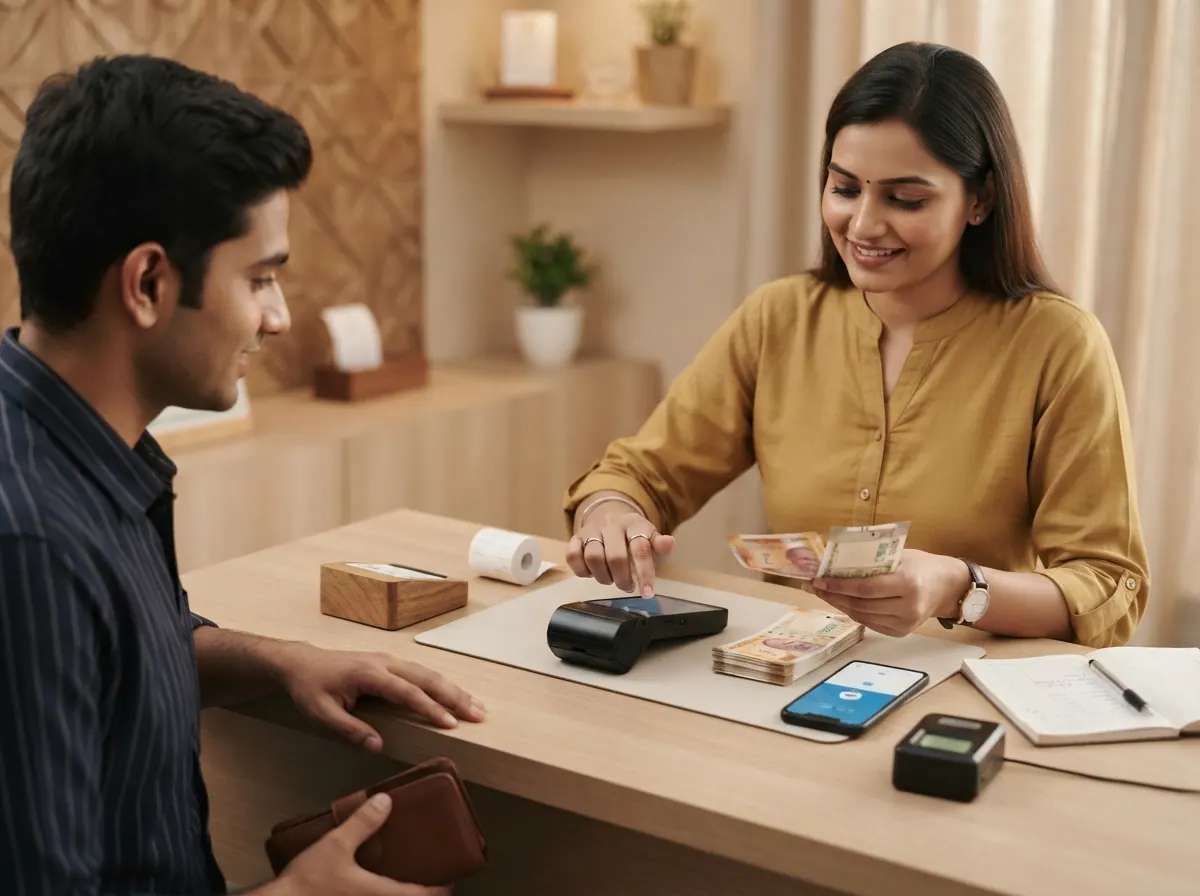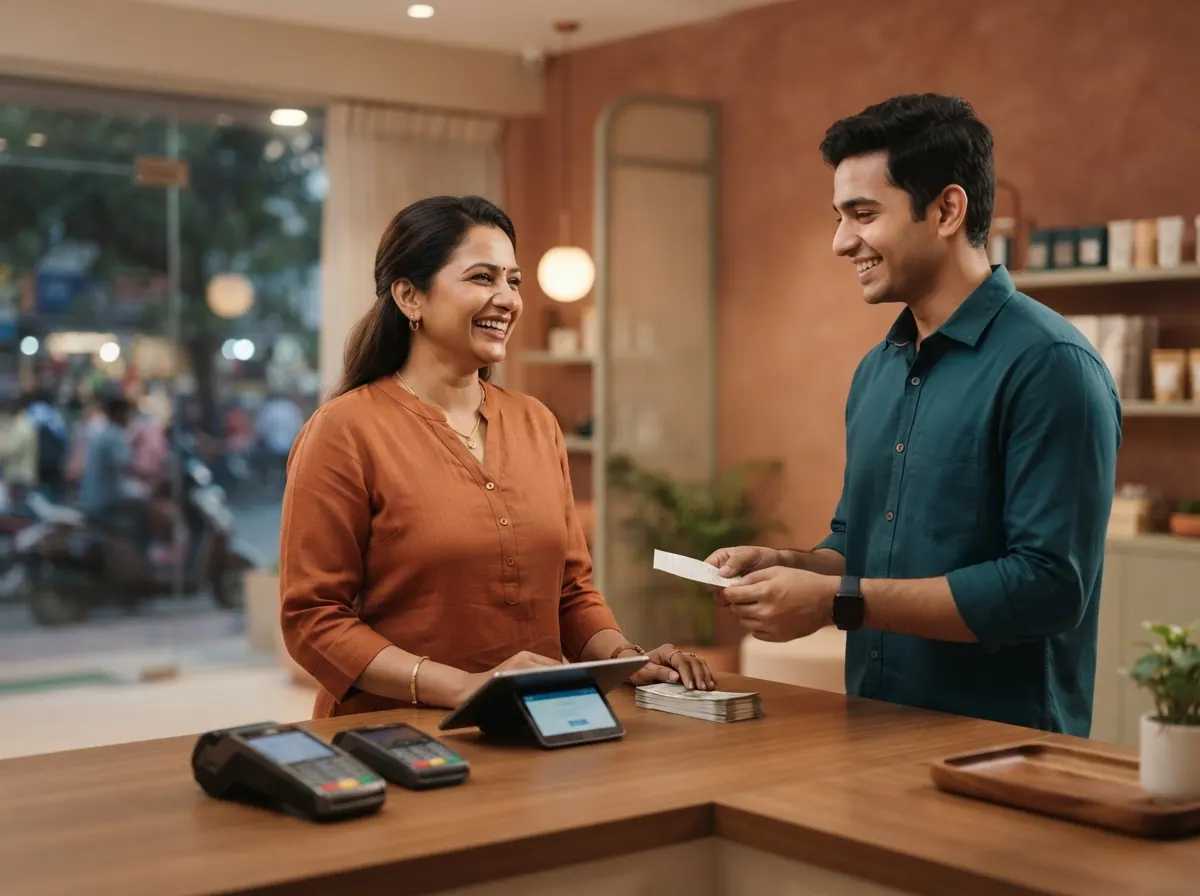
A CSP (customer service point), also called a bank mitra or banking agent, is a small shop that lets people in your area withdraw and deposit cash, open accounts, send money and pay bills through a bank's system, using a fingerprint scanner and your phone or computer. It can start from about ₹30,000 to ₹2 lakh, covering a small shop, a computer or tablet, a scanner, a printer and some cash float. You earn a small commission on each transaction, so it is a business of footfall, trust and tidy cash.
All figures here are estimates. Check the bank's terms and local prices before you spend.
What does it cost?
| Item | Estimate |
|---|---|
| Small shop deposit and fittings (counter, chairs, signboard) | ₹15,000–60,000 |
| Computer or laptop, or tablet | ₹15,000–40,000 |
| Fingerprint scanner | ₹2,000–5,000 |
| Printer and stationery | ₹5,000–12,000 |
| Power backup, internet router | ₹5,000–15,000 |
| Registration, agency or training fee (if genuine and asked) | ₹0–25,000 |
| Cash float (to pay out withdrawals) | ₹20,000–1,00,000 |
| Total | about ₹60,000–2.6 lakh |
You can keep the lower end if you run it from a corner of an existing shop, such as a grocery or mobile store. Many CSPs pair it with recharge, bill payment, photocopy and insurance forms, because the one service alone rarely pays the rent.
How much can it earn?
Assume a small shop in a large village or town market. The commission numbers are assumptions only. Your bank or agency will have its own rates.
- Average commission about ₹8 per transaction across withdrawals, transfers, bill payments and recharge
- Other income (account opening, insurance and similar) of about ₹4,000 a month in a good month
A good month
- Transactions: 70 a day × ₹8 × 26 = ₹14,560
- Other income: ₹4,000
- Total income: ₹18,560
- Rent ₹4,000 + power and internet ₹1,500 + paper and ink ₹1,500 + small costs ₹1,000 = ₹8,000
- Left over: ₹18,560 − ₹8,000 = ₹10,560
A slow month
- Transactions: 40 a day × ₹8 × 26 = ₹8,320
- Other income: ₹1,500
- Total income: ₹9,820
- Costs stay near ₹8,000
- Left over: about ₹1,800
You can see the point. A CSP with an owner at the counter and no helper pays the owner little in a slow month. With a helper it loses money. The best months are the weeks around the days when pension, wages and scheme payments reach people's accounts, because many villagers withdraw cash in one burst. Cash float matters too: if you run out, people walk away at the busiest time.
What do you need before you start?
- A real tie-up with a bank or an authorised business correspondent agency. Ask for the agreement in writing.
- A shop where people already walk, near a market, a bus stand, a post office or a village centre.
- Steady power and internet. A transaction that fails halfway loses the customer's trust, and sometimes your money.
- A habit of counting cash, morning and night, every day.
- Patience with first-time users. Many customers will not know their own account number or how the fingerprint step works.
Step by step
- Choose the bank or agency. Ask which services you can offer, what commission each pays, how often you are paid, and what you owe if a transaction fails.
- Complete KYC and any training, and read the agreement before you sign.
- Set up the shop, with a counter, a fingerprint scanner, a clear rate or service board and a spot for customers to sit.
- Start with a modest float, and watch which days your cash runs out.
- Keep a daily register of cash in, cash out, failed transactions and customer complaints.
- Add related services slowly, such as recharge, bill payment, ticket booking, photocopy and form filling, if the bank allows.
- Learn the common failures: network down, fingerprint not matching, wrong account number, bank server delay. Teach customers what to do.
- Check your balance against the bank's statement every week and chase any mismatch quickly.
Which licences and papers apply?
- Agreement with the bank or its agency, usually with KYC, address and shop proof.
- Shop and establishment registration or a local trade licence, depending on your area.
- GST, if your income crosses the limit. Ask a CA what applies to your commission.
- Customer identity rules. The bank may require checking ID and keeping records for some services. Follow what the bank tells you, and never process a transaction for someone else's account without their presence.
- Rules on limits and charges change over time. Ask the bank or agency to explain what is allowed.
What goes wrong?
- Fake CSP offers. Someone takes a large fee and an advance, promises an ID, and vanishes. Check with a real bank or agency before paying.
- Failed transactions and disputes. The customer's money is cut but the cash does not come out. Keep proof, take the complaint and follow up with the bank.
- Cash shortage on pension days. A queue and no cash drives customers to the next shop.
- Cash theft or robbery. Carrying large cash from the bank in daylight is risky. Keep a small float, and bank often.
- Customers who share their PIN or fingerprint help. A neighbour who "helps" a villager and misuses their account puts your shop in a complaint.
- Wrong keystroke. A typo on a transfer sends money to the wrong person, and a refund is slow.
- Thin commission. Rates can change, and a shop with only a few transactions a day will not pay the rent.
Situations you will face
What would you do? Each choice costs something.
Getting started
They say they can get you a CSP ID in two days for a fee, and show a printed form. They do not name the bank.
- Check with the bank branch: A day lost, you stay safe
- Ask a friend agent about them: Slow, safer
A bank branch takes agents slowly. An agency starts you fast but keeps a share of your commission.
- Wait for the bank: Slow start, better commission
- Join the agency: Quick start, lower commission
You already run a grocery with steady footfall. A separate shop near the bus stand costs rent but is more visible.
- Use your grocery corner: Cheap, shared footfall
- Rent near the bus stand: Rent, more passing people
A big float pays every withdrawal but locks up your money. A small float runs out on busy days.
- Keep a large float: Money locked, no refusals
- Keep a small float: Money free, some walk away
A cut halfway through a withdrawal leaves customers unsure if the money went. An inverter costs a fair amount.
- Buy a power backup: Cost now, steady service
- Manage without it: Saves money, failed jobs
Villagers with worn fingers often fail on a cheap scanner. A better one costs more.
- Buy the better scanner: Costs more, fewer failures
- Buy the cheap one: Saves money, many retries
People do not know what you offer. A board with services and any fees makes things clear, but customers may compare you with the next point.
- Put up a clear board: Small cost, fewer disputes
- Skip the board: Saves money, more arguments
First month
A woman's account shows a deduction but your machine gave no cash. They are upset and the queue is watching.
- Log it, follow up today: Slow, honest, safe
- Pay them from your pocket now: Costs you, may be repaid
An elderly man cannot press the keys, and a young man offers to help. The young man asks to use the old man's PIN.
- Help the old man yourself: Slower, protects them
- Call the bank helpline together: Slower, PIN stays private
The cash drawer is ₹1,200 short against your register. Your helper handled the counter for two hours.
- Recount, check each slip: Takes an hour, finds the cause
- Log the gap in the register: Honest record, some friction
Customers ask for mobile recharge and electricity bill payment. Another service is another app to learn and another float.
- Add the services: Small cost, extra commission
- Stay with banking only: Simple, lower footfall
A customer gave you an account number with one digit wrong. The money has gone to a stranger.
- Report to the bank immediately: Slow recovery, clean record
- Ask them to settle with the stranger: Quick, money likely lost
On busy days people wait an hour. A helper costs a month's profit, but you could serve more people.
- Hire a part-time helper: Wage cost, shorter queues
- Handle it alone: No wage, tired and slower
Running it
Hundreds of people come to withdraw at once. You have a large float, but a trip to the bank takes two hours.
- Close for the bank trip: Lose two hours, refill cash
- Turn people away at noon: No effort, angry crowd
You carry large cash on a bike every week. A shopkeeper was robbed on the same road last month.
- Go with a partner, small amounts: More trips, safer
- Carry it in two daytime trips: Slower, less at risk
The bank gives targets for insurance sales with extra commission. Some customers cannot really afford it.
- Offer only where it fits: Lower targets, honest advice
- Push it on everyone: High commission, complaints
A new point on the same street shows cheaper fees on remittance. Your regulars are comparing.
- Match the fee: Thinner commission, keep people
- Hold, stress your trust: Full commission, lose some
The bank sends a notice reducing commission on withdrawals. Your shop is on the margin already.
- Add other income services: Cost and effort, offsets it
- Accept and carry on: No effort, lower income
No transactions work and customers keep coming. A neighbouring shop offers their internet link at a charge.
- Pay for the link: Cost, keep the work going
- Shut the shop for the day: No cost, lose the income
A scheme payment reached many student accounts. Parents want to withdraw, and many do not have bank cards.
- Open extra counters that week: More cost, many transactions
- Keep normal hours: No cost, long queues
Families want large withdrawals for weddings. Your float is small and a bank trip takes half a day.
- Raise your float for the season: Cash locked, no refusals
- Keep the normal float: Money free, some turned away
When things go wrong
A customer says you charged a fee that was not allowed. The bank wants your explanation and records.
- Show records, refund if wrong: Costs money, clean record
- Reply to the bank in writing: Slow, records shown later
Someone took the cash float while you were at lunch. You can report it and own up to the bank, or try to hide the gap.
- Report the theft honestly: Big loss, trust with the bank
- Borrow to cover, then report: Loan cost, report anyway
A stranger offers a big fee to put money through several accounts quickly, and says no one will mind.
- Refuse and inform the bank: Lose the fee, stay clean
- Refuse and note their number: Lose the fee, keep records
The bank suspended your ID pending a check on a mismatch. You cannot work until it is cleared.
- Submit full records: Days of work, clean slate
- Use the days to retrain staff: No income, appeal later
Cash is short before the busy week. A local lender offers a quick loan at high interest.
- Borrow from the lender: Cash now, heavy interest
- Cut services that week: No debt, lose business
Growing
A relative offers a shop in the next big village. It needs a trusted person, a second float and a second device.
- Open the second point: Float and staff, more volume
- Deepen the first point: Smaller spend, slower growth
People ask for help with government forms, ID updates and applications. Each one pays a small fee but takes counter time.
- Add form services: Small fees, more footfall
- Stay with banking: Focus, fewer customers
Two young people want to work under you at a share of commission. You earn from their volume but own the risk.
- Train and sign them: Time and risk, more volume
- Keep it a one-shop business: Simple, limited growth
A telecom company offers you a retail tag with recharge commission. It needs a signboard and a small deposit.
- Take the retail tag: Deposit, steady extra income
- Decline for now: No spend, fewer services
Is it right for you?
This suits someone who is careful with cash, calm with first-time users, already known in the market, and happy to build slowly from many small transactions. It does well alongside an existing shop that already has footfall.
It suits you less if you want high income, cannot keep a clear daily record, or live where customers have many ATMs and bank branches nearby. Before you pay anyone, ask the bank branch manager nearest to you whether the offer is real, and sit in a working CSP for a day to count the transactions.