The best small business ideas to start from home in India are a tiffin service, tailoring, home tuition, a home bakery and a small parlour. Each can begin for roughly ₹10,000 to ₹1.5 lakh, mostly on equipment, and needs only cheap paperwork: FSSAI basic registration (₹100 a year) for food and a local trade or Shop & Establishment registration where your city asks for it. Most home businesses make a modest, steady income, often ₹8,000–30,000 a month. Very few make "lakhs from home", and anyone promising that is selling something.
This guide compares the main options with real costs, explains the licences (especially FSSAI for home food) and says honestly what each one earns.
Which home businesses make sense in India?
A home business works when your customers are within walking or scooter distance, your kitchen, front room or one sewing machine can handle the work, and you don't need walk-in traffic from a main road. Here are the options our guides cover, with setup cost and typical monthly profit in a tier-2 city:
| Business | Setup from | Typical shop: setup | Typical shop: profit a month (tier 2 city) |
|---|---|---|---|
| 📚 Tuition centre | ₹35,000 | ₹1.3 lakh | ₹17,500–₹60,500 |
| 🧵 Tailoring shop or boutique | ₹40,000 | ₹2.3 lakh | ₹15,000–₹43,500 |
| 🍱 Tiffin service | ₹40,000 | ₹1 lakh | ₹17,500–₹30,500 |
| 🥐 Bakery | ₹1 lakh | ₹12 lakh | ₹45,000–₹68,000 |
| 💇 Salon or beauty parlour | ₹1.8 lakh | ₹2.5 lakh | ₹40,000–₹78,000 |
| 🥡 Cloud kitchen | ₹5.5 lakh | ₹7 lakh | ₹15,000–₹41,000 |
One thing to know when reading the table: the setup column shows the cheapest format, which is usually the home one. The profit column is for the typical format of that business in a tier-2 city, which is sometimes a small rented shop. A home version usually earns less than that range, especially in its first year.
1. Tiffin service: the most practical home food business
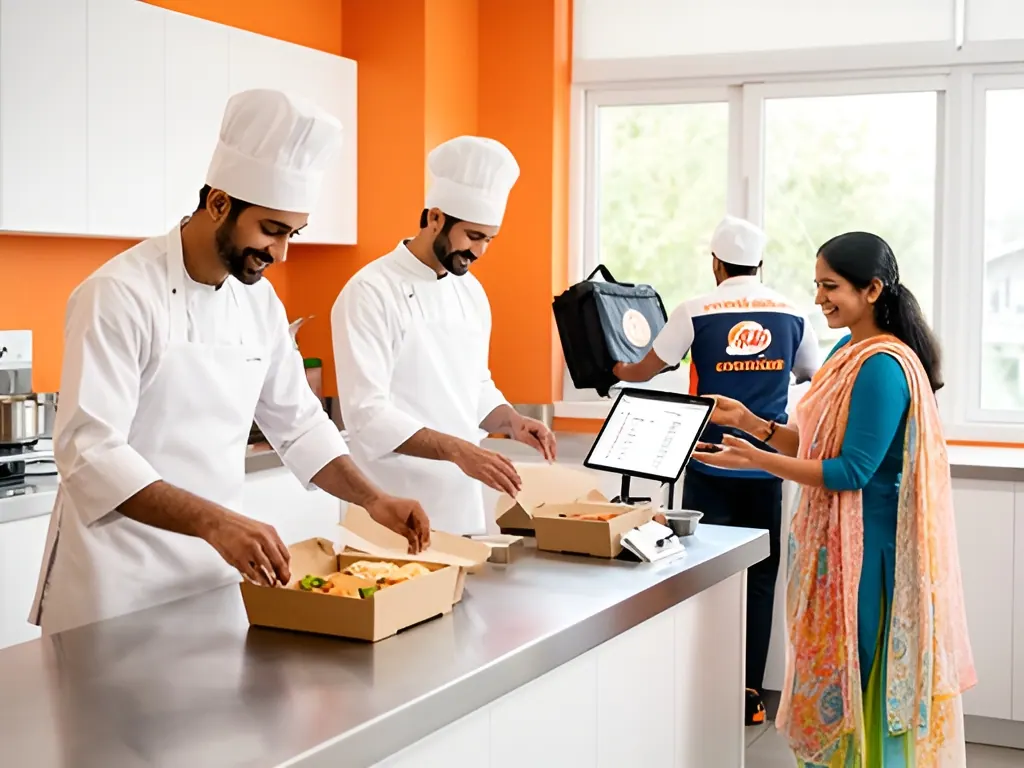
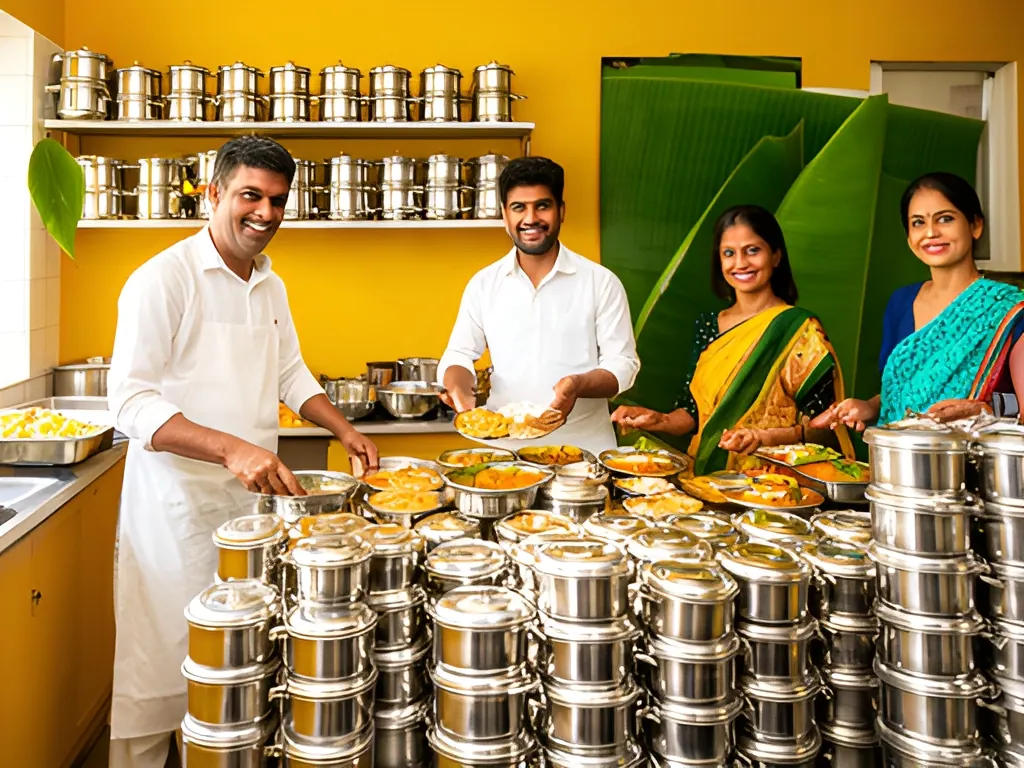
A Tiffin service sends home-cooked lunch and dinner to students, PG residents and office workers on a monthly plan. It suits anyone who already cooks for a family and can cook 2–3 times that quantity.
What it costs. A home kitchen setup costs about ₹10,000–50,000. OkCredit's 2026 guide puts a 25–30 tiffin-a-day kitchen at ₹55,000–75,000, or about ₹30,000 if you already own the vessels (OkCredit). The main purchases are a commercial burner (₹8,000–12,000), big vessels (₹15,000–20,000), 30–40 steel dabbas at ₹150–250 each and insulated bags. Keep ₹15,000–25,000 aside for the first month's rations, because subscribers usually pay at the end of the month.
What it earns. Our research puts a small-town home kitchen with about 25 subscribers (₹60–70 a meal) at roughly ₹2,000–4,000 net profit a week, and a tier-2 operator with about 35 subscribers (₹80–90 a meal) at ₹4,000–7,000 a week. These are estimates, and they don't pay you for your own hours. Food is 40–45% of the meal price, packaging 5–7% and delivery 8–12%.
What goes wrong.
- Students go home at Diwali and in summer. A student-heavy tiffin can lose 35–60% of its revenue in those weeks.
- Month-end bills go unpaid when a student leaves town. Take a week's advance from new subscribers.
- Cook too much and food goes in the bin; cook too little and a hungry subscriber cancels.
Try it free in the simulator: Tiffin service
Run a realistic week of this business in 5 minutes before you invest a rupee.
Try it free in the simulator →2. Tailoring and boutique work from home
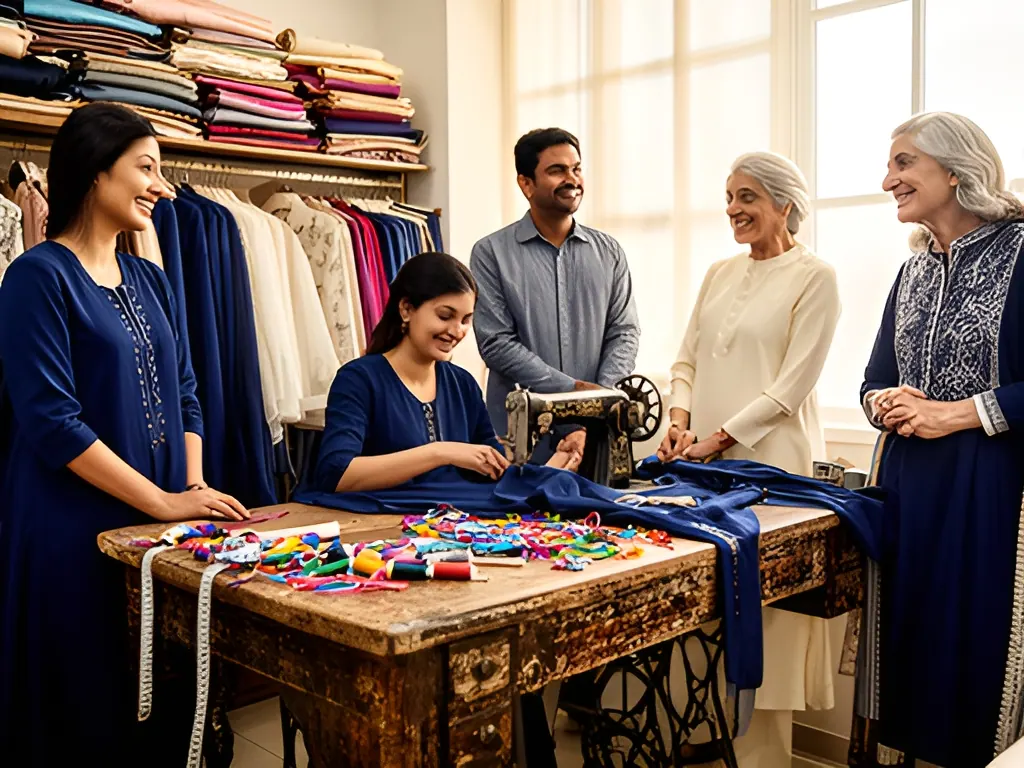
Home Tailoring shop or boutique needs one machine, an iron and a cutting table. A domestic electric machine costs about ₹12,500–20,000 and a manual one ₹6,000–12,000. A basic industrial machine is about ₹19,000–20,000 and stitches 1.5–2 times faster.
Prices you can charge. A simple blouse is about ₹200–350 in a small town and ₹300–500 in a tier-2 city. Designer blouses with fancy necks, piping and padding go for ₹750–3,000. A basic salwar suit is about ₹350–400. One person stitches about 7 plain blouses a day, so your income is capped by your hours. Designer work raises earnings for the same machine time.
Honest earnings. Vendor blogs say home tailors make ₹15,000–30,000 a month. The government's labour survey tells a harder story: India has about 1.2 crore tailors, around 80% are self-employed, and their average income is about ₹6,000 a month, partly because work comes only six or seven months a year (ThePrint). The tailors at the top end are the ones who get busy during Navratri, Karva Chauth, Diwali, Eid and the wedding months, and who upsell design work.
Two schemes worth checking. PM Vishwakarma lists the darzi (tailor) among its 18 trades. It offers a ₹15,000 toolkit e-voucher and collateral-free loans of ₹1 lakh, then ₹2 lakh, at 5% interest. It is not open to people who have already taken a PMEGP, PM SVANidhi or Mudra loan, so pick carefully. Tailoring GST was cut to 5% from 22 September 2025, but you only need GST registration above ₹20 lakh turnover.
The risk people forget. Late delivery of a wedding blouse can end up in consumer court. An Ahmedabad tailor was ordered to pay ₹7,000 in 2025. Never take more orders than you can finish before the date.
3. Home tuition: almost zero setup, capped by your hours
Tuition centre is the cheapest serious home business. A whiteboard, a few chairs and some books are enough to start for under ₹20,000. About 27% of Indian school students took private coaching in 2025, 30.7% in cities and 25.5% in villages (NSO survey, PIB).
Batches beat one-to-one. A one-to-one tutor in Delhi NCR asks a median ₹500 an hour (EZ Tuitions study). A batch of 25 students at ₹1,500 a month, three sessions a week, works out to roughly ₹2,900 per teaching hour. That is why tutors who do well move from one-to-one to small batches. In tier-2 and tier-3 towns fees are lower, about ₹500–1,500 per subject a month.
Seasons. Admissions come in April–June, demand peaks in November–February before board exams, and the board-class students leave in March. Results drive referrals more than anything you spend on advertising.
4. Home bakery: low setup, but the OTG sets your limit
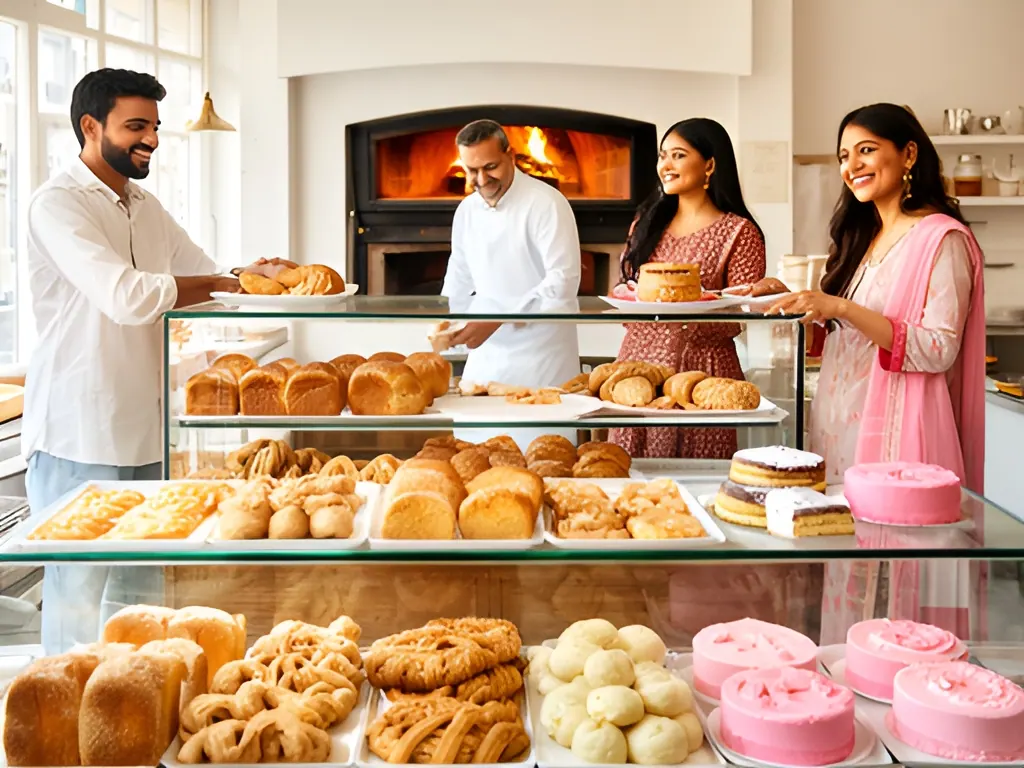
A home Bakery costs about ₹0.5–1.5 lakh. The big items are an OTG (₹8,000–15,000) and a stand mixer (₹15,000–45,000), plus moulds, a fridge shelf and packaging. Compliance is cheap: FSSAI registration at ₹100 and under ₹500 in total (Petpooja). GST on cakes and pastries fell from 18% to 5% in September 2025.
Price for profit. A simple rule from the trade: take ingredients, labour, packaging and gas, and multiply by two. A 1 kg chocolate truffle cake with ₹450 of ingredients, ₹200 of labour and ₹50 of packaging and gas should sell at about ₹1,400. Many new home bakers sell at ₹800 because a neighbour does, and then work for nothing.
The honest picture. A home OTG makes about 1–2 cakes an hour, so you hit a ceiling of roughly 15 orders a week before you need to upgrade. One documented home baker worked 14-hour days and cleared ₹8,000 a month after ingredients. An established baker with steady Instagram orders, 15–40 a week, can make far more (our estimate is ₹30,000–80,000 a month), but that takes months of reviews and repeat customers. Christmas, New Year, birthdays and Valentine's Day are the peaks.
Try it free in the simulator: Bakery
Run a realistic week of this business in 5 minutes before you invest a rupee.
Try it free in the simulator →5. Cloud kitchen from home: possible, but read the fine print
A home-based Cloud kitchen means cooking at home and selling through delivery apps. It sounds like the easiest food business, but the app economics are tough:
- Commission is 16–30% of the order value, and after 18% GST on commission, payment fees, ads and discounts the total cut is about 28–40% of the menu price.
- A small independent kitchen needs about 40–65 orders a day at a ₹250–350 average order to break even.
- About 25–30% of metro cloud kitchens close in their first year, mostly because commission and ad spend eat up thin volume.
A home kitchen can start smaller than the ₹5–8 lakh a tier-2 commercial cloud kitchen costs. It still needs FSSAI registration, a tight menu (8–15 items keeps food cost near 28–30%) and a plan for ratings. For most home cooks, a tiffin service with direct WhatsApp customers keeps more of each rupee.
6. Home parlour, paan and stationery counters
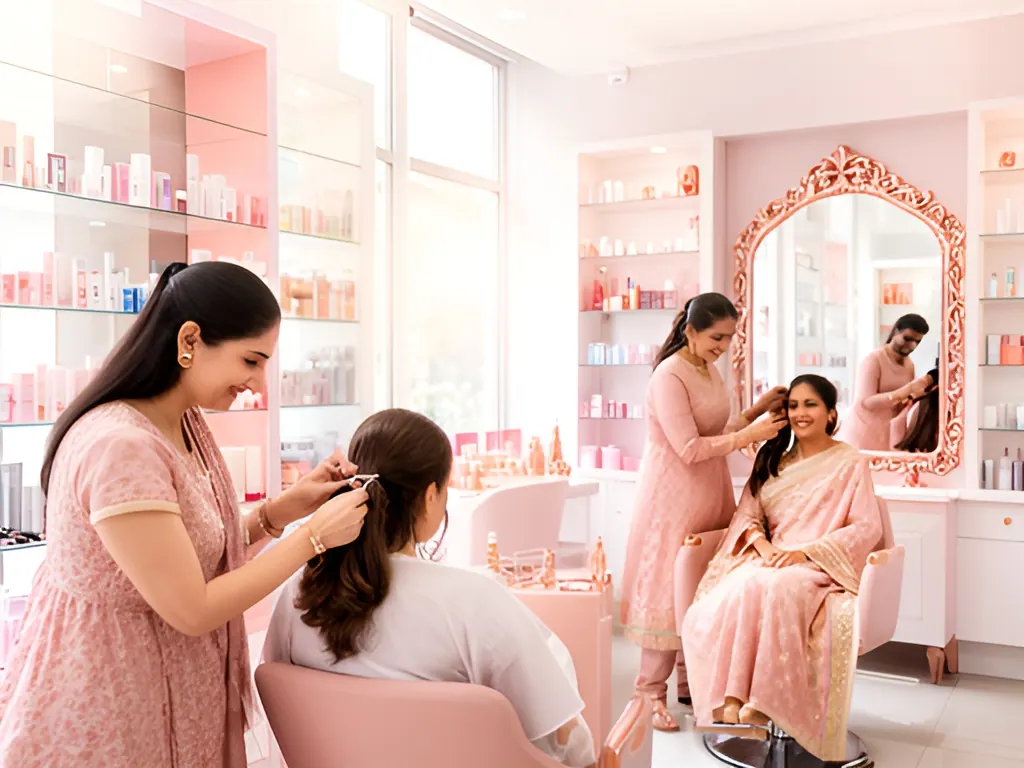
- Home beauty parlour. A ladies Salon or beauty parlour run from a room at home costs about ₹0.5–2 lakh. Threading (₹30–100) brings customers back every 2–4 weeks. Bridal makeup (₹8,000–20,000 per function in suburbs) and Karva Chauth week bring the big spikes. We cover this in detail in our guide to business ideas for women.
- Paan counter at the house front. A Paan shop gumti or counter costs about ₹70,000 in our tier-2 benchmark. Hand-made meetha paan earns 60–75% gross margin. Cold drinks and snacks bring footfall at thin 8–20% margins. If you sell tobacco, it is illegal within 100 yards of a school or to anyone under 18.
- Stationery and photocopy counter. A Stationery shop counter with a photocopier starts around ₹1.75 lakh. It works best if your house faces a school or college. April–June school reopening can bring 30–45% of the year's sales.
What licences does a home business need?
| Business | Usually needed |
|---|---|
| Any home food business (tiffin, bakery, cloud kitchen, pickles) | FSSAI basic registration, ₹100 a year |
| Tailoring, tuition, parlour | Nothing national at small scale; Udyam (free) helps with loans |
| Any shop-like counter facing the street | Shop & Establishment registration and/or municipal trade licence, as your city requires |
| GST | Only above ₹20 lakh turnover for services, ₹40 lakh for goods |
FSSAI for home food businesses: the 2026 change
From 1 April 2026, FSSAI basic registration covers food businesses with turnover up to ₹1.5 crore (it was ₹12 lakh before). It costs ₹100 a year and is now valid indefinitely. Turnover of ₹1.5–50 crore needs a State licence. Many older blogs still quote the ₹12 lakh limit, so ignore those (FSSAI order, 27 March 2026). Delivery apps will ask for your FSSAI number before listing you.
Local rules to check
- Commercial LPG. A 19 kg commercial cylinder costs about ₹2,810 in Delhi (October 2026), against ₹942 for a domestic one. Using domestic cylinders for a business is not allowed, and cylinders can be seized. Budget for the commercial rate once your volume grows.
- Society and neighbours. Housing societies may object to customers coming and going, cooking smells or delivery riders. Small-scale home work is usually tolerated, but a complaint can shut you down.
- Labour rules. If you hire a helper, the four labour codes in force since 21 November 2025 expect an appointment letter and timely wages, even in tiny businesses.
How to pick the right home business
Ask yourself four questions:
- What can I already do well? Cooking, stitching and teaching are skills people pay for every month. You won't need to learn a new trade first.
- How many hours do I really have? Tiffin means two fixed delivery runs every day. Tuition fits school hours. Tailoring and baking can flex, except in festival weeks.
- Who lives within 2–3 km? Students and PGs suit tiffin. Families with school children suit tuition. A colony of working women suits a parlour.
- Can I survive a slow month? Keep one to two months of costs in cash. Student tiffins and tuition both have holiday dips.
For money, most home businesses fit a Mudra Shishu loan (up to ₹50,000) or a Kishor loan (₹50,000–5 lakh). Both are collateral-free, with interest that varies by bank (roughly 9–14%). Women can also look at PMEGP, which offers a 15–35% subsidy on project cost. Borrow only for equipment that earns, not for decoration.
Try before you invest
Every business above has a free BizGame simulator. You run a realistic week (cooking too much, a student leaving without paying, a festival rush) in about five minutes, using the costs from our research. It is a learning game, not a way to earn money, but losing a few virtual rupees is cheaper than losing real ones. Start with the Tiffin service or Tailoring shop or boutique simulation and see whether the numbers work for your town.