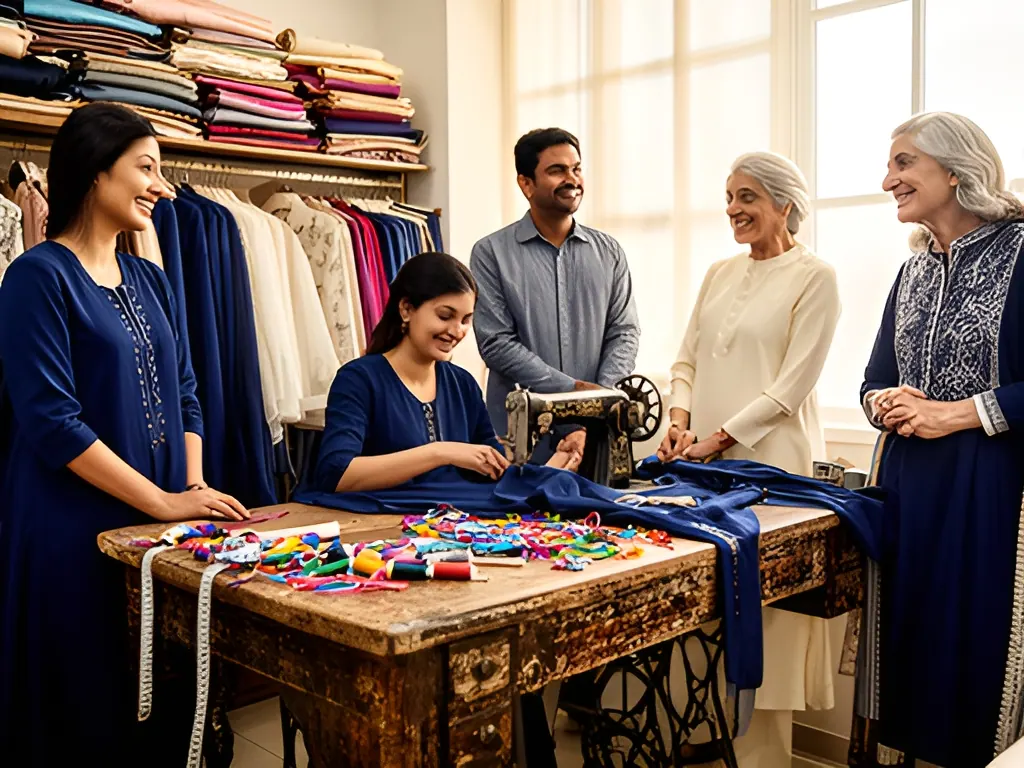
The most practical business ideas for women in India are tailoring or a small boutique, a ladies beauty parlour, a tiffin service, a home bakery, tuition and, for some, a cloud kitchen. Most can start from home for ₹10,000–2 lakh, and they use skills many women already have. Loans are available too: Mudra (collateral-free up to ₹10 lakh for most first businesses) and Stand-Up India (₹10 lakh–1 crore for new businesses led by women). Expect a modest income at first, usually ₹5,000–25,000 a month in year one, which grows with repeat customers.
We also cover safety, how much time each business really takes, and what each one earns.
How to choose: skill, time and customers
Before picking a business, answer three questions honestly:
- What do people already ask you to do? If relatives ask you to stitch their blouses or bake for birthdays, you already have your first customers.
- Which hours are free, and are they fixed? Some businesses need you at fixed times every day. Others can flex around children and family.
- Who lives nearby? Students and PGs suit tiffin. Families with school children suit tuition. Colonies of working women suit a parlour.
Here is how the main options compare in our tier-2 city benchmarks:
| Business | Setup from | Typical shop: setup | Typical shop: profit a month (tier 2 city) |
|---|---|---|---|
| 📚 Tuition centre | ₹35,000 | ₹1.3 lakh | ₹17,500–₹60,500 |
| 🧵 Tailoring shop or boutique | ₹40,000 | ₹2.3 lakh | ₹15,000–₹43,500 |
| 🍱 Tiffin service | ₹40,000 | ₹1 lakh | ₹17,500–₹30,500 |
| 💇 Salon or beauty parlour | ₹1.8 lakh | ₹2.5 lakh | ₹40,000–₹78,000 |
| 🥐 Bakery | ₹1 lakh | ₹12 lakh | ₹45,000–₹68,000 |
| 🥡 Cloud kitchen | ₹5.5 lakh | ₹7 lakh | ₹15,000–₹41,000 |
The setup column shows the cheapest format, usually a home one. The profit column is for the typical format in a tier-2 city, sometimes a small rented shop, so a home version often earns less in its first year.
How much time does each business take?
| Business | Fixed daily hours? | Flexible? | Busiest periods |
|---|---|---|---|
| Tuition | Yes, after school (about 4–8 pm) | Morning free | November–February before exams |
| Tailoring / boutique | No | Very, except near festivals | Navratri to Diwali, Eid, wedding months |
| Ladies parlour | Partly; customers want evenings and weekends | Moderate | Karva Chauth, Teej, weddings |
| Tiffin service | Yes, two cooking and delivery runs a day | Low | Steady; dips in student holidays |
| Home bakery | No, order-based | High | Christmas, New Year, birthdays, Valentine's Day |
| Cloud kitchen | Yes, lunch and dinner peaks, 12–16 hour days in small kitchens | Low | Dinner, weekends, rainy days |
1. Tailoring and boutique
Tailoring shop or boutique is the most common women-led business in India for a reason: one machine (₹12,500–20,000 for a domestic electric model) and a table are enough to start. A boutique adds ready designs, dress material and a trial room, and needs ₹2–5 lakh.
What you can charge. A simple blouse fetches ₹200–350 in small towns and ₹300–500 in tier-2 cities. Designer blouses go for ₹750–3,000, and padding is another ₹150. One person stitches about 7 plain blouses a day, so moving to designer and bridal work is how earnings grow.
Honest earnings. Vendor blogs say ₹15,000–30,000 a month for home tailors. The national picture is lower: about 80% of India's 1.2 crore tailors are self-employed, earning about ₹6,000 a month on average, partly because work comes only six or seven months a year (ThePrint). About 71% of women entrepreneurs use social media to sell, but only 17.6% take orders online (Fynd). A WhatsApp catalogue and an Instagram page are cheap ways to stand out.
Help available. PM Vishwakarma gives darzi applicants a ₹15,000 toolkit voucher and a 5% loan of ₹1 lakh, then ₹2 lakh. You can't take it if you have already had a Mudra, PMEGP or SVANidhi loan.
Try it free in the simulator: Tailoring shop or boutique
Run a realistic week of this business in 5 minutes before you invest a rupee.
Try it free in the simulator →2. Ladies beauty parlour
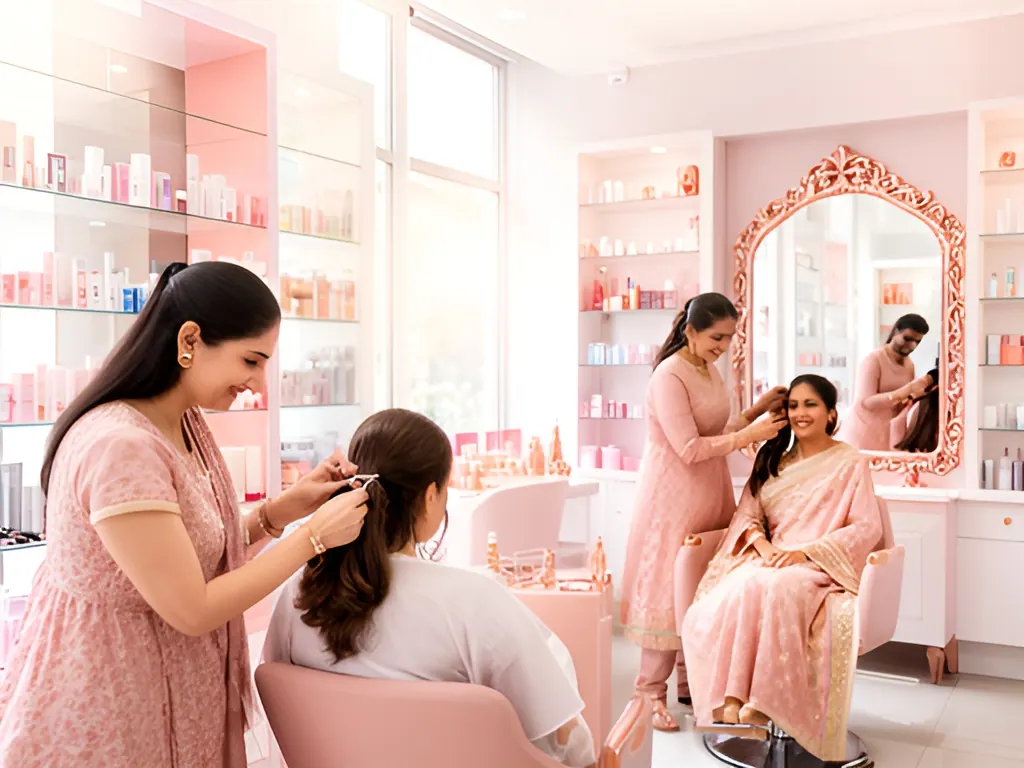
A ladies Salon or beauty parlour works on two kinds of income: frequent small services (threading every 2–4 weeks at ₹30–100, waxing from about ₹99) and big spikes (bridal makeup at ₹8,000–20,000 per function in suburbs, ₹10,000–45,000 for HD or airbrush). A home parlour costs about ₹0.5–2 lakh and a small shop about ₹2.5 lakh in our tier-2 benchmark.
Festivals make the year. Karva Chauth falls around 29 October in 2026. In that week, our research estimates parlour demand can run three to five times normal, and mehendi that costs ₹100–300 a hand can go for anywhere from ₹200 to ₹2,100 a hand. Teej, Diwali and the November–December wedding dates (21, 24, 25 and 26 November are popular this year) follow.
What goes wrong. Product cost should be about 8–12% of service revenue, but it climbs to 15–22% when nobody tracks it. A parlour on the first floor gets 20–40% fewer walk-ins than one on the ground floor. The beautician course is the first step; many women do a course, work in a salon for a year, then open their own.
3. Tiffin service
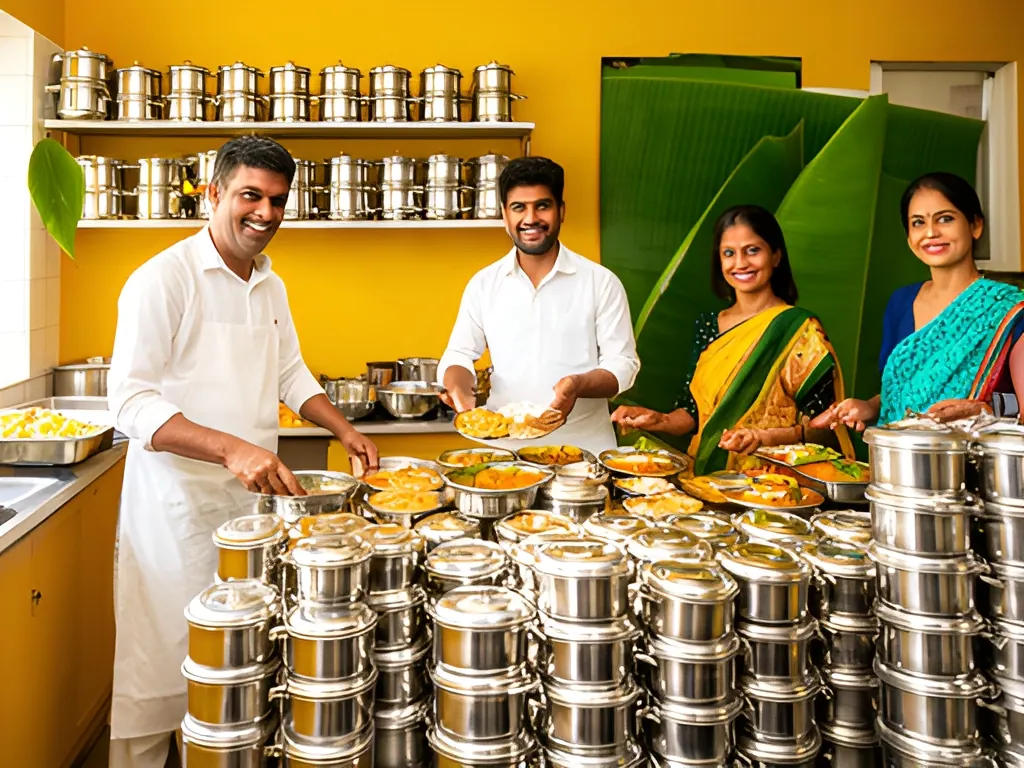
A Tiffin service suits women who already cook for a family. A home kitchen setup is ₹10,000–50,000, or about ₹30,000 if you already have the vessels (OkCredit). Our research estimates ₹2,000–4,000 net a week for a small-town kitchen with about 25 subscribers, and ₹4,000–7,000 a week in a tier-2 city with about 35. Many tiffin owners are homemakers, and family members often help deliver.
The catch: it's two fixed runs every day, students vanish at Diwali and in summer, and month-end bills sometimes go unpaid. Take a week's advance from new subscribers.
4. Home bakery
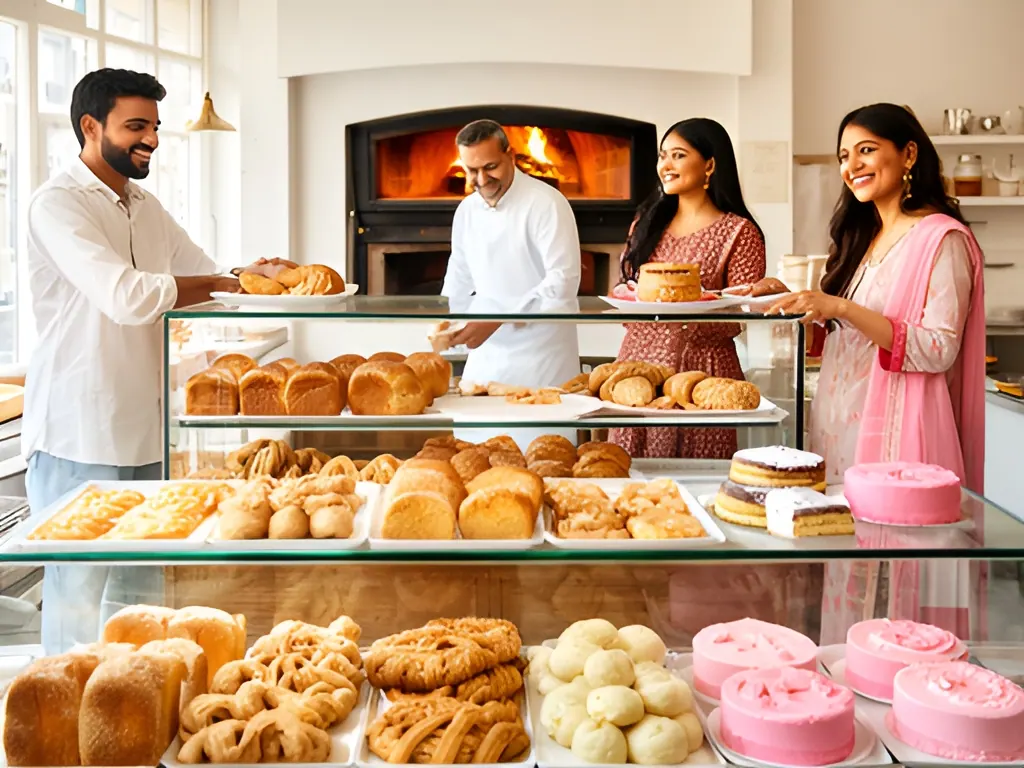
A home Bakery costs about ₹0.5–1.5 lakh (OTG ₹8,000–15,000, stand mixer ₹15,000–45,000) and needs only FSSAI registration at ₹100. GST on cakes fell to 5% in September 2025. A home OTG handles about 15 orders a week. One documented home baker cleared just ₹8,000 a month working 14-hour days (Petpooja), while established Instagram bakers with 15–40 orders a week earn much more (our estimate is ₹30,000–80,000 a month). Price at about twice your cost of ingredients, labour, packaging and gas, or you'll be busy but broke.
Try it free in the simulator: Bakery
Run a realistic week of this business in 5 minutes before you invest a rupee.
Try it free in the simulator →5. Tuition
Tuition centre fits school hours and needs almost no money. About 27% of school students took private coaching in 2025 (NSO survey, PIB). Fees in tier-2 and tier-3 towns run about ₹500–1,500 per subject a month. A batch of 20–25 students earns far more per hour than one-to-one teaching. Good board results are the best advertising you can get.
6. Cloud kitchen
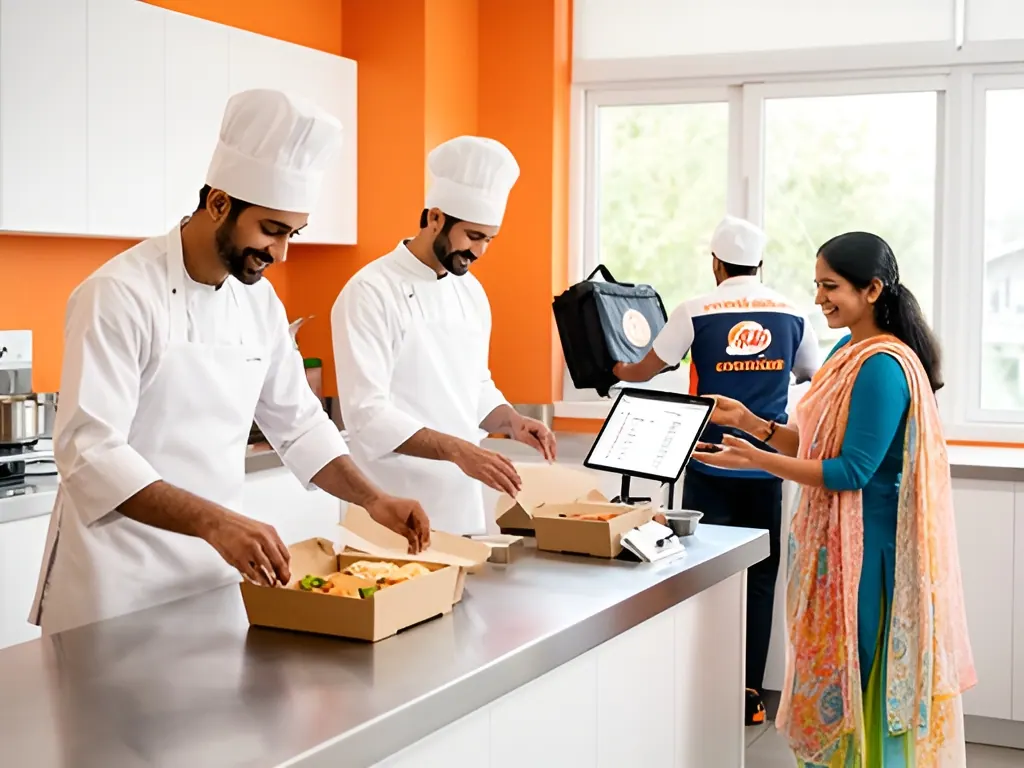
A Cloud kitchen sells only through delivery apps. It suits women with strong cooking skills and the stamina for 12–16 hour days. Apps take 28–40% of the menu price once commission, GST on commission, ads and discounts are added, and a small kitchen needs about 40–65 orders a day to break even. A tier-2 commercial setup costs ₹5–8 lakh, and about 25–30% of metro cloud kitchens close in year one. Start as a tiffin or home-delivery business, build a following, then add the apps.
Safety and working from home
Most of these businesses run from home or a small local shop, which helps with safety and family time. A few practical points:
- Parlour. Keep it women-staffed and give it a discreet entrance. Many customers, especially in conservative areas, won't visit otherwise.
- Deliveries. For tiffin or bakery orders, use a family member or a known rider, and avoid late-night deliveries to unknown addresses. Take payment by UPI so you carry less cash.
- Home address. On Instagram and Google listings, show your area, not your full address. Share the exact location only after an order is confirmed.
- Keep it legal. FSSAI registration for food, a written receipt for advances and clear delivery dates for stitching all protect you if a customer complains.
Loans and schemes for women entrepreneurs
- Mudra (PMMY). Collateral-free loans: Shishu up to ₹50,000, Kishor ₹50,000–5 lakh, Tarun ₹5–10 lakh, and Tarun Plus up to ₹20 lakh for those who repaid a Tarun loan. Interest is set by the bank, roughly 9–14%. Most home businesses need only Shishu or Kishor.
- Stand-Up India. Bank loans of ₹10 lakh–1 crore for new (greenfield) businesses started by women or SC/ST entrepreneurs. It fits a larger boutique, a salon with staff or a small food unit, not a one-machine start.
- PMEGP. A subsidy of 15–35% of project cost for new units; women get the higher rate (25–35%).
- PM Vishwakarma. For tailors and some other trades: toolkit voucher, training stipend of ₹500 a day and cheap loans.
- Self-help groups (SHGs). Many women start with small SHG loans, often ₹10,000–1 lakh, before going to a bank.
Borrow for equipment that earns money: a better machine, an oven, a parlour chair. Don't borrow for interiors before you have customers. Keep one or two months of running costs in hand.
What women entrepreneurs get wrong (and how to avoid it)
- Underpricing. Charging less than the neighbourhood rate to "get started" usually locks you into working for free. Work out your real cost first.
- Not counting your own time. If a tiffin earns ₹6,000 a month for 6 hours a day, that is about ₹35 an hour. Decide if that's worth it, or how to grow it.
- Taking every order in festival week. Late delivery loses customers, and sometimes ends in consumer court. Close bookings when you're full.
- Mixing household and business money. Keep a separate UPI ID or account so you know whether the business actually makes money.
Try before you invest
BizGame has a free simulator for each of these businesses. In about five minutes you can run a festival week in a Salon or beauty parlour, juggle wedding blouse orders in a Tailoring shop or boutique shop or plan meals for a Tiffin service, using costs from our research. It is a learning game, not a way to earn money, but it lets you make your first mistakes for free.