The best business ideas for students in India are small, part-time and cheap to start: tuition for younger children, a summer juice cart, a mobile accessories table or repair counter, an evening snack stall, or helping run a stationery and photocopy counter. Tuition can start for almost nothing; most of the others need ₹20,000–60,000. Treat it as a way to earn pocket money and learn business, not a route to quick riches. Your studies come first, and a business that eats your exam weeks is costing you more than it pays.
Here is what each idea really costs, how many hours it takes and what usually goes wrong.
What makes a good student business?
A student business has to pass four tests:
- Low capital. Ideally under ₹50,000, so a loss doesn't hurt your family.
- Fits your timetable. Evenings, weekends or vacations, not 9 to 5.
- Can pause for exams. You should be able to shut it for two or three weeks without losing everything.
- Teaches you something. Buying, pricing, handling customers and keeping accounts are skills you'll use in any job.
Here is every business in our guides that starts for ₹1 lakh or less, with setup cost and monthly profit in a tier-2 city:
| Business | Setup from | Typical shop: setup | Typical shop: profit a month (tier 2 city) |
|---|---|---|---|
| 🥬 Vegetable shop | ₹20,000 | ₹20,000 | ₹17,500–₹39,000 |
| ☕ Chai business | ₹25,000 | ₹60,000 | ₹55,000–₹1.1 lakh |
| 📚 Tuition centre | ₹35,000 | ₹1.3 lakh | ₹17,500–₹60,500 |
| 🧵 Tailoring shop or boutique | ₹40,000 | ₹2.3 lakh | ₹15,000–₹43,500 |
| 🍱 Tiffin service | ₹40,000 | ₹1 lakh | ₹17,500–₹30,500 |
| 📱 Mobile repair shop | ₹45,000 | ₹1.5 lakh | ₹24,000–₹69,500 |
| 🥟 Street food stall | ₹50,000 | ₹50,000 | ₹35,000–₹90,000 |
| 👗 Clothing store | ₹50,000 | ₹7 lakh | ₹21,500–₹1.1 lakh |
| 🍗 Chicken shop | ₹55,000 | ₹3.3 lakh | ₹13,000–₹43,500 |
| 🍃 Paan shop | ₹70,000 | ₹2.5 lakh | ₹21,500–₹78,000 |
| 🥤 Sugarcane juice business | ₹75,000 | ₹75,000 | ₹17,500–₹47,500 |
| 🥐 Bakery | ₹1 lakh | ₹12 lakh | ₹45,000–₹68,000 |
| 🚿 Car wash | ₹1 lakh | ₹6 lakh | ₹20,000–₹25,000 |
| 👟 Footwear shop | ₹1 lakh | ₹6 lakh | ₹86,500–₹3.5 lakh |
The profit column is for a full-time owner running the typical format. Part-time, you'll earn a fraction of it, which is fine. The point is to learn the business with money you can afford to lose.
1. Tuition: the safest place to start
Tuition centre is the classic student business, and for good reason. You need no shop and no stock, just a room, a whiteboard and the syllabus you've already studied. About 27% of Indian school students took private coaching in 2025 (NSO survey, PIB), so demand is everywhere, including small towns.
What you can earn. In tier-2 and tier-3 towns, fees for younger classes run about ₹300–1,500 a month per child. Experienced one-to-one tutors in Delhi NCR ask a median ₹500 an hour (EZ Tuitions study), but as a student you'll start well below that. A batch of 8–10 children at ₹500–1,000 each brings in ₹4,000–10,000 a month for about 6–8 hours a week.
Make it work. Teach classes you're strong in (Classes 1–8 are easiest to start with). Hold a short test every two weeks and send parents a WhatsApp update, because parents pay for visible progress. Admissions happen in April–June, so start looking for students before then.
Watch out for. Your own exams clash with your students' exams in February–March. Plan revision weeks for both.
Try it free in the simulator: Tuition centre
Run a realistic week of this business in 5 minutes before you invest a rupee.
Try it free in the simulator →2. Summer juice cart: built for vacations
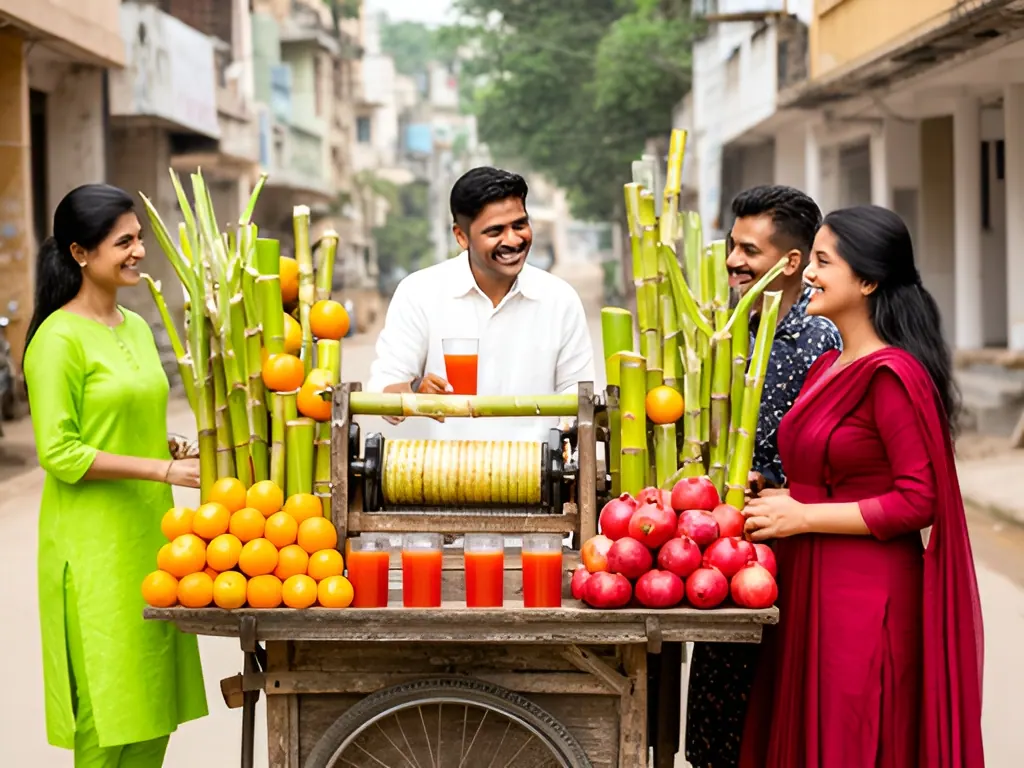
A sugarcane Sugarcane juice business cart peaks exactly when colleges close: April to June. A budget crusher costs ₹25,000–35,000, and cane costs only ₹3–5 a glass, so the gross margin is 70–80%. Our research puts a well-placed sugarcane cart at about ₹8,000–35,000 net a week in peak summer, depending on the city. That is for a full-time owner at a good spot, so a part-time student will make less.
The catch. Volume halves after summer, and many carts in north India shut in winter. That suits a student, since you can sell or store the crusher when classes start. Hygiene matters: customers judge you by your ice, glasses and hands. You also need FSSAI basic registration (₹100) and, in most cities, a vending certificate or permission for your spot.
3. Mobile accessories and repair: learn a skill that pays for years
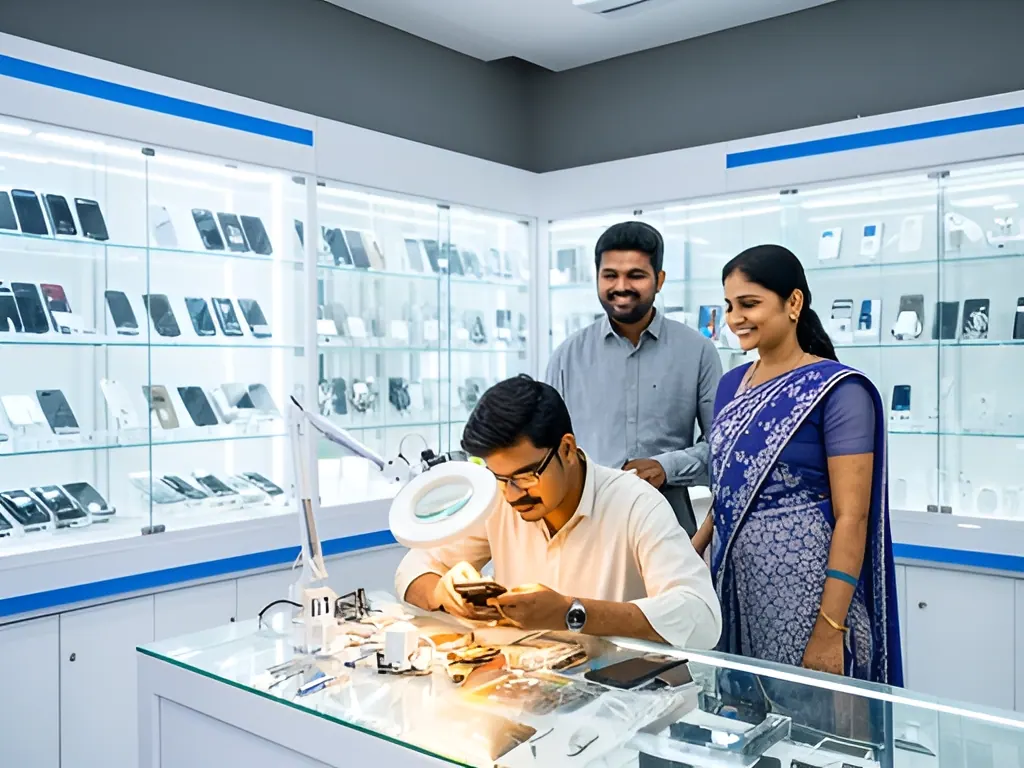
A Mobile repair shop business has two parts. Accessories (covers, chargers, earphones, screen guards) need no skill, just stock and a good spot. Repairs need training, usually 1–3 months for ₹1,000–37,000, but pay better per job.
Setup. A solo repair counter in a tier-2 or tier-3 town costs about ₹30,000–60,000: tools ₹5,000–15,000, parts ₹10,000–20,000, plus fit-out and a small cash buffer (IIFL). A simple accessories table can start smaller.
Why it works. People keep phones about 36 months now, and 87% of users dropped their phone in the past year (Analytics Insight). Students on your campus are your first customers. Festive sales bring 4–6 weeks of extra accessory demand.
Watch out for. Online sellers and quick-commerce apps undercut branded accessories, so stick to fast-moving basics. Repair customers fear part swaps, so repair in front of them and give a short written warranty. Accessories and repairs carry 18% GST, but you only need GST registration above ₹20 lakh turnover.
4. Snack or food stall near college
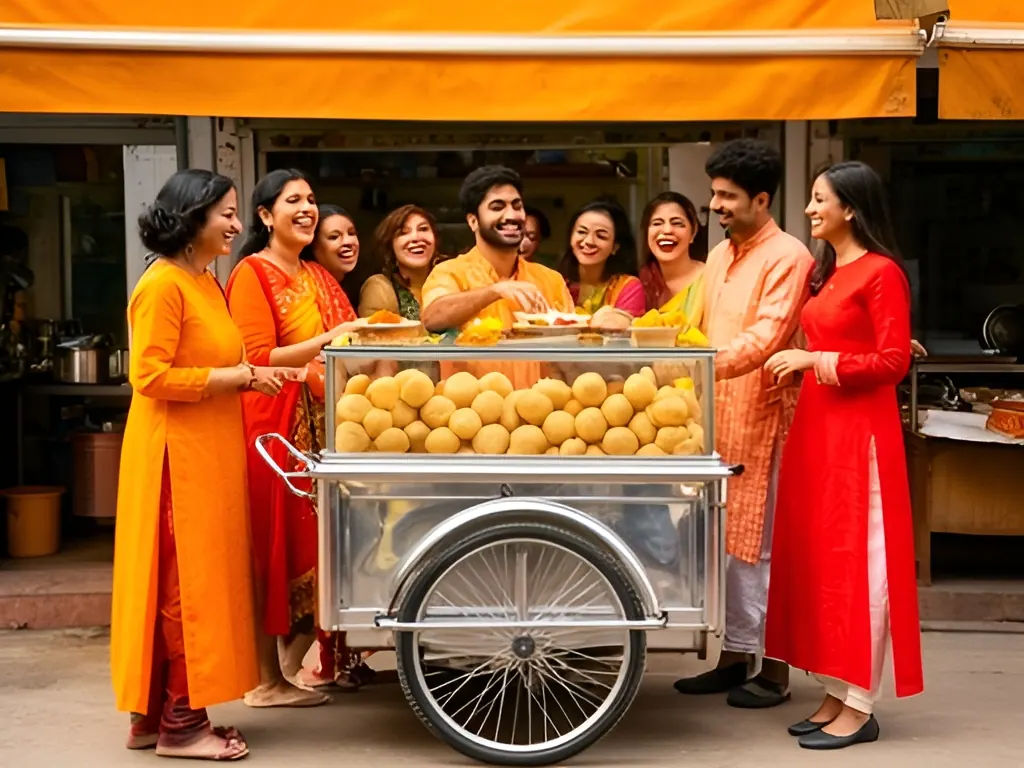
A Street food stall stall such as momos, maggi, sandwiches, vada pav or chaat outside a college or coaching hub catches students between 4 and 9 pm. A new stainless-steel cart costs about ₹35,000–1.15 lakh, though momo and vada pav guides quote ₹15,000–50,000 all-in with a second-hand cart. Ingredients are about 25–45% of the price, so gross margins are 55–75%, but each plate earns only a few rupees, so you need volume.
Hard truths.
- A food stall needs 2–4 hours of prep plus selling time every day. That clashes with term time, so many students run one only in vacations or at college fests.
- You need FSSAI basic registration (₹100) and, under the Street Vendors Act, a vending certificate from your town's vending committee. Without one, municipal drives can take your cart.
- Commercial LPG costs about ₹2,810 for 19 kg (Delhi, October 2026). Using a home cylinder is not allowed.
If you're under 18 or can't commit daily, a weekend stall at a fest, mela or society event is a lower-risk way to learn the same lessons.
5. Stationery and photocopy counter
A Stationery shop counter with a photocopier starts at about ₹1.75 lakh in our benchmark, which is too much for most students alone. It works well as a family shop you help run, or as a partnership. Since 22 September 2025, notebooks, pencils, erasers and sharpeners have been GST-free, but margins on school basics are thin at 15–25%. The money is in photocopying, printing, gifts and art supplies (35–60% margins). April–June school reopening can bring 30–45% of a year's sales. Near a college, printing project reports and notes before exams is a dependable small earner.
6. What about opening a café?
Many students dream of a Café near college. Be careful. A coffee kiosk costs about ₹3–8 lakh and a small café ₹8–25 lakh. Independent cafés typically keep only 5–15% of sales as profit, and payback takes 12–24 months. College areas go quiet on Sundays, during exams and in vacations, exactly when rent is still due. A café is a fine goal for later; learn the food trade with a stall or a part-time café job first.
How much time does each idea need?
| Idea | Hours a week | Best season | Pause for exams? |
|---|---|---|---|
| Tuition | 6–12 | All year; admissions April–June | Partly |
| Juice cart | 30–40 (in season) | April–June | Yes, it's seasonal anyway |
| Mobile accessories | 10–20 | Festivals, start of term | Yes |
| Mobile repair | 15–30 after training | All year; monsoon | Hard, customers expect you |
| Food stall | 25–40 | Evenings, fests, vacations | Yes, but you lose your spot |
| Stationery/photocopy | 15–30 | April–June, exam weeks | Hard |
Money, paperwork and age
- Start with savings, not loans. Use money your family can afford to lose. A Mudra Shishu loan (up to ₹50,000) exists, but banks lend to adults and you'll need a repayment plan that doesn't depend on your exam results.
- If you're under 18, contracts, bank loans and most registrations are usually in a parent's name. Run the business with them.
- Register only what you need. Food sellers need FSSAI basic registration (₹100 a year). A fixed stall may need a municipal trade licence or vending certificate. Udyam registration is free and useful later. GST is only needed above ₹20 lakh turnover for services or ₹40 lakh for goods.
- Keep accounts from day one. Use a separate UPI ID and write down every purchase. It shows whether you're making money or just turning money over.
What students usually get wrong
- Counting revenue as profit. Selling ₹2,000 of juice in a day is not ₹2,000 earned. Subtract cane, ice, glasses, rent and wastage.
- Underpricing to win friends. Discounts for classmates add up. Keep one price.
- Ignoring the calendar. College-gate businesses lose most of their customers in vacations and exam weeks. Plan for those dead weeks.
- Copying viral reels. Videos of vendors "earning lakhs" are outliers, and the claims are often overstated. Most stalls earn much less.
Try before you invest
Before you spend your savings, run the business in BizGame's free simulator. In about five minutes you can play a week of Tuition centre, a summer with a Sugarcane juice business cart or a festive season at a Mobile repair shop counter, using costs from our research. It is a learning game, not a way to earn money, but it's a good way to find out which idea suits you before your money is on the line.