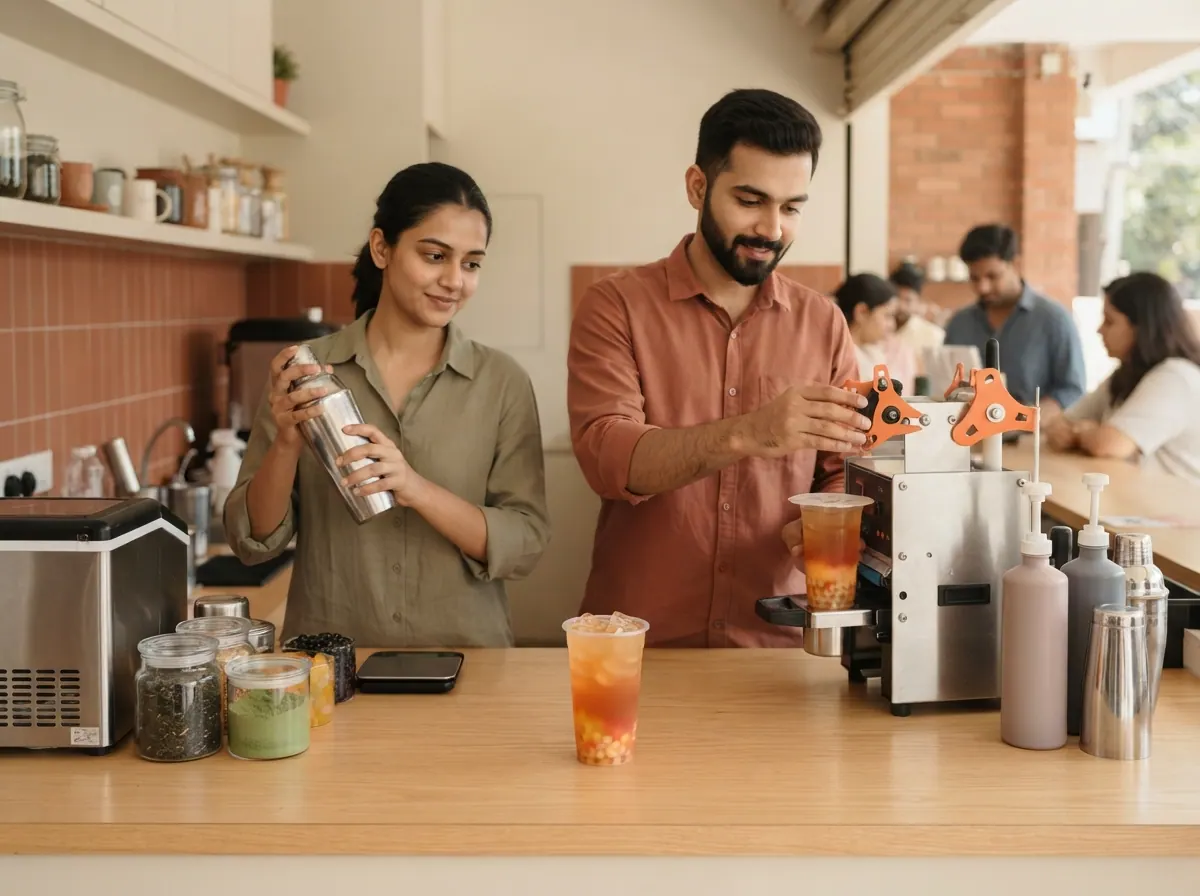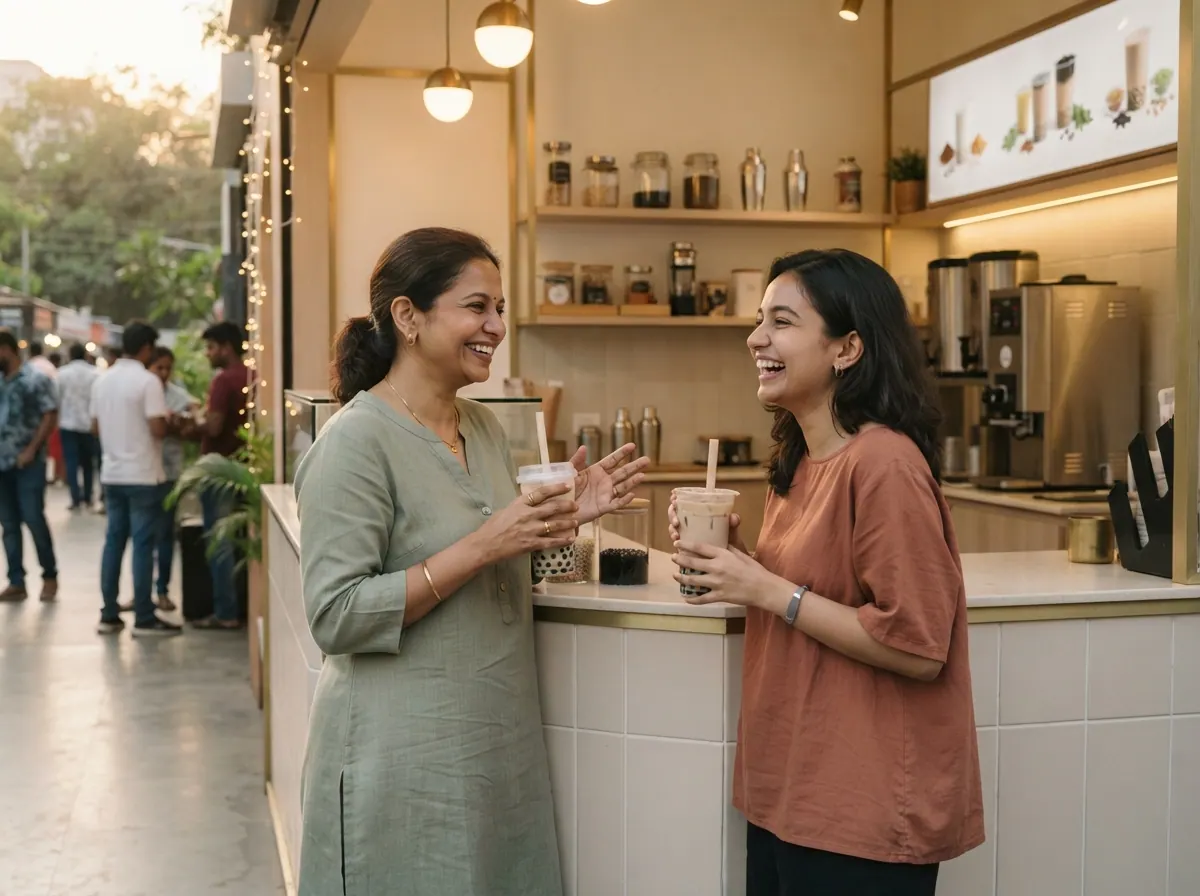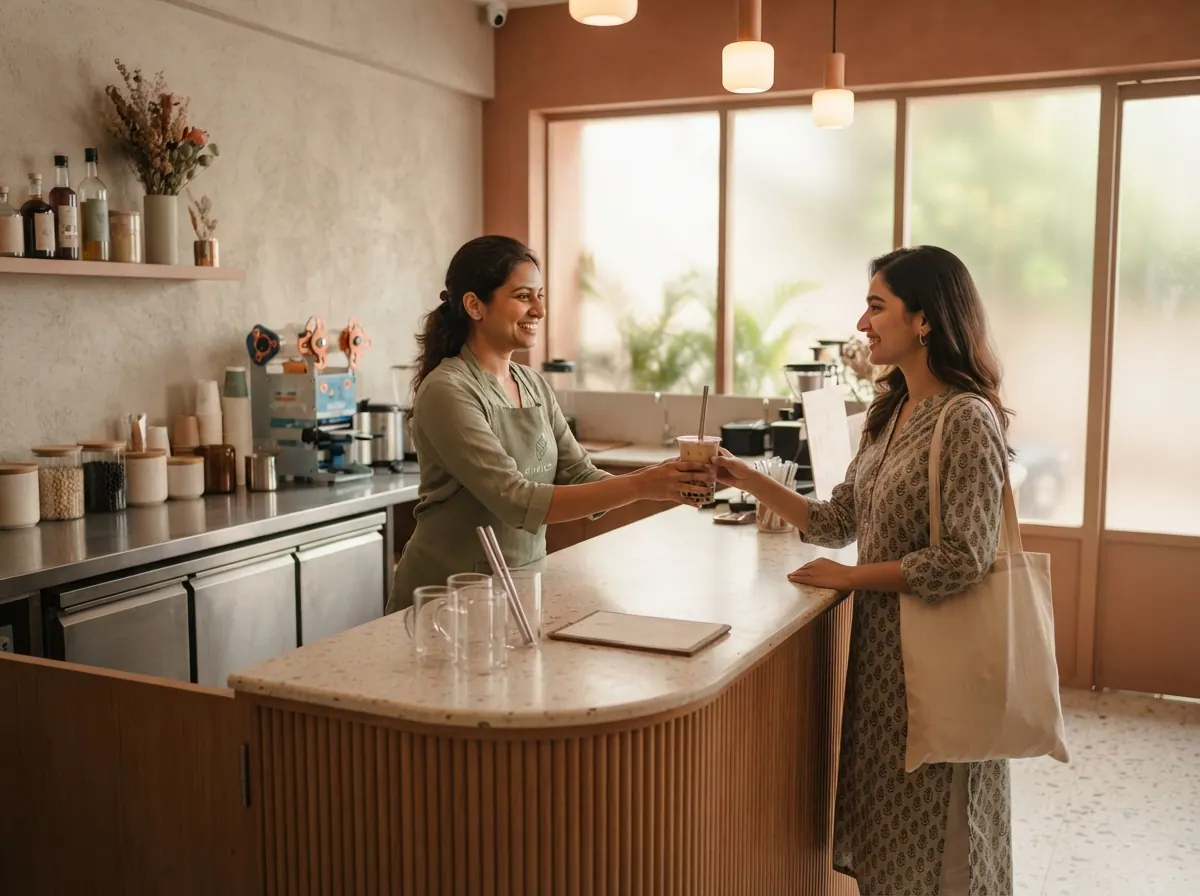
To start a bubble tea business in India you need a small shop or a proper counter in a busy spot, a cup-sealing machine, a fridge, an ice machine, a way to cook pearls fresh, a menu of about ten drinks, and about ₹50,000 to ₹3 lakh. The low end is a compact counter inside an existing shop. The high end is a small shop with seating. Bubble tea is a youth-and-mall drink, so your sales depend on footfall, a fun menu and fresh pearls.
All figures here are estimates. Check prices near you before you spend.
What does it cost?
| Item | Compact counter | Small shop with seating |
|---|---|---|
| Rent deposit and counter fitting | ₹15,000–50,000 | ₹1–2 lakh |
| Sealing machine and shaker | ₹10,000–30,000 | ₹15,000–40,000 |
| Fridge and ice machine | ₹30,000–70,000 | ₹60,000–1.2 lakh |
| Pearl cooker or pot, tea brewing setup | ₹5,000–15,000 | ₹10,000–25,000 |
| Bottles, jars, dispensers, tools | ₹5,000–12,000 | ₹10,000–25,000 |
| Counter signage, menu, lighting | ₹10,000–25,000 | ₹30,000–80,000 |
| First stock: tea, syrups, pearls, cups, straws | ₹15,000–30,000 | ₹30,000–60,000 |
| Licences | ₹3,000–8,000 | ₹5,000–15,000 |
| Working money for two months | ₹20,000–50,000 | ₹50,000–1.2 lakh |
| Total | about ₹1.1–2.9 lakh | about ₹3.1–6.9 lakh |
To come in near ₹50,000, you would share a counter with a shop that already has a fridge, use a small ice maker or buy bagged ice, and start with five drinks.
What do you sell?
- Milk tea with pearls: the classic. Black tea, milk and sugar syrup, with tapioca pearls.
- Fruit teas: fresh and light, with fruit syrups, a favourite in summer.
- Iced teas and lemon teas: a cheaper cup for people who want a cold drink.
- Toppings: pearls, jelly, popping boba and cream foam for an extra charge.
- Sizes and sweetness: regular and large cups, and a choice of sugar levels, which customers like.
How much can it earn?
Here is a small counter in its third month, selling about 80 cups a day, open 30 days.
Sales
- 50 regular cups × ₹130 = ₹6,500
- 20 large cups × ₹170 = ₹3,400
- 10 add-on toppings × ₹30 = ₹300
- Total per day = ₹10,200
- ₹10,200 × 30 days = ₹3,06,000 a month
Costs each month
- Tea, milk, syrups, pearls and fruit: about 22% of sales = ₹67,300
- Cups, lids, straws, film: about 12% = ₹36,700
- Ice and water = ₹8,000
- Rent = ₹25,000
- Two staff = ₹28,000
- Power = ₹10,000
- Delivery app commission and misc = ₹20,000
- Total = ₹1,95,000
Left over: ₹3,06,000 − ₹1,95,000 = about ₹1,11,000 before tax and your own pay.
At 35 cups a day, sales would be about ₹1,34,000. Rent, staff and power stay almost the same, so profit falls close to zero. Bubble tea needs steady footfall.
What do you need before you start?
- A spot where young people walk. Near a college, a mall, a cinema, a busy market or a coaching lane.
- A pearl routine. Cook small batches through the day and keep them warm in sugar syrup for a short time.
- A supplier for pearls, syrups and cups. Look for one that sells in small lots, so pearls are not sitting for months.
- A clear menu. Ten drinks is enough. Each one needs a fixed recipe with ml and grams.
Step by step
- Make every drink at home, write down tea strength, milk, syrup and ice per cup, and cost each one.
- Price each cup at about 4 to 5 times its ingredient and cup cost.
- Rent the counter and fit the fridge, ice machine and sealing machine with a safe layout and clean water.
- Register with FSSAI and ask the municipality about a trade licence.
- Train staff on one fixed recipe card for each drink, with measuring jugs and a timer for the pearls.
- Launch with a short menu of about eight drinks and two toppings.
- Add seasonal drinks like mango or lychee and a loyalty stamp card.
Which licences apply?
- FSSAI registration or licence, depending on yearly sales, on the FoSCoS portal.
- Trade or shop licence from the municipality, and shop establishment registration in many states.
- Water quality. Use clean filtered water for tea and ice. Ask the food safety office if you must test it.
- GST once your sales pass the limit. Ask a CA.
- Brand names. Choose your own name. Do not copy a famous chain.
- Rules vary, so confirm each with the local office.
What goes wrong?
- Old pearls. Hard or sour pearls ruin a drink. Throw away pearls that sit too long and cook small batches.
- Ice and water problems. Dirty ice or unfiltered water can make people ill. Clean the ice machine on schedule.
- A menu that is too long. Twenty syrups that rarely sell go stale and eat your cash.
- Sweet tooth versus health. Customers now ask about sugar. Offer less-sugar options.
- Off-season slump. Cold drinks fall in winter and rain. Add hot milk tea and a snack.
- Cup and straw costs. Domed lids, thick straws and film add up. Check cost per cup every month.
Situations you will face
What would you do? Each choice costs something.
Getting started
A manual sealing machine is cheap but slow in a rush. A semi-automatic one seals faster and costs more.
- Buy the semi-auto sealer: Costly, fast in rush
- Buy the manual sealer: Cheaper, slower queues
An ice machine costs a lot but gives clean ice daily. Bagged ice is cheap but needs a supplier you trust.
- Buy an ice machine: Costly, clean steady ice
- Buy bagged ice from a plant: Cheaper, supply risk
A distributor offers pearls cheaper in large sacks. Small packs cost more but stay fresh.
- Buy small packs: Higher cost, fresher pearls
- Buy large sacks: Cheaper, old pearls risk
Friends say list 25 drinks with every syrup. A small counter will waste many of them.
- Start with eight drinks: Less choice, less waste
- List twenty-five drinks: More choice, more stale syrup
A mall counter has strong footfall and high rent. A college lane counter has cheaper rent and price-sensitive buyers.
- Take the mall counter: High rent, high footfall
- Take the college lane: Low rent, budget buyers
Your shop tap water is hard. A water filter costs money, and bad water ruins both tea and ice.
- Fit a proper filter: Cost now, clean taste
- Buy a small purifier: Cheaper, limited flow
First month
A buy-one-get-one on opening weekend would fill the queue but cuts margin on every cup.
- Run buy-one-get-one: Crowd, thin margin
- Free topping on every cup: Smaller crowd, lower cost
By evening pearls have been sitting for hours and are rubbery in the cup.
- Cook small batches hourly: More effort, fresh pearls
- Throw old pearls, cook big again: Waste cost, same habit
Many customers want less sweet drinks. Sugar level options need recipe cards and training.
- Offer sugar levels: Training cost, wider appeal
- Keep one sweetness: Simple, lose some buyers
A local creator offers a video post for a fee plus free cups.
- Pay for the reel: Cost now, crowd for days
- Only give free cups: Cheap, small reach
Customers report leaks from cheap cups and poor film seals. Better cups cost more per drink.
- Switch to thicker cups and film: More per cup, no leaks
- Keep cheap cups: Cheaper, bad reviews
The morning helper and the evening helper make the same drink differently.
- Make recipe cards and jugs: Small cost, steady taste
- Trust staff judgement: Free, uneven drinks
Running it
A hot week doubles your cold drink orders. Ice and fruit run out by evening.
- Stock up and add a helper: Cost now, big sales
- Keep normal stock: Safe, miss sales
Cold drink orders fall by half in the cool months. Rent stays the same.
- Add hot milk tea and snacks: New items, steady sales
- Wait for summer: No cost, weak months
Customers ask for mango drinks. Fresh pulp costs more and spoils fast, while syrup is easier.
- Use fresh pulp: Costly, better taste
- Use mango syrup: Cheaper, flatter flavour
Your supplier raises prices on syrups and cups. Menu prices are printed on the board.
- Raise prices by ₹10: Margin safe, fewer cups
- Hold prices: Keep buyers, thin margin
Students come often but compare prices. A stamp card gives a free cup after ten.
- Start the stamp card: Small cost, repeat buyers
- Skip it: No cost, no loyalty
A birthday party wants 40 cups of different drinks by 5 p.m. and asks for a discount.
- Give a small discount: Big order, tight margin
- Quote full price: Better margin, may refuse
The sealing machine stops during the weekend rush. A repair man can come tomorrow.
- Pay for a same-day repair: Extra fee, save the evening
- Serve open cups with lids: Cheap, messy takeaways
A college fest wants your drinks at their event stall for three days. You would need ice, staff and a rented sealer.
- Join the fest: Cost and effort, big crowd
- Skip it: No cost, miss exposure
When things go wrong
The ice looks cloudy and has a slight smell. It has not been cleaned for weeks.
- Stop, clean and sanitise it: Lose some sales, safe ice
- Clean it, add a service plan: Higher cost, fix the habit
A customer messages that they had a stomach upset after a fruit tea at your counter.
- Refund and review each step: Pay now, protect trust
- Ignore the message: Free, rumours spread
A new counter in the same lane sells bubble tea ₹30 cheaper.
- Add a budget cup: Keeps buyers, lower margin
- Hold price, stress quality: Keeps margin, lose some
The helper who knew every recipe leaves before a busy weekend.
- Hire an experienced person: High pay, quick fix
- Train someone new: Cheaper, weeks of errors
Rain keeps students away and delivery bikes are scarce. You still have fruit and milk in stock.
- Run a hot tea offer: Small cost, some sales
- Cut stock and wait: Safe, income falls
A long evening power cut leaves cut fruit and milk warm in the fridge.
- Throw them, buy fresh: Small loss, safe drinks
- Throw them, buy an inverter: Bigger cost, steady cold
Growing
A mall owner offers a counter near the cinema. You would need staff, a fridge and a sealer.
- Open the second counter: Big cost, more sales
- Improve the first counter: Safer, slower growth
Students ask for a place to sit and chat. Seating needs furniture and cleaning.
- Add small tables: Cost, longer stays
- Stay takeaway: Lean, capped growth
Cups printed with your name look better in photos but cost more per drink.
- Order printed cups: Costly, free marketing
- Keep plain cups: Cheaper, no recall
A distributor offers a better rate for a quarter's stock. Pearls and fruit syrups have shelf limits.
- Buy three months of stock: Cash locked, expiry risk
- Buy monthly: Higher rate, fresher stock
Is it right for you?
A bubble tea business suits you if you like a quick, clean, drink-making routine, enjoy working with young customers and can keep small recipes exact. It suits you less if you want a big margin from day one, because rent and footfall decide whether the counter pays.
A good test: spend a few weekend evenings at a busy bubble tea counter. If you like the pace, start with a compact counter and eight drinks, and add seating only after you sell out most evenings.