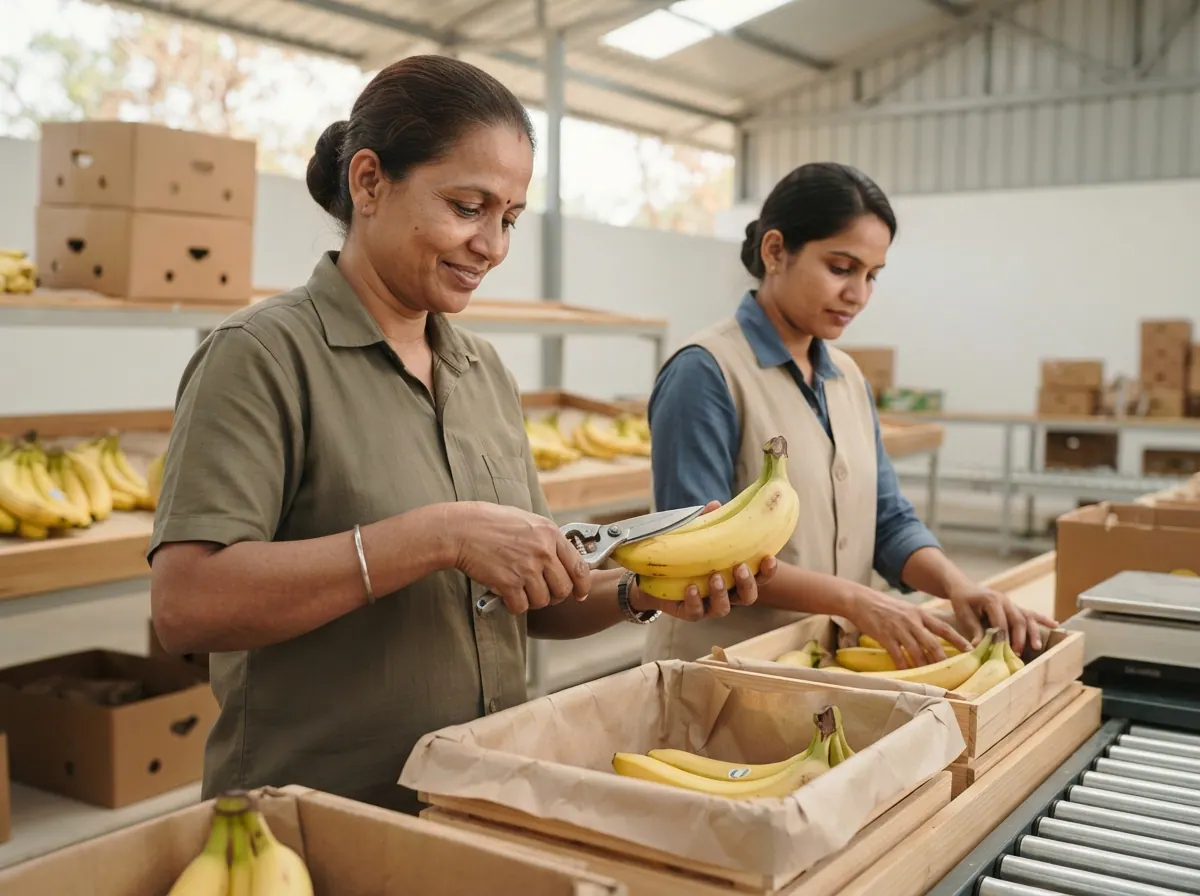
To grow bananas in India you need good water, a drip line, clean tissue-culture plants and about ₹1–3 lakh for the first crop on one to two acres. A first crop is thin on profit and takes 11 to 14 months, and the money is made in the second crop and in avoiding the big losses: wind, disease and a price crash on harvest week.
All figures here are estimates. Check prices near you before you spend.
What does it cost?
Here is one acre of tissue-culture banana, about 1,000 plants, for the first crop:
| Item | One acre |
|---|---|
| Land preparation, farmyard manure | ₹12,000–20,000 |
| Tissue-culture plants (1,000 × ₹12–18) | ₹12,000–18,000 |
| Drip system | ₹30,000–50,000 |
| Support poles or ropes for bunches | ₹10,000–18,000 |
| Fertiliser over the crop | ₹25,000–45,000 |
| Sprays and plant protection | ₹8,000–15,000 |
| Labour for weeding, desuckering, tying | ₹25,000–45,000 |
| Harvest and transport | ₹20,000–35,000 |
| Total for one acre | about ₹1.4–2.5 lakh |
If you plant two acres, almost every line doubles except the borewell or pump, which you probably already have. A farm pond, a new borewell or a shed will add to the total.
The drip system lasts for several crops, so the second crop looks much cheaper than the first.
Which variety should you grow?
- Grand Naine (G9): the most common tissue-culture variety for fresh fruit and export. It gives even bunches and good fruit, but it needs water, feeding and care.
- Robusta, Dwarf Cavendish: common in many states, shorter and a little easier in wind.
- Nendran, Poovan, Red banana and others: regional types with strong local markets, for example Nendran for chips and cooking in the south. Plant what your buyers ask for.
Check with your nearest buyer which variety and bunch size they want before you order plants.
How much can it earn?
Here is one acre of G9 on your own land, first crop, with drip.
Income
- 1,000 plants planted, about 950 give a bunch
- Average bunch about 19 kg
- 950 × 19 = about 18,000 kg
- Farm-gate price: about ₹12 a kg
- 18,000 × ₹12 = ₹2,16,000
Costs
- Land preparation and manure = ₹15,000
- Plants: 1,000 × ₹15 = ₹15,000
- Drip = ₹40,000
- Support poles and ropes = ₹15,000
- Fertiliser = ₹35,000
- Sprays = ₹10,000
- Labour = ₹35,000
- Harvest and transport: 18,000 kg × ₹1.5 = ₹27,000
- Total = ₹1,92,000
Left over: ₹2,16,000 − ₹1,92,000 = about ₹24,000 for the first crop over a year. At ₹15 a kg the income is ₹2,70,000 and you keep about ₹78,000. At ₹8 you lose money. The second crop from the same plants needs no new plants or drip, so it is usually a better crop, if the plants are healthy.
Price swings are large, so check the rate at your market in the weeks before harvest, and not just on the day you plant.
What do you need before you start?
- Water all year. Bananas need steady water. A dry spell in the first months or at flowering cuts bunch size.
- Wind protection. Heavy bunches on tall plants fall easily. Plan support poles and, if you can, a windbreak.
- A buyer lined up. Many farmers sell to a trader who cuts bunches in the field. Others sell to exporters or ripening houses. Talk to more than one buyer.
- Land that has not grown banana recently. Panama wilt and nematodes build up in banana soil.
Step by step
- Visit two banana farms at harvest time, including one that has lost a crop. Ask what happened.
- Test soil and water, and ask the horticulture office about the right variety for your area.
- Prepare the field: deep plough, add farmyard manure and set pits at the right spacing.
- Buy tissue-culture plants from a reliable lab or nursery. Ask for the variety name and the hardening details, and check that plants look uniform.
- Plant at the right season for your area, so that flowering does not fall in extreme heat or cold.
- Feed through drip in small, regular amounts, remove extra suckers, and tie or prop bunches early.
- Plan harvest with the trader or buyer, and agree on weight, rate and payment day before the bunches are cut.
Which licences apply?
Banana farming itself needs little paperwork, but several things matter:
- Land and water. A borewell or electricity connection may need permission. Ask the local office.
- Subsidy and loans. Horticulture missions and state schemes have supported tissue-culture plants and drip. Banks also lend for banana crops. Rules and amounts change, so ask your district horticulture office before you buy.
- Crop insurance. Some areas offer insurance for banana, which can matter for storm damage. Ask your bank and agriculture office.
- Pesticides. Buy from a licensed dealer and follow label waiting periods before harvest.
- Tax. Ask a CA how sales and any subsidy are treated.
What goes wrong?
- Wind before harvest. A storm in the last months can flatten a field. Support and insurance matter.
- Panama wilt. Plants yellow and collapse. Once in the soil it is hard to remove, so buying clean plants and rotating land matters.
- Price crash at harvest. When everyone's crop arrives together, traders drop the rate and some stop buying.
- Uneven bunch size. Too little water or feed at the wrong stage gives small bunches that traders discount.
- Cheap, doubtful plants. A bad batch costs you the whole year.
- Cutting too early or too late. Buyers want a certain fullness. Cutting early gives poor fruit and cutting late means ripening in transport.
Situations you will face
What would you do? Each choice costs something.
Getting started
Suckers from a neighbour cost almost nothing. Tissue-culture plants cost several times more.
- Buy tissue-culture plants: Costly, clean even crop
- Take the free suckers: Cheap, uneven, disease risk
G9 gives bigger bunches the traders like. The local variety is hardier and known in your market.
- Plant G9: Higher yield, needs more care
- Plant the local type: Hardy, lower price
Drip costs about forty thousand an acre. Furrow watering is free but uses more water and gives uneven bunches.
- Fit drip and fertigation: Costly, even bunches
- Use furrow watering: Cheap, thirsty and uneven
Your plot grew banana last season. Changing to another field means rent, but wilt may be in the soil.
- Rent a fresh field: Extra rent, cleaner soil
- Replant the same plot: No rent, wilt risk
Closer planting fits more plants per acre. It also gives smaller bunches and more disease.
- Use the usual spacing: Fewer plants, larger bunches
- Plant close together: More plants, smaller bunches
A trader offers a contract rate now. It may be below the market price at harvest, or above it.
- Sign the contract rate: Safe rate, no upside
- Stay open to the market: Possible gain, price risk
Farmyard manure for the pits costs more than last year. Chemical fertiliser alone is cheaper.
- Buy full manure: Costly, stronger roots
- Use less manure: Saves money, weaker start
First month
New plants show yellow leaves a month after planting. It may be water, feed or root damage.
- Test soil and water: Small fee, find the cause
- Add more fertiliser: Cheap, may be wrong
Side shoots are growing around every plant. Removing them takes labour and must be done on time.
- Hire labour to desucker: Labour cost, bigger bunches
- Do it when you get time: Free, lower yield
After rain the weeds shot up. A weedicide is cheap, but sprays can touch the young banana leaves.
- Weed by hand: Labour, safe for plants
- Use a weedicide: Cheap, risk of leaf burn
About fifty plants are of a different height and leaf shape. The nursery blames the weather.
- Complain and replace: Hassle, even crop
- Keep them anyway: No effort, mixed bunches
Pigs are rooting around the young plants at night. A fence or a watchman costs money.
- Put up a solar fence: Costly, plants safe
- Keep a night watchman: Monthly cost, some loss
Running it
Potash is expensive just when the plants need it for bunch filling.
- Pay for the full dose: Costly, full bunches
- Give half the dose: Saves money, thin bunches
Brown streaks are spreading on older leaves in the damp weather. Fungus is cutting leaf area.
- Spray on a schedule: Costly, protects bunches
- Cut the worst leaves only: Cheap, disease stays
Heavy bunches are bending the plants. Bamboo poles and rope are not cheap at this time of year.
- Prop every plant now: Costly, safe in wind
- Prop only the heavy ones: Cheaper, wind risk
At flowering time the borewell gives less water. Bunch size depends on water now.
- Buy tanker water: Costly, full bunches
- Cut watering hours: Free, smaller bunches
Covers keep fruit clean and bright, which an exporter likes. They cost per bunch and take labour.
- Cover all the bunches: Cost, cleaner fruit
- Leave them uncovered: Free, scarred fruit
A trader offers cash and wants bunches cut at 75 per cent fullness. They would not fill out further.
- Let them cut early: Quick cash, lower weight
- Wait for full bunches: Extra weeks, higher weight
A trader wants to cut tomorrow. The last spray label asks for more waiting days before harvest.
- Wait the full period: Delay, trader may leave
- Cut only the unsprayed rows: Smaller lot, rest waits
When things go wrong
A strong wind is forecast in three days. Half the bunches are almost ready to cut.
- Cut the ready bunches now: Lower weight, saved fruit
- Prop and hope: Cost of props, wind risk
A patch of plants is yellowing from the older leaves and splitting at the base. It looks like wilt.
- Remove and isolate them: Labour, saves the rest
- Keep them till harvest: Free, disease spreads
Every farm in the region is cutting at once. Traders drop the rate or stop coming.
- Hold bunches a week: Cost, may fall further
- Sell at the low rate: Poor money, no waiting
A trader weighed less than you did and paid for less. They say wet fruit weighs differently.
- Insist on a weighbridge: Fair weight, lose the buyer
- Accept their weight: Less money, buyer stays
Bunches cut a day too late are starting to yellow on the way to market. The buyer may reject them.
- Sell at a nearby market: Lower price, less spoilage
- Continue to the city: Higher price, reject risk
Dry hot wind is scorching leaves just as bunches emerge. Mulch and extra water cost money.
- Mulch and add irrigation: Costly, protects bunches
- Leave it, save money: Free, split fingers
Growing
After harvest each plant has side shoots. A second crop needs good feeding and cleaning.
- Raise a ratoon crop: Cheaper crop, care needed
- Clear and replant fresh: Costly, fresh plants
A shopkeeper in town asks for ripened bananas. A small ripening room means a setup cost and daily care.
- Build a ripening room: Setup cost, better price
- Sell green bunches: No spend, regular price
A neighbour wants to lease their plot to you. Your first crop only just made a profit.
- Lease and plant it: Big spend, more bananas
- Strengthen the first acre: Smaller spend, steady yield
Your small bunches sell cheap. A local chips maker offers a steady rate for raw bananas.
- Sell raw to the chips maker: Steady money, low rate
- Make chips yourself: Setup, food licence, margin
The district office mentions support for tissue-culture plants and drip. It needs papers and nothing is promised.
- Apply with a CA's help: Fees, cleaner records
- Skip the paperwork: No fees, no support
Is it right for you?
Banana farming suits you if you have reliable water, can wait about a year for the first income, and can handle a year in which the price falls. It suits you less if you cannot afford one failed crop.
A good test: grow half an acre first with clean plants and drip, and learn what your local buyers actually pay. If it works, extend with the second crop's money, not with a loan.